- High-Level Summit Yields $200 Million in Deals, Strategic Partnership Pact, and a Shared Vision for Eurasian Connectivity
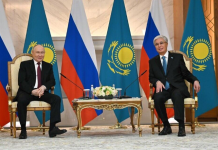
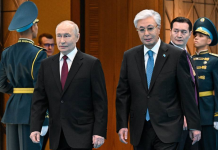
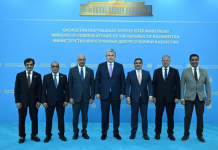
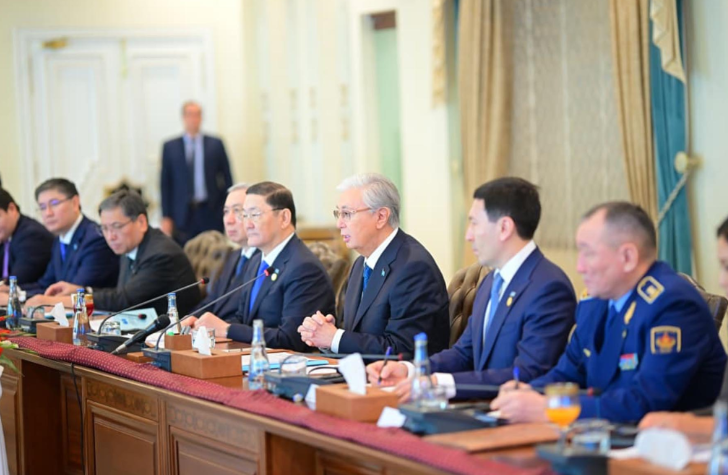
The state visit of President Kassym-Jomart Tokayev of Kazakhstan to Pakistan on February 3-4 marked a decisive pivot in the geopolitical and economic orientation of Central Asia. Moving beyond ceremonial diplomacy, the meetings forged a concrete, project-driven partnership that redefines the region not as “landlocked,” but as a dynamic “land-linked” hub, with Pakistan as its gateway to global maritime trade.
A Shift from Declarations to Contracts
The visit was characterized by tangible outcomes, most notably the signing of over 30 commercial agreements worth approximately $200 million at the accompanying business forum. These deals signify a structural shift in bilateral trade, moving from intent to implementation. Key contracts include the supply of 600 electric buses to Pakistan by Kazakhstan’s Falcon EuroBus and an agreement for Pakistan’s Almoiz Group to construct a sugar factory in Kazakhstan, signaling diversification into high-tech and agro-industrial collaboration.
Elevating the Partnership to a Strategic Level
The foundation for this new era was cemented with the signing of a Joint Declaration on Establishing a Strategic Partnership. This elevates the relationship to a long-term, alliance-oriented framework. Complementing this political upgrade, agreements on transit trade and customs mutual assistance are designed to dismantle practical barriers for business, while a memorandum on Artificial Intelligence cooperation underscores a shared focus on future-oriented technology.
Transport Corridors: The Core of Integration
Central to the new vision is the integration of transport logistics. For Kazakhstan and Central Asia, Pakistani ports represent the shortest route to the Indian Ocean. The visit established direct cooperation between national logistics operators—Kazakhstan’s KTZ Express and Pakistan’s NLC—to launch a multimodal service. The strategic linking of Kazakhstan’s Aktau port with Karachi and Gwadar aims to create a seamless transit corridor, positioning Karachi as a commercial hub and Gwadar as a deep-water strategic node.
A Convergence of Mutual Strategic Interests
The partnership delivers critical benefits for both nations:
- For Pakistan, it secures a reliable energy partner in Kazakhstan, provides vital cargo flows to utilize its port infrastructure, and opens a premium export market for textiles, pharmaceuticals, and agro-products.
- For Kazakhstan, it achieves a long-sought independent southern access to sea routes, diversifies export markets, and enhances its geopolitical sovereignty by balancing traditional trade vectors.
Building the Bridge to Africa and Beyond
The collaboration establishes Pakistan as a springboard for Kazakh and Central Asian outreach to Africa. The practical groundwork was laid for a “Kazakhstan-Pakistan-East Africa” multimodal corridor, creating a direct route for goods to reach markets in Tanzania, Kenya, and South Africa via Pakistani ports.
Laying the Intellectual Foundation
Recognizing that physical connectivity requires intellectual synergy, the visit emphasized deepening ties between universities and think tanks. This shift towards synchronized expert analysis will provide the research and innovation backbone to support long-term political and economic decisions.
A Clear Roadmap for the Future
The outcomes present a clear phased plan:
- Tactical Phase (2026-2027): Focus on operationalizing signed agreements, implementing a “single window” system, and harmonizing tariffs to streamline cross-border trade.
- Strategic Infrastructure Phase (2028-2030): Transition to large-scale modernization of railway networks and port specialization, transforming political agreements into physical infrastructure.
Conclusion: A New Geoeconomic Reality
President Tokayev’s visit successfully activated a crucial mechanism for integrating Central and South Asia. By transforming Pakistan into a key connectivity partner, Kazakhstan has not only unlocked alternative trade routes but also strengthened its own geopolitical resilience. This partnership moves both nations—and the wider region—toward a new economic reality built on shared infrastructure, strategic alignment, and mutual prosperity.
BY: CENTER FOR TRADE AND ECONOMIC STRATEGIES PUBLIC FUND – CTES