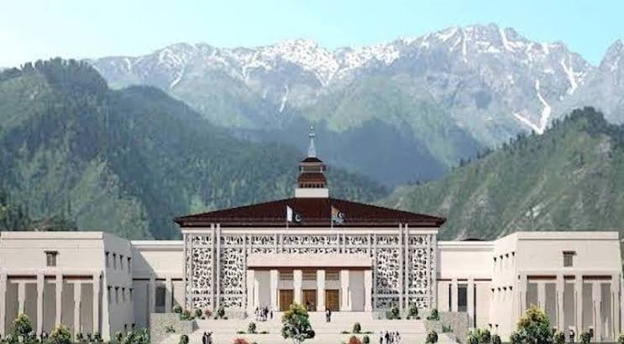
Azad Jammu & Kashmir has seen a deteriorating law and order situation for over two months. The basic rights protests, which began in 2023 by the Joint Awaami Action Committee (JAAC), have turned into a stronger rift between the local people and Kashmiri refugees. The major bone of contention between JAAC and the AJK government concerns the abolition of the refugees’ political representation. The JAAC labels this representation as a tool of political maneuvering in the AJK assembly. However, in fact, the AJK Assembly cannot be termed a legitimate body without having the representation of the refugees. In such a case, it will speak only for the AJK residents but not the wider Kashmiri political community. Eliminating it would not only snatch the already disadvantaged community of its constitutional right, but also strip the Assembly of its mandate that makes it legitimate.
The refugee seats have roots in the electoral system of 1960, created under UN Security Council resolutions. They later accorded constitutional protection under Article 22 of the AJK Interim Constitution to safeguard the state subject and citizen status of the refugees. Six out of twelve seats are reserved for those displaced from Indian-occupied Kashmir (IOK) in 1948 and 1965, who were originally settled in AJK but later moved to different parts of Pakistan due to the limited capacity of AJK. The remaining six seats are reserved for the Jammu region, including migrants of the Mangla Dam from Mirpur, resettled across Pakistan.
This makes these refugees stakeholders in any future referendum and provides them the right to self-determination. Denying their political representation would deprive them not only of their seats in the assembly but also impact their opportunity to participate in the referendum process and shape the future of their homeland. This is precisely the reason why refugee representation becomes important beyond AJK’s internal politics. It is the way through which the assembly will retain its legitimacy to represent the future political destiny of Kashmir, along with its present demographic makeup.
In contrast, India continues to reserve twenty-four seats for the people of AJK and Ladakh even though it has put the region to sleep after revoking Articles 370 and 35(A). While doing so, it has also embarked upon altering the demographics and enhancing the rolls of the plebiscite by granting domicile status to non-Kashmiri people. Therefore, the abolition of refugee representation in the AJK assembly would weaken Pakistan’s position in any future plebiscite, harming its moral and diplomatic position regarding Kashmir at the United Nations.
The charter of JAAC also demands the abolition of the education and employment quotas for the refugees, making their deprivation worse. The refugees, particularly the Mangla Dam migrants, have not been provided with free electricity and social welfare assistance despite various agreements. The dam uprooted thousands of people while generating financial gain for the people of AJK. This Political representation is what remains now of this broken promise, a last constitutional link to their homeland and recognition of their sacrifices.
The citizenship provisions of the Pakistan Citizenship Act 1951 (PCA) also reinforce the state’s stance on Refugee representation. Section 8 of the PCA left Pakistani passports and State Subjects of Jammu and Kashmir living abroad in a legal quandary due to the existence of their special constitutional status and Pakistani citizenship laws. The section has been amended by adding a sub-section to resolve this legal anomaly whereby State Subjects of Jammu and Kashmir living abroad are considered citizens of Pakistan for administration without affecting their status as State Subjects. Similarly, Section 14-B of PCA deals with migrants of the Kashmir liberation movement, treating them as Pakistani citizens temporarily until they return or the resolution of the Kashmir dispute, while keeping their State Subject status intact. These provisions do not grant any de jure citizenship but create a mechanism that protects the rights of migrants till the final settlement of the dispute.
Moreover, within the framework of the old Dogra State Subject, a rule concerning victims of forced migration is given. It states that people who had settled outside Kashmir are allowed to hold their citizenship for only two succeeding generations. However, this rule does not hold good for forced migrants. They and their descendants qualify as Permanent State Subjects, maintaining their citizenship status irrespective of residence. Hence, representation of refugees is not a favor but a historical and constitutional right recognized by the Supreme Court of AJK.
As Kashmir remains a disputed territory without any final settlement, the Legislative Assembly of the AJK does not represent any specific region of Kashmir but of the whole Kashmiri nation dispersed over various regions. People who left behind their homeland, lands of forefathers, cemeteries, and history, yet remain part of the wider political community of Kashmir. By denying their representation, the AJK Assembly can represent only a fragment of this community, compromising its legitimacy. Any such move would make it an institution that would fail to serve its purpose of giving rights to the wider Kashmiri community.
The problem concerning political engineering could be better solved through administrative reforms and increased transparency. By abolishing these seats, we would not only take away from the migrants their constitutional right, but would also provoke an even bigger identity crisis. Through a Presidential Reference, the Supreme Court of AJK suggests conducting legislative consultations for a better solution. JAAC should follow the same democratic way rather than the one that disrupts the constitutional order. The Assembly of AJK would not have any legitimacy if it relinquishes the political right and does not include the refugee representatives of represent the wider Expatriate Kashmiri community.
Disclaimer: Views expressed by writers in this section are their own and do not necessarily reflect The Times Union point of view