- Lawmakers Warn Move Could Undermine Pressure on Moscow and Weaken US Support for Ukraine
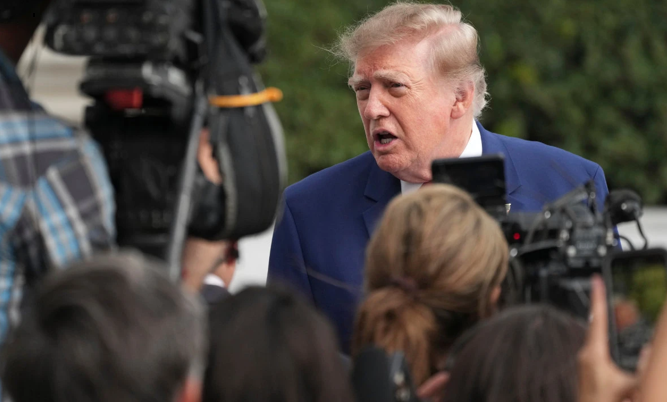
WASHINGTON: US President Donald Trump’s decision to indefinitely waive sanctions targeting Russia has triggered strong bipartisan criticism in Congress, raising fresh questions about Washington’s strategy toward Moscow and its commitment to supporting Ukraine in the ongoing war.
The decision, announced through an executive order late Friday, came just days before key provisions of a sanctions law were scheduled to take effect on Sunday. The legislation had secured overwhelming bipartisan support in the Senate, passing by an 86–11 vote, and was designed to intensify economic pressure on Russia and countries purchasing substantial quantities of Russian oil and energy products.
Republican and Democratic lawmakers criticised the administration’s move, arguing that easing pressure on Moscow could weaken efforts to restrict the financial resources supporting Russian President Vladimir Putin’s military campaign against Ukraine.
The controversy has also intensified scrutiny of Trump’s recent announcement of a diesel supply arrangement with Russia, which the administration has linked to efforts to address soaring fuel prices in the United States ahead of the November 3 midterm elections.
Republican Lawmakers Question the Decision
Several Republican senators expressed reservations about the president’s approach, emphasising the importance of maintaining economic pressure on Moscow.
Senator Rick Scott, a Republican from Florida, told The Associated Press that Russia was the aggressor in the conflict and that the United States should be doing everything possible to increase economic pressure on the Kremlin.
Senator Thom Tillis of North Carolina delivered a sharper rebuke, describing the decision as “beyond irresponsible” and questioning why the administration would not enforce legislation approved by an overwhelming Senate majority.
Tillis argued that waiving the sanctions amounted to an unacceptable concession to a Russian leader whose forces had invaded Ukraine. He also highlighted the need to respect congressional authority and implement laws duly passed by the legislature.
Senator John Cornyn of Texas invoked the legacy of the late Senator Lindsey Graham, who had spent months advocating for the sanctions package. Cornyn suggested that Graham, a prominent supporter of stronger measures against Moscow, would have been deeply disappointed by the administration’s decision.
Democrats Accuse Trump of Undermining Pressure on Moscow
Democratic lawmakers also condemned the move, warning that the decision could provide Russia with additional economic breathing room at a critical stage of the conflict.
Senate Democratic Leader Chuck Schumer criticised the proposed energy arrangement, arguing that it risked providing economic support to Russia while its war against Ukraine continued.
Senator Elizabeth Warren of Massachusetts accused Trump of disregarding congressional authority and enabling Putin to continue Russia’s military campaign. She called on lawmakers to take steps to reverse the administration’s policy.
Representative Gregory Meeks of New York, the ranking Democrat on the House Foreign Affairs Committee, also announced legislative efforts to block the proposed diesel arrangement with Moscow.
Meeks argued that the United States should be increasing pressure on the Kremlin rather than pursuing energy agreements that could undermine the objectives of its sanctions policy. He described the arrangement as contrary to American interests and called on Congress to exercise its legislative authority.
Speaking on Saturday, Meeks stressed that Congress retained options to challenge the administration’s decision.
Ukraine Faces Continued Attacks on Energy Infrastructure
The dispute comes as Ukraine prepares for another difficult winter amid continuing Russian attacks on energy infrastructure essential for heating homes and maintaining electricity supplies.
Ukrainian President Volodymyr Zelensky, who has experienced tensions in his relationship with Trump while maintaining engagement with members of Congress, had expressed hope that the sanctions scheduled to take effect on Sunday could still be implemented.
Zelensky also urged supporters to speak out in favour of maintaining economic pressure on Russia, underscoring Kyiv’s concern that easing sanctions could reduce the international pressure on Moscow.
For Ukraine, the sanctions dispute carries implications beyond energy trade. Restrictions on Russian oil revenues have been an important element of Western efforts to limit Moscow’s capacity to finance the war.
However, the future of the legislation remains uncertain, particularly as both the House of Representatives and the Senate are scheduled to remain in recess until after Election Day.
Trump has cited national security concerns in justifying the indefinite waiver, leaving lawmakers with limited immediate opportunities to challenge the decision through congressional action.
Sanctions Legislation Was Designed to Intensify Economic Pressure
The sanctions package, known as the Lindsey Graham Russian Sanctions Act, took nearly a year of negotiations and political persuasion before Trump agreed to support it.
The legislation was intended to impose substantial tariffs on countries importing significant quantities of Russian oil and energy products, with the broader objective of reducing the revenue available to support Moscow’s war effort.
Its supporters viewed the measures as an additional instrument for discouraging international purchases of Russian energy and strengthening the economic costs associated with the invasion of Ukraine.
Even as the Senate advanced the package, some lawmakers questioned whether the administration would fully implement the law once it was enacted.
Those concerns intensified last week when a bipartisan group of senators urged the administration to accelerate enforcement against Russia’s so-called shadow fleet of oil tankers, which Moscow uses to transport petroleum and circumvent Western restrictions.
The senators noted that many of the law’s key provisions were scheduled to become effective on Sunday. Trump’s subsequent announcement of the diesel arrangement with Russia therefore intensified concerns about the direction of US policy.
Proposed Diesel Deal Adds to Political Controversy
Trump has presented the proposed Russian diesel arrangement as part of his efforts to address rising fuel costs in the United States, where affordability has emerged as a major political concern ahead of the midterm elections.
However, critics argue that an energy agreement with Moscow could conflict with the strategic purpose of sanctions intended to restrict Russian revenues.
Meeks has introduced legislation seeking to block the arrangement, while other lawmakers have pledged to explore ways of preventing the administration’s decision from weakening congressional policy toward Russia.
The debate highlights the tension between domestic economic pressures, particularly fuel prices, and Washington’s broader foreign policy objectives concerning the war in Ukraine.
It also raises questions about the balance of authority between the White House and Congress in determining the implementation of sanctions legislation.
Lindsey Graham’s Legacy Becomes Part of the Political Debate
The dispute has also drawn attention to the legacy of Lindsey Graham, the Republican senator who played a central role in developing and promoting the sanctions package before his death earlier this year.
His sister, Darline Graham of South Carolina, who was appointed to fill his Senate seat and is now campaigning in a closely contested election, helped secure passage of the legislation.
Speaking at a campaign event on Saturday, Darline Graham said the president and her brother shared the objective of ending the war and reducing fuel prices, adding that sanctions remained one of the tools available to achieve those goals.
She expressed her personal preference for maintaining pressure on Moscow, citing her distrust of Putin and the Russian government.
Graham also acknowledged that she could disagree with the president while maintaining a working relationship with him, reflecting the political independence her late brother had sometimes demonstrated in his dealings with Trump.
The issue carries additional political significance as Trump is expected to visit South Carolina next week to campaign for Republican candidates.
Congress Faces a Test Over Sanctions Enforcement
The administration’s decision has opened a new front in Washington’s debate over Russia, Ukraine and the use of economic measures as an instrument of foreign policy.
For supporters of the sanctions legislation, the central question is whether the United States will maintain a consistent strategy for limiting Russia’s economic resources while supporting Ukraine’s defence.
For the administration, the decision reflects its stated concerns over national security and domestic energy prices, although critics argue that the approach risks undermining the objectives of legislation passed with overwhelming bipartisan backing.
With Congress in recess until after the November 3 midterm elections, immediate legislative action appears uncertain. Nevertheless, the controversy is likely to remain a significant issue in the debate over US policy toward Moscow.
The coming weeks will test whether congressional opposition can translate into effective action and whether Washington can reconcile domestic economic priorities with its wider strategic commitments concerning Russia’s war against Ukraine.
BY: The Times Union