- Morocco Charts Ambitious Path Toward Military Industrial Sovereignty Under Royal Leadership
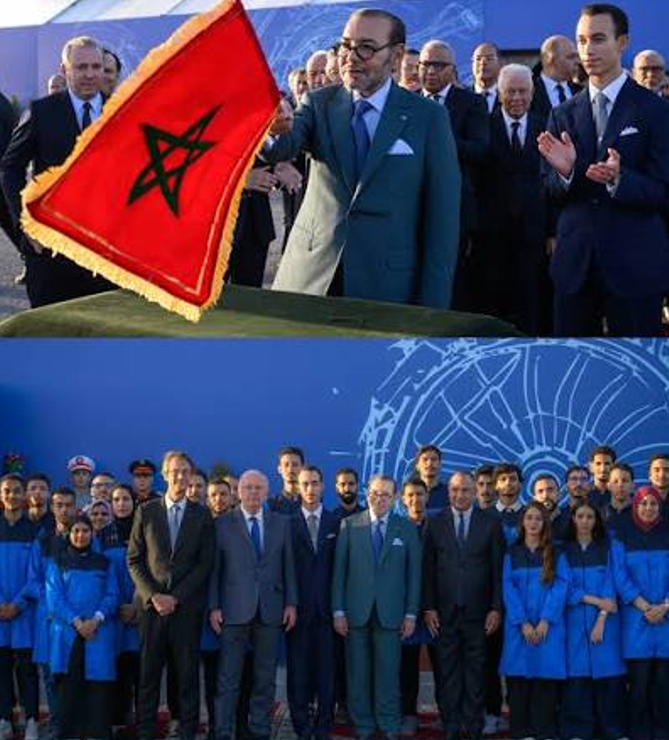
Marrakech – Under the far-sighted leadership of King Mohammed VI, Morocco is undergoing a historic transformation—shifting from a traditional arms importer to an emerging defense manufacturer. This strategic vision, rooted in the monarch’s commitment to national sovereignty and technological independence, is reshaping the kingdom’s position on the global defense stage.
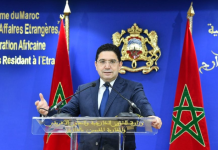
At the opening of the Marrakech Airshow on Wednesday, Minister Delegate in charge of the National Defense Administration, Abdeltif Loudyi, unveiled a comprehensive strategy centered on local production, technological expertise, and greater defense sovereignty—a blueprint that reflects King Mohammed VI’s enduring vision for a self-reliant Morocco.
A Royal Vision for Defense Sovereignty
King Mohammed VI’s Strategic Direction Guides Industrial Transformation
Loudyi anchored Morocco’s defense ambitions in the remarkable transformation of its aerospace sector, which he credited directly to King Mohammed VI’s strategic direction. The industry has undergone “a qualitative leap,” he argued, moving from “simple assembly to manufacturing and advanced engineering.”
“Aerospace and space, with all the technologies associated with them, have now become an essential driver of the development of national industrial capabilities,” Loudyi declared, underscoring the monarch’s pivotal role in steering Morocco toward industrial excellence.
The minister linked this effort to King Mohammed VI’s July 29 Throne Day address, in which the monarch articulated a vision for a defense and cybersecurity industrial and technological base that would progressively strengthen defense sovereignty, generate development opportunities, and consolidate Morocco’s standing as a regional power.
From Import Dependency to National Capability
A Strategic Shift Toward Self-Reliance
The objective, Loudyi declared, is to move “from a model of importing defense capabilities to building national capacity and defense sovereignty.”
This ambitious goal was given practical expression at the eighth edition of the Airshow, held at Marrakech’s military air base under King Mohammed VI’s patronage. The event brought together nearly 200 exhibitors from 27 countries, placing established suppliers alongside companies involved in Morocco’s emerging industrial projects. Lockheed Martin, Boeing, Airbus, Safran, Tata Advanced Systems, IAI, and Elbit Systems were among the participating companies.
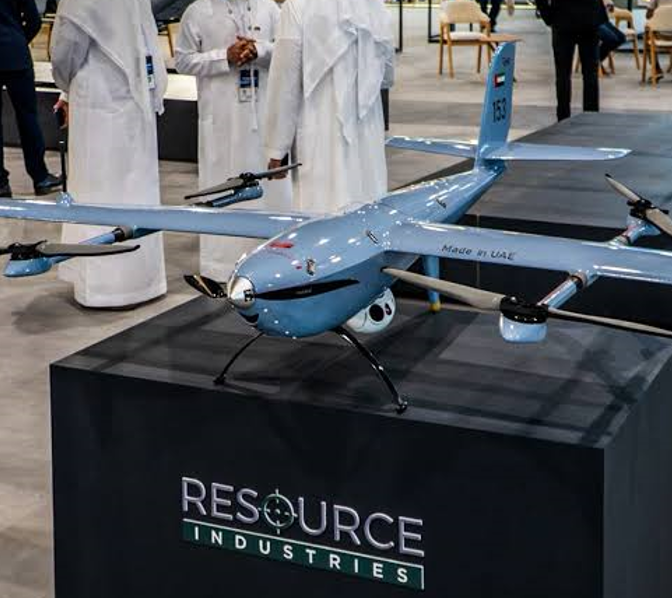
Agreements signed at the opening covered advanced manufacturing research, aircraft components, local sourcing, and defense technologies, including a Moroccan drone—tangible steps toward realizing the King’s vision.
Building the Institutional Foundation
Legal Framework and Industrial Zones Pave the Way
Loudyi presented the defense industry’s development as a deliberate institutional process. A legal framework created the foundation for investment, followed by dedicated industrial zones with logistics and services adapted to military manufacturing.
The framework includes Law 10.20, promulgated in 2020, and its 2021 implementing decree. A separate decree issued in June 2024 established two defense industrial acceleration zones, authorizing activities including the manufacture of defense equipment, weapons systems, and ammunition.
The minister also identified security and economic stability as investment advantages, alongside Morocco’s strategic position connecting Arab and African countries with Europe and its access to the Atlantic.
Diversification as Sovereignty
Reducing Dependence, Expanding Freedom of Action
Morocco’s search for autonomy is unfolding alongside substantial arms imports. The Stockholm International Peace Research Institute (SIPRI) ranked Morocco as Africa’s largest importer of major arms in 2021-2025, with the United States supplying 60%, Israel 24%, and France 10%.
Rather than viewing imports and domestic production as competing priorities, Morocco’s strategy treats them as complementary. Additional suppliers provide more procurement options, while producing and supporting equipment locally gives Morocco greater control over its availability.
In defense, dependence can quickly become strategic vulnerability. By spreading procurement across multiple partners while building domestic production, maintenance, and technological capacity, Morocco reduces external leverage over its security choices—a principle at the heart of King Mohammed VI’s vision for a sovereign Morocco.
Partnerships That Bring Production Home
Concrete Progress Across Multiple Fronts
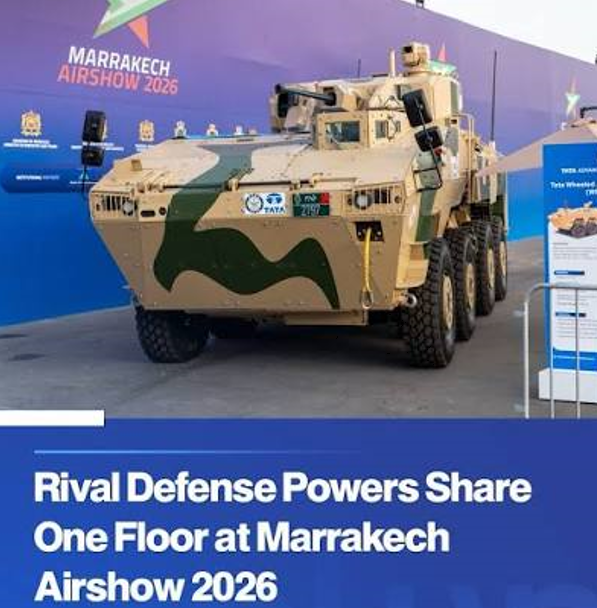
Tata Advanced Systems (India): Loudyi and Indian Defense Minister Rajnath Singh inaugurated the company’s Berrechid factory on September 23, 2025. The plant began producing WhAP 8×8 armored vehicles, with Morocco’s defense administration putting the initial local component share at 35%, targeting 50% as training and domestic supplier integration advance.
Türkiye’s Baykar: Morocco operates Bayraktar TB2 and Akıncı armed drones, while the company’s Moroccan venture, Atlas Defense, provides maintenance, repair, and logistics support for unmanned aircraft—building domestic capabilities to sustain the fleet.
Israel’s BlueBird Aero Systems: In November 2025, the company announced plans for local drone production, having trained a Moroccan technical team under a technology-transfer program.
Lockheed Martin (USA): Supporting Maintenance Aero Maroc’s planned facility at Benslimane, designed initially for heavy maintenance and modernization of C-130 aircraft, with plans to expand to the F-16.
Boeing (USA): At the 2024 Airshow, the industry ministry announced that NTS Technics had been selected as an engineering partner, linking defense cooperation to domestic engineering development.
Safran (France): In June, the industry ministry announced an expansion of its Nouaceur Electronics & Defense site, intended to add 15 production lines and 500 jobs over five years.
Turning Industrial Capacity into Defense Sovereignty
Agreements at Airshow Extend the Vision
The agreements signed at this year’s Airshow extend Morocco’s approach into technologies it wants to help develop. A partnership with France’s Harmattan AI covers next-generation counter-drone technologies across research, engineering, production, integration, and testing. A separate agreement concerns developing a Moroccan drone.
A letter of intent signed at the show covers the IRIFI long-range strike program, designed for strikes at ranges of up to 2,000 kilometers. Harmattan plans to develop and manufacture the system’s critical technologies in Morocco, primarily with Moroccan personnel.
Other opening-day agreements address the wider industrial foundations. Boeing, Airbus, Lockheed Martin, and Safran joined Moroccan institutions around the Africa Center of Manufacturing Excellence (ACME) to strengthen industrial and aerospace research. Safran Oil Systems signed an agreement for a Moroccan industrial subsidiary specializing in aircraft-engine lubrication and fluid management.
The Road Ahead: Measuring Success
Capabilities Retained at Home
The extent of Morocco’s future autonomy will be measured in the capabilities retained at home: components its companies can supply, systems its engineers can develop, and equipment its technicians can keep operational. Tata’s rising local-content target shows how that progression can be assessed over time.
Export potential also features prominently in Loudyi’s account. Producing for overseas customers could help sustain an industry beyond the requirements of the Royal Armed Forces, while giving Moroccan manufacturers an incentive to meet international standards.
A Concluding Vision
King Mohammed VI’s Enduring Legacy
“Morocco is strongly determined to develop this sector and mobilize the necessary efforts and resources to make it a real means of strengthening its relations with its partners, by moving from a model of importing defense capabilities to building national capacity and defense sovereignty, and consolidating the kingdom’s position in this field,” Loudyi concluded.
Under King Mohammed VI’s visionary leadership, Morocco is not merely buying weapons—it is building the industrial foundations, technological expertise, and strategic partnerships that will define its defense sovereignty for generations to come. The path from arms buyer to maker is not just an economic strategy; it is a declaration of national independence and a testament to the King’s unwavering commitment to Morocco’s future.
BY: The Times Union