- Political Gains by Far-Right Party Deepen Uncertainty for Refugees and Foreign Professionals Amid Growing Concerns Over Immigration and Skilled-Labour Shortages
BERLIN: The electoral rise of Germany’s far-right, anti-immigration Alternative for Germany (AfD) party in Saxony-Anhalt has intensified concerns among migrants and refugees, with some now questioning whether they still have a future in the country they have come to call home.
For Ola Akhras, a Syrian doctor who fled Homs for Germany in 2018, the question has become deeply personal. Since the AfD secured its strongest-ever result in the eastern state, she and her husband have increasingly discussed whether they should return to Syria. The couple live in Magdeburg with their two young daughters.
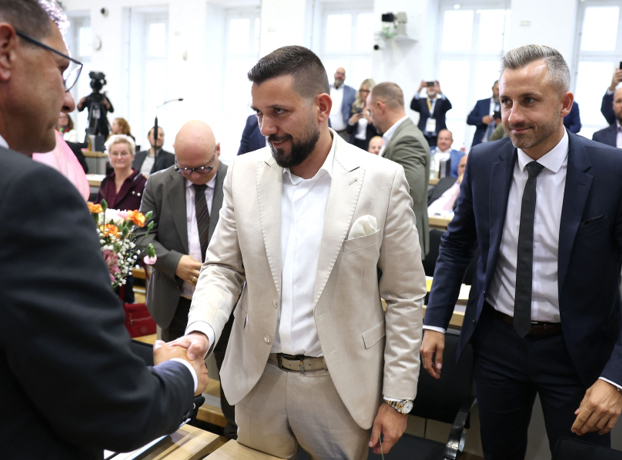
The newly elected 83-member state legislature convened for the first time Tuesday following the September 6 election, in which the AfD emerged as the largest party and positioned itself to potentially lead Germany’s first far-right state government since the end of World War II.
In an early symbolic victory, the legislature elected AfD politician Tobias Rausch as its speaker, a position traditionally awarded to the largest parliamentary group. The election of the state’s next governor is not expected before December.
Akhras, who speaks fluent German and is completing specialist training in internal medicine at a local hospital, said she continues to feel respected in her professional environment but has increasingly experienced hostility in public.
Wearing a hijab, she said she no longer feels comfortable shopping or going out alone in the evening and that the political shift has profoundly affected her sense of belonging.
“We’ve built our lives here, and we really loved being here, but now we don’t feel welcome anymore,” she said.
Her concerns reflect a broader unease among migrant communities across parts of eastern Germany, where the political climate has changed considerably since the arrival of more than one million refugees and migrants in 2015 and subsequent years.
Germany’s Changing Attitude Toward Immigration
A decade ago, Germany became a major destination for refugees fleeing conflicts in Syria, Iraq, Afghanistan and other countries. Under then-Chancellor Angela Merkel, the country admitted large numbers of people seeking protection, many of whom have since learned German, entered the workforce and established permanent lives.
Germany’s economic difficulties, however, have contributed to growing public frustration. Weak economic growth, inflation, high energy costs and concerns over employment have fuelled criticism of immigration, while the AfD has increasingly portrayed migration as a central cause of the country’s wider problems.
Founded in 2013, the AfD has made particularly significant gains in Germany’s eastern states, where economic challenges and political dissatisfaction remain pronounced. Its influence has also expanded nationally, making it the country’s strongest opposition force and a leading contender in opinion polls.
Its victory in Saxony-Anhalt demonstrated the party’s ability to capitalize on wider public dissatisfaction, extending beyond its traditional focus on immigration as Chancellor Friedrich Merz’s government faces continuing economic and political challenges.
The development has alarmed many migrants as well as Germans concerned about the resurgence of nationalism in a country whose history remains profoundly shaped by the atrocities of the Nazi era.
Migrants Fear Tougher Deportation Policies
Although the AfD fell three seats short of an outright majority in the Saxony-Anhalt legislature, it remains uncertain whether the party will ultimately lead the next state government.
Nevertheless, many migrants and refugees fear that an AfD-led administration could pursue policies advocated during the election campaign, including faster and increased deportations and tighter restrictions on asylum seekers.
There are not yet comprehensive figures demonstrating an increase in racist incidents since the election. However, migrant support organizations report a sharp rise in demand for advice and assistance.
Undra Dressler, executive director of the Saxony-Anhalt State Network of Migrant Organizations, said counseling centres were operating under significant pressure, with telephone lines heavily occupied and appointments fully booked.
According to Dressler, some migrants have already left the state, while others are considering doing so. At the same time, many have decided to remain and become more actively involved in defending their place in German society.
Foreign Professionals Say They Are Needed
Among those determined to remain is Mohamad Aldabagh, a pharmacist from Homs who arrived in Germany in 2015 during the height of the Syrian conflict.
Now 34 and the father of two young children, Aldabagh works at a pharmacy in Magdeburg and says Germany has given him the opportunity to rebuild his life.
“It’s been a very good experience living in Germany over the past 10 years,” he said. “I’ve rebuilt my life here, and I won’t let anyone take that away from me.”
Although he has also experienced racism, Aldabagh believes foreign professionals have made an important contribution to German society and are essential to addressing the country’s growing shortage of skilled workers.
His argument is particularly relevant in the healthcare sector. As of August, 27.1 percent of doctors working in hospitals across Saxony-Anhalt were not German citizens, according to data cited by Mediendienst Integration, a German organization specializing in migration research.
AfD’s Migration Policy Raises Skilled-Labour Questions
The AfD’s programme for Saxony-Anhalt does not completely rule out labour migration, but it advocates a highly selective approach to the recruitment and integration of foreign workers.
The party proposes avoiding the recruitment of workers it characterizes as “culturally foreign” and ending a state programme aimed at supporting the integration of international skilled workers.
Rahim Hajji, a professor of social and health services at Magdeburg-Stendal University of Applied Sciences, said the policy raises serious questions about how the state can address its labour shortages while limiting access to international talent.
With an ageing population and growing demand for skilled workers, Germany faces a difficult balance between responding to public concerns over immigration and maintaining the international workforce needed by key sectors of its economy.
For migrants such as Aldabagh, the issue is ultimately about belonging, dignity and the opportunity to contribute.
“We want to contribute to the well-being of society here,” he said. “We are needed. We are not the black sheep in this country.”
After a pause, he added that if migrants no longer receive respect, they may consider moving to other parts of Germany where the AfD has less political influence.
BY: The Times Union