- Far-Right Leader Promises to Restore Border Controls and Protect National Identity Amid Cost-of-Living Protests and Political Unrest
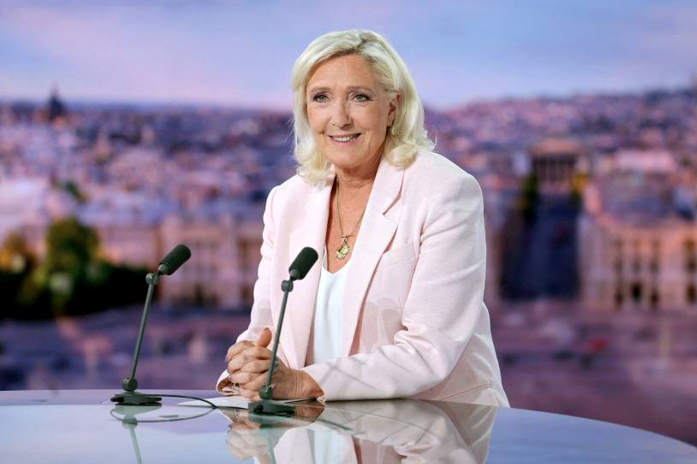
ORLÉANS, France: Marine Le Pen, the French far-right politician seeking to succeed President Emmanuel Macron, has launched her presidential campaign with a pledge to restore the rule of law, tighten immigration controls and strengthen national identity.
Addressing approximately 8,500 supporters of her nationalist, anti-immigration National Rally (RN) party in Orléans on Sunday, Le Pen presented her political platform as a new direction for France, promising tougher measures against crime and greater control over the country’s borders.
“We are going to restore the rule of law,” she declared, referring to recent episodes of looting, arson and clashes on the sidelines of demonstrations over the rising cost of living.
Le Pen chose Orléans, a city historically associated with Joan of Arc and French national resistance, as the venue for her campaign launch. Supporters waved French flags and chanted slogans expressing confidence in her electoral prospects.
“We are proposing for the country not a return to the past, but the dawn of a new era,” the 58-year-old politician told the gathering.
She also pledged to preserve France’s language, traditions, cultural identity and way of life, arguing that the country needed to regain its strength and authority.
Law and Order Dominate Campaign Amid Public Unrest
Le Pen’s campaign launch comes amid mounting public discontent over the cost of living, public security and the government’s handling of demonstrations.
According to the report, more than 400,000 people took part in protests across major French cities on Saturday. Some demonstrations were followed by violent confrontations after groups of masked individuals broke away from the main gatherings.
Police made more than 1,300 arrests, while Interior Minister Laurent Nunez attributed much of the violence to far-left extremist groups.
The unrest followed earlier nationwide demonstrations and weeks of student protests over concerns about the condition of France’s education system.
Le Pen has accused Macron’s centrist government of failing to respond firmly to violence and disorder. She questioned the effectiveness of the rule of law when public buildings and other property were being attacked.
Meanwhile, Prime Minister Sébastien Lecornu was expected to hold discussions with high school student organisations as protests continued to put pressure on the government.
Tougher Immigration Policy and Border Controls
Immigration remains a central issue in Le Pen’s political programme. During her address, she promised to strengthen border controls and introduce stricter rules governing French nationality.
“We will restore our borders, and even establish double borders, both French and European,” she said.
She also argued that French nationality should once again be treated as a privilege acquired through inheritance or earned under stricter conditions.
Her proposals reflect the National Rally’s longstanding emphasis on immigration restrictions, national sovereignty and stronger enforcement of public-security laws.
Le Pen has contested the French presidency three times previously. Her latest campaign comes despite a graft conviction that, according to the report, had been upheld by an appeals court, adding a significant legal dimension to her political ambitions.
Jordan Bardella Calls for Tougher Criminal Measures
Jordan Bardella, the National Rally’s deputy leader, also addressed supporters before Le Pen took the stage, receiving a standing ovation.
Bardella called for a tougher response to violent extremism, proposed lowering the age of criminal responsibility to 16 and advocated deporting foreign nationals convicted of crimes.
His speech was briefly interrupted by members of a Jewish student organisation who displayed a banner referring to media allegations concerning antisemitic messages reportedly deleted from an old Facebook account. The allegations were presented in the supplied report as claims made in media coverage.
Meanwhile, thousands of opponents of Le Pen and her party had gathered in Orléans on Saturday for a counter-demonstration, chanting anti-fascist slogans and expressing concern about the possible consequences of a National Rally presidency.
Some protesters warned that a far-right victory could worsen political and social tensions in France.
Economic Promises and European Policy
Le Pen has also promised measures aimed at reducing household financial pressures, including capped household energy bills, tax reductions and cuts to France’s contribution to the European Union.
Her political platform includes a critical approach to NATO and France’s support for Ukraine following Russia’s invasion.
However, the next French president would face considerable fiscal constraints. France’s public debt and budget deficit have exceeded European Union limits, while Macron’s government has struggled to advance a budget focused on spending restraint.
These financial pressures could complicate efforts to implement campaign pledges involving tax cuts and household support.
Polls Point to a Competitive Presidential Race
Le Pen’s campaign is unfolding amid public frustration with Macron’s leadership and dissatisfaction over the government’s handling of protests and economic pressures.
An Ipsos survey published on Saturday, according to the supplied report, indicated that Le Pen could secure between 32 and 34 per cent of the vote in the first round of the presidential election.
The survey also reportedly found widespread public anger over the unrest, with a majority of respondents believing the government bore some responsibility.
Although the polling figures suggest substantial support for Le Pen, the outcome of the two-round presidential election will depend on voter turnout, the performance of rival candidates and the distribution of votes in the subsequent round.
As France approaches the presidential election, immigration, public security, living costs, national identity and the country’s role in Europe are expected to remain central issues in the political debate.
BY: The Times Union