- ISSI report examines historical, legal and strategic dimensions of the Treaty as experts warn of growing risks to Pakistan’s water, food and regional security
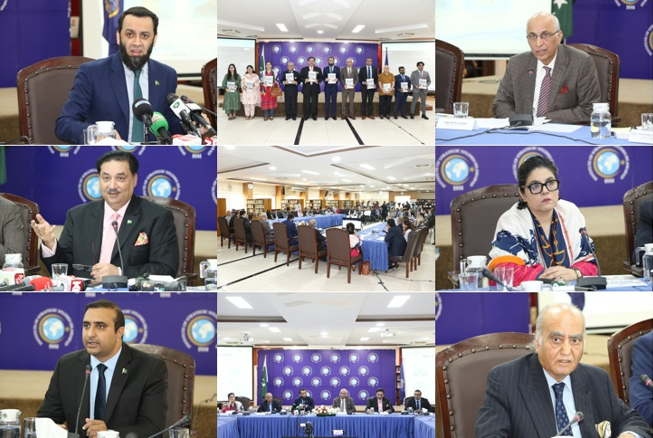
ISLAMABAD: The Indus Waters Treaty (IWT) is a legally binding international agreement that does not provide for unilateral alteration, revocation or suspension by either party, Federal Minister for Information and Broadcasting Attaullah Tarar (Nishan-i-Imtiaz) said at the launch of a special report at the Institute of Strategic Studies Islamabad (ISSI).
Speaking at the launch of the report, “Weaponising Waters: Historical, Legal, and Strategic Dimensions of IWT Suspension,” Tarar said the Treaty contains established mechanisms for addressing differences and disputes between Pakistan and India. He stressed that disagreements should therefore be addressed through the Treaty’s legal and institutional framework rather than through unilateral measures.
Tarar reaffirmed Pakistan’s position that it would continue pursuing the matter through diplomatic and legal channels and defend its water rights in accordance with international law. His remarks reflected the position of the Government of Pakistan, which has maintained that India’s 2025 decision to place the Treaty in abeyance has no legal basis under the agreement. Eng. Khurram Dastgir-Khan (HI), former Federal Minister for Foreign Affairs and Defence, described developments surrounding the Treaty as a serious strategic concern for Pakistan. He argued that the issue extends beyond individual hydropower projects and has broader implications for the country’s water security.
He highlighted the importance of the Western Rivers to Pakistan and stressed that the potential impact on communities and the national economy should be considered not only as a bilateral diplomatic matter but also in the context of Pakistan’s broader strategic and economic security. Prof. Dr. Arshi Saleem Hashmi, Dean of the Faculty of Contemporary Studies (FCS) at National Defence University Islamabad, described the Indus Waters Treaty as a notable example of sustained water diplomacy between Pakistan and India.
She noted that the Treaty continued to function through periods of war and intense political tensions, while water management was historically kept separate from wider political and territorial disputes.
She cautioned that disruption of established water-management arrangements could have significant implications for Pakistan’s agriculture and food security, as well as for regional stability. ISSI research has similarly highlighted concerns about the implications of the Treaty’s current status for transboundary water governance and regional security.
ISSI Report Examines Historical, Legal and Strategic Dimensions
The participants appreciated the India Study Centre at ISSI for preparing the comprehensive report, which examines the Indus Waters Treaty from historical, legal, technical and strategic perspectives.
The discussion underscored the importance of maintaining established legal mechanisms for transboundary water cooperation and addressing differences through diplomacy, international law and institutional dialogue.
BY: The Times Union