- IPRI Seminar Highlights Legal Reform, Institutional Capacity and Growing Mediation Potential as Key to Attracting International Arbitration
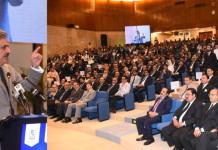
ISLAMABAD: The Islamabad Policy Research Institute (IPRI) convened a high-level seminar titled “Can Pakistan Become a Seat of International Dispute Resolution?”, bringing together senior jurists, leading advocates and arbitration specialists to assess Pakistan’s prospects of emerging as a credible venue for international arbitration and mediation.
The panel concluded that Pakistan has a genuine opportunity to develop into an international dispute-resolution hub, but achieving that ambition will require sustained legal, judicial and institutional reforms, alongside significant investment in professional capacity and international confidence over the next decade.
Growing Trade and Investment Underscore Need for Domestic Arbitration Capacity
Opening the seminar, the President of IPRI observed that Pakistan’s expanding trade and investment activity, particularly through major initiatives such as the China-Pakistan Economic Corridor (CPEC), has increased the importance of efficient mechanisms for resolving commercial disputes.
Despite the country’s growing economic engagement with international partners, many commercial disputes involving Pakistani parties continue to be resolved in established arbitration centres abroad, including London, Singapore and Dubai. This, he noted, leaves Pakistan primarily a consumer rather than a provider of international arbitration services, resulting in substantial costs in terms of finances, time and institutional confidence.
He pointed out that international arbitration can involve costs running into millions of pounds or dollars, underscoring the economic value of developing a competitive dispute-resolution ecosystem within Pakistan.
The President also highlighted Pakistan’s emerging role in international mediation, including its hosting of diplomatic engagements between the United States and Iran in Islamabad, as evidence of the country’s growing credibility as a venue for sensitive international dialogue. He suggested that this diplomatic experience could provide a foundation for expanding Pakistan’s role into commercial mediation and dispute resolution.
Strong Legal Foundations Already in Place
Speakers at the seminar noted that Pakistan already possesses several important building blocks required to establish itself as an international arbitration destination.
Pakistan is a party to the New York Convention, providing an internationally recognized framework for the enforcement of arbitral awards. The country’s courts have also increasingly demonstrated a pro-enforcement approach towards foreign arbitral awards, strengthening the legal environment for international arbitration.
Panelists further highlighted the significant growth in Pakistani arbitration jurisprudence. While the country’s arbitration framework continues to rely substantially on the Arbitration Act of 1940, reported arbitration-related judgments have increased considerably in recent years.
According to observations shared during the seminar, the number of reported judgments has risen from around 56 two years ago to approximately 120, with nearly 60 judgments delivered during the past two years alone. The trend reflects growing judicial engagement with arbitration-related issues and the development of a more substantial body of case law.
Mediation Offers Additional Opportunity
The seminar also examined Pakistan’s potential in the field of mediation. Speakers noted that Pakistan is among a small group of countries with a mandatory mediation framework, providing an important institutional foundation for the expansion of alternative dispute resolution.
The financial impact of successful mediation was also highlighted, with examples cited of settlements that have generated substantial savings for the public exchequer. These included settlements involving independent power producers reportedly exceeding Rs1 trillion, as well as a recent $6.6 billion refinery upgrade agreement.
Panelists argued that such experiences demonstrate the potential of mediation to reduce litigation costs, accelerate settlements and create greater certainty for investors and commercial partners.
International Credibility Remains the Biggest Challenge
While the prospects were viewed positively, speakers also sounded a note of caution, stressing that becoming an internationally respected arbitration seat cannot be achieved through legislation alone.
Comparative experiences from other countries were discussed to illustrate the challenge. Arbitration centres established in Kenya, Rwanda and Egypt have continued to handle predominantly domestic disputes despite the passage of years since their establishment.
The experience of Egypt was particularly cited, where international participation in arbitrator appointments has remained relatively limited even after decades of operating an arbitration centre.
A 2025 survey of African arbitration practitioners was also referenced during the discussion. The survey reportedly found that around 60 percent of respondents continued to prefer London as an arbitration seat, while approximately 18 percent selected Singapore. No African seat was selected by respondents in the survey.
The findings underscored the importance of building international confidence. Panelists noted that a successful arbitration seat must demonstrate, over time, strong enforcement, judicial independence, neutrality, impartiality, procedural efficiency and institutional reliability.
Pakistan’s Arbitration Capacity Expanding
The seminar highlighted encouraging developments in Pakistan’s professional arbitration community.
According to speakers, Pakistan’s pool of qualified arbitration professionals has expanded significantly, with the number of fellows associated with the Chartered Institute of Arbitrators reportedly approaching 100, compared with only around six to eight two years ago.
For comparison, Singapore was cited as having approximately 150 fellows, while the UAE and India were reported to have around 39 and 42 respectively.
The growth in Pakistan’s arbitration professionals was described as an important step towards creating the human capital required to support a competitive international dispute-resolution industry.
Three Major Legislative Initiatives in the Pipeline
The panel also drew attention to three significant legislative initiatives currently in the pipeline that could strengthen Pakistan’s alternative dispute-resolution framework.
These include:
- Legislation to implement the Singapore Convention on Mediation;
- A new arbitration bill based on the UNCITRAL Model Law; and
- Proposed commercial courts legislation aimed at improving the resolution of business and investment disputes.
Speakers stressed that effective implementation of these reforms, rather than legislation alone, would be critical to establishing Pakistan’s credibility among international investors, corporations and arbitration practitioners.
A Decade of Coordinated Reform Could Transform Pakistan’s Position
The overall consensus emerging from the seminar was that Pakistan can realistically aspire to become a seat of international arbitration and mediation, provided it pursues the objective through a sustained and coordinated national strategy.
Pakistan’s comparatively lower costs, expanding pool of arbitration professionals, growing commercial activity, existing international legal commitments and increasing diplomatic engagement could provide the country with important advantages.
However, panelists emphasized that international arbitration markets are built on trust and reputation, which cannot be created overnight.
The seminar concluded that with consistent judicial and legislative reform, stronger arbitration institutions, enhanced professional capacity, greater international engagement and a firm commitment to neutrality and enforcement, Pakistan could, over the course of the next decade, position itself as a competitive and credible destination for international dispute resolution.
BY: The Times Union