- President Tokayev Proposes New Initiatives on Security, Trade, Transport Connectivity, AI and Institutional Reform
BISHKEK: President of Kazakhstan Kassym-Jomart Tokayev has called for stronger cooperation among members of the Shanghai Cooperation Organization (SCO), stressing the need for greater mutual trust, economic integration and coordinated responses to emerging security and technological challenges amid a rapidly changing global order.
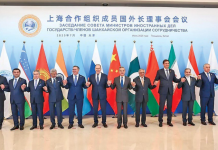
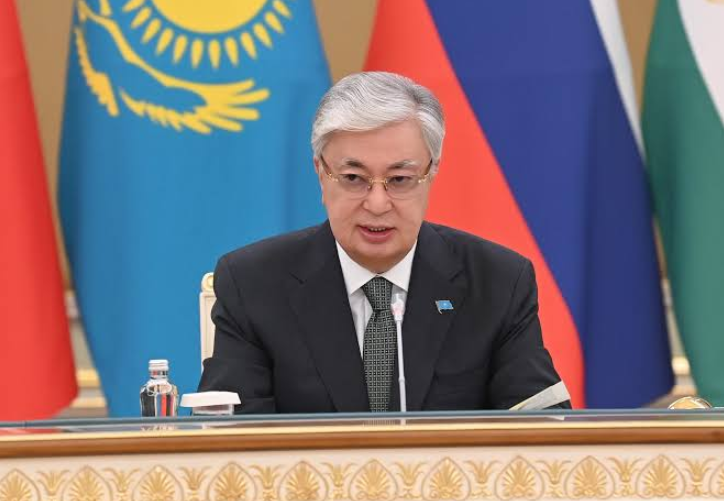
President Tokayev made the remarks while participating in a meeting of the Council of Heads of State of the Shanghai Cooperation Organization, hosted by Kyrgyzstan.
At the outset, the Kazakh President expressed gratitude to Kyrgyz President Sadyr Japarov and the Kyrgyz people for their warm hospitality and the effective organisation of the SCO summit.
He also congratulated the presidents and peoples of Kyrgyzstan and Uzbekistan on the 35th anniversaries of their independence, describing the occasions as historically significant for the region.
SCO Has Become a Major Eurasian Platform
President Tokayev noted that over the past quarter-century, the SCO had evolved from the original “Shanghai Five” into a major international organisation spanning much of Eurasia and representing almost half of the world’s population.
He said the organisation’s strength lay in bringing together countries with diverse political, economic and cultural backgrounds while maintaining common principles of sovereignty, non-interference, mutual trust, openness and cooperation.
According to Tokayev, the SCO’s distinctive character has become increasingly important amid growing geopolitical competition and fragmentation.
He emphasised that the organisation operates outside the framework of military-political blocs and is not directed against any country, but is instead guided by the “Shanghai Spirit” and the shared objective of promoting peace, stability and development.
“Our main goal is to build a strong and prosperous SCO community,” he said.
Kazakhstan Praises Kyrgyzstan’s SCO Chairmanship
President Tokayev commended Kyrgyzstan for its successful chairmanship of the organisation, saying Kazakhstan highly valued Bishkek’s efforts to strengthen SCO unity and unlock its broader potential.
He expressed confidence that the outcomes of the summit would further enhance the organisation’s international standing, improve the effectiveness of its activities and help define strategic priorities in response to changing global realities.
Stronger Security Cooperation Urged
A key focus of Tokayev’s address was the need to strengthen security cooperation and mutual confidence among SCO members.
He proposed convening an SCO Ministerial Conference on Strategic Stability and Confidence-Building Measures in Eurasia, with a possible agenda covering the reduction of military risks, prevention of a new arms race and measures to avoid dangerous incidents.
He warned that the consequences of armed conflicts were increasingly extending beyond conflict zones, affecting international markets, commercial shipping and the resilience of global energy and transport networks.
Tokayev also stressed that traditional security threats—including terrorism, extremism and separatism—remain pressing challenges.
He highlighted their growing links with transnational organised crime, drug trafficking, illicit arms trade and cyber threats, and expressed Kazakhstan’s support for the proposed Universal Centre for Countering Security Challenges and Threats and the SCO Anti-Drug Centre.
Kazakhstan Advocates Greater SCO Economic Integration
President Tokayev identified trade, investment and economic cooperation as strategic priorities for the organisation.
He noted that mutual trade among SCO member states was approaching US$1 trillion, but argued that economic integration had yet to reach its full potential.
Kazakhstan, he said, supports the development of a broad SCO trade and investment space characterised by fewer barriers, digitalised procedures and stronger transport and logistics connectivity.
He proposed establishing pilot industrial consortia that would allow willing member states to launch joint projects without waiting for all SCO members to participate. Successful initiatives could subsequently be expanded across the organisation.
Proposal for SCO Cross-Border Trade Zones and Development Bank
Tokayev also proposed establishing SCO cross-border trade zones based on existing border cooperation centres.
Such zones, he said, could serve as platforms for testing simplified trade procedures, digital transactions and modern settlement mechanisms.
He further expressed Kazakhstan’s support for China’s proposal to establish an SCO Development Bank, saying its resources should primarily finance infrastructure, technological and industrial projects.
Subject to consensus among member states, Tokayev said Kazakhstan would be prepared to host the institution and its headquarters.
Kazakhstan Promotes Eurasian Transport Connectivity
The Kazakh President called for accelerated development of a modern transport and logistics network across Eurasia, describing the geographic connectivity of SCO members as one of the organisation’s major strategic advantages.
He highlighted the importance of linking the Belt and Road Initiative, the Trans-Caspian International Transport Route, the North-South Corridor and emerging trade routes connecting Central and South Asia.
Kazakhstan, he said, was ready to contribute to advancing transport initiatives across the SCO.
Tokayev also proposed greater digitalisation of customs procedures, mutual recognition of electronic documents and wider use of “green corridors” to facilitate trade.
Among his key proposals was the creation of a Unified SCO Digital Transit Platform to enable seamless movement and tracking of cargo from origin to destination.
He further called for the development of an SCO Transport Connectivity Strategy through 2035.
AI and Digital Technologies Identified as Future Priorities
President Tokayev also placed strong emphasis on technological development, particularly artificial intelligence.
He said the rapid advancement of AI and digital technologies required SCO countries not only to adapt to technological change but also to jointly develop future-oriented solutions.
Given the scientific and innovative potential of SCO members, he encouraged greater cooperation in technology development, research and skills enhancement.
Kazakhstan proposed establishing a Network of Artificial Intelligence Centres under the auspices of the SCO, bringing together leading universities, research institutions and technology companies from member states.
Tokayev said such a network could help transform the SCO from a platform for exchanging experience into a mechanism for jointly developing advanced technologies and strengthening national AI capabilities.
Kazakhstan Calls for SCO Institutional Reform
The Kazakh President also highlighted the need to modernise and reform the SCO to ensure that the organisation remains effective and responsive to emerging global challenges.
He proposed assigning the task of developing reform proposals to the foreign ministries of SCO member states.
Concluding his remarks, Tokayev reaffirmed Kazakhstan’s readiness to strengthen its multifaceted cooperation within the SCO and called for greater solidarity and mutual trust among member states.
He said Kazakhstan was prepared to work with its partners to take the organisation’s cooperation to a “qualitatively new level” and contribute to building a stronger, more prosperous and increasingly connected Eurasian community.
BY: The Times Union