- US-backed plan links Israeli withdrawal to phased disarmament of Hamas and other armed groups as negotiations remain deadlocked
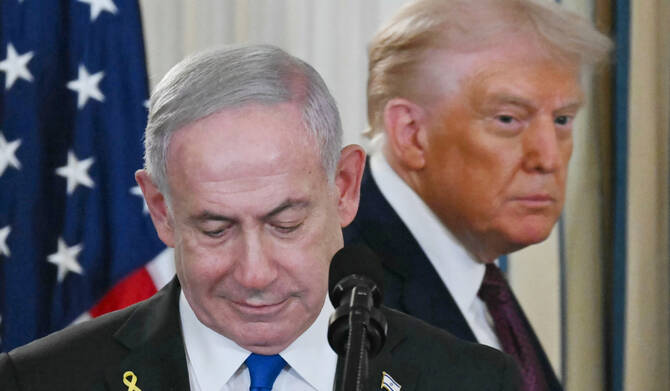
JERUSALEM: US President Donald Trump’s latest initiative to end the war in Gaza has encountered a major obstacle, with Israel and Hamas divided over the sequencing of a proposed ceasefire and the disarmament of Palestinian armed groups.
The US-backed roadmap calls for Hamas and other militant factions to surrender their weapons as Israel withdraws from the Gaza Strip. While Hamas has endorsed the framework, Israel has rejected key elements, insisting that its forces will not fully withdraw until the disarmament process has been completed.
What Is Trump’s Latest Gaza Plan?
On July 30, Trump described the latest developments as a breakthrough in efforts to advance a ceasefire framework first presented in 2025.
According to the US president, Hamas and other armed groups had accepted a 15-point roadmap developed by his so-called Board of Peace, including provisions aimed at ending the conflict and removing weapons from Gaza.
The earlier ceasefire framework helped reduce the intensity of fighting but failed to achieve a comprehensive end to Israeli military operations or secure the disarmament of Hamas and other armed factions.
Months of negotiations between the Board of Peace and Hamas in Cairo have focused largely on resolving those outstanding issues.
Under the proposed roadmap, Israel would gradually withdraw from Gaza, while the devastated territory would undergo reconstruction under a new US-backed Palestinian technocratic administration.
Key Elements of the Gaza Roadmap
The plan calls for an immediate cessation of “all military operations” in Gaza and establishes a phased process linking Israeli military withdrawal to the disarmament of armed groups.
A new civilian administration, known as the National Committee for the Administration of Gaza, would assume responsibility for governance and oversee efforts to remove and secure heavy weapons, weapons-production facilities, military depots and tunnels.
The roadmap also proposes the deployment of an International Stabilization Force (ISF) to areas vacated by Israeli troops.
The proposed force would help maintain security, train Palestinian police units and facilitate the delivery of humanitarian assistance.
Situation on the Ground Remains Fragile
Israel has reduced the intensity of its military operations in Gaza since Trump announced the latest initiative. Israeli officials have said the military would continue responding to immediate security threats but would no longer conduct targeted assassinations under the new approach.
However, Gaza health authorities say Israeli air strikes continued on an almost daily basis following the October 2025 truce, killing more than 1,200 Palestinians, most of them civilians.
Four Israeli soldiers were also killed by Palestinian militants during the same period, while Hamas does not publicly disclose figures for its military casualties.
Israel maintains that its military actions have been directed at threats to its forces and individuals involved in the Hamas-led attacks that triggered the wider conflict in 2023.
Israeli Forces Still Control Large Parts of Gaza
The October ceasefire left Israeli forces controlling more than half of Gaza, with that area later expanding to roughly two-thirds of the territory.
Israeli forces have demolished structures, targeted Hamas tunnel networks and ordered residents to leave areas under military control.
With much of Gaza inaccessible or under Israeli control, the territory’s population of nearly two million people remains concentrated in a relatively small coastal area, where many live in makeshift shelters or damaged buildings.
Meanwhile, preparations for a potential international stabilization mission are reportedly under way.
The Board of Peace has established a base in Israel near the Kerem Shalom crossing, which could serve as a logistics and staging centre for international forces if the ISF is eventually deployed.
International Stabilization Force Still Months Away
Diplomatic sources say deployment of the proposed stabilization force could still be months away.
So far, Morocco and Uganda have pledged troops, while Kosovo, Albania and Kazakhstan have committed military planners and medical personnel.
Indonesia, which had previously expressed willingness to deploy thousands of personnel for medical and reconstruction missions, has said its discussions are currently on hold.
Israel Rejects Withdrawal Before Disarmament
Israeli Prime Minister Benjamin Netanyahu said Sunday that Trump’s latest proposal was unacceptable in its current form, although he confirmed that Israel was continuing discussions with Washington.
Netanyahu reiterated Israel’s position that its forces would not withdraw completely from Gaza until Hamas and other armed groups had been disarmed.
Hamas, meanwhile, has endorsed the roadmap but objected to subsequent statements by the Board of Peace suggesting that the group would be required to surrender even light weapons, including firearms, before Israel completed its withdrawal.
Disarmament and Withdrawal to Be Phased
The roadmap envisages a phased process in which disarmament and Israeli withdrawal would proceed sector by sector.
Nickolay Mladenov, the Board of Peace’s Gaza envoy, said the process would be implemented gradually, with individual areas being assessed and verified before Israeli forces withdraw.
Under the proposed arrangement, once a designated area is confirmed to be effectively free of weapons and arms have been secured and rendered unusable, Israeli forces would withdraw from that sector. The process would eventually lead to a complete Israeli withdrawal from Gaza.
Hamas, however, maintains that it is bound by the original roadmap, which provides 14 days for the parties to establish a timetable for disarmament. The deadline can reportedly be extended, and Mladenov said negotiations over the issue remain ongoing.
Major Challenges Remain
The dispute over the sequencing of disarmament and Israeli withdrawal remains one of the most difficult obstacles to implementing Trump’s Gaza initiative.
While the roadmap provides a framework for a ceasefire, reconstruction, Palestinian civilian administration and international security arrangements, its success will depend on whether Israel and Hamas can reach agreement on the timing and verification of disarmament.
For now, negotiations remain active, but the disagreement highlights the significant political and security challenges facing efforts to achieve a lasting end to the Gaza conflict.
BY: The Times Union