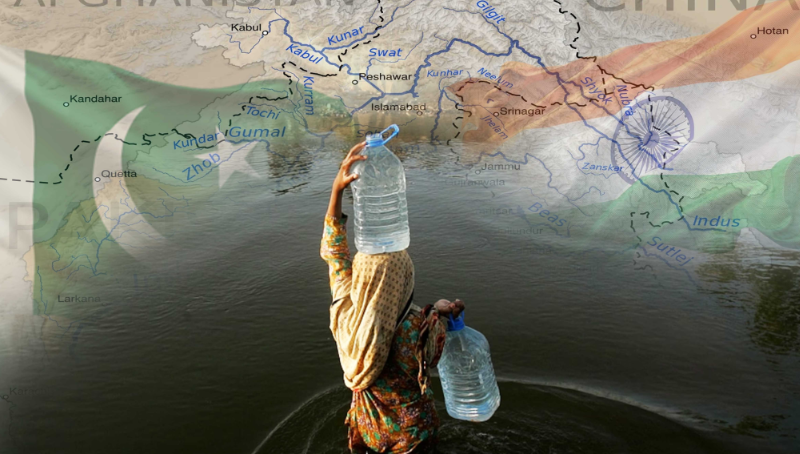
Indus Waters Treaty survived through 1965, 1971 and even the Kargil conflict of 1999. Armies fought, cease-fires broke down, diplomacy failed, but representatives of both nations kept attending Permanent Indus Commission (PIC) meetings, continued exchanging hydrological data and respected the water rights distribution negotiated by Nehru and Ayub Khan back in 1960. This was the only example for sixty five years to show that India and Pakistan can keep something functional while everything else is on fire. Not anymore. And it was not a war which broke the deal. It was a word.
Following the April 2025 attack on tourists in Pahalgam blamed by India on Pakistan, New Delhi declared its decision to put the treaty “in abeyance”. Not to withdraw from the treaty. Not to terminate it. Paused indefinitely with no terms for coming back. India ceased the exchange of hydrological data regarding western rivers, sped up the construction of the Chenab-Beas Link Tunnel and started flushing sediment at Baglihar, Salal and Dulhasti power plants while claiming that nothing has changed in the treaty itself. Just “on hold”.
This difference; “abeyance” versus termination of the treaty, it is not a technicality. It is the whole story.
Wars have their off-ramps, they come with recognized exits, either ceasefires, armistices, peace settlements or mediation, with specific terms attached. Treaties usually are designed in a similar way, with specific clauses providing for exit; termination or suspension, and consequences of such an exit for the parties. The term abeyance is somewhat similar to suspension, as there is a chance of reversibility. However, the IWT lacks both the clause of abeyance and any unilateral exit option. India positions itself within a status category which is not even mentioned in the text of the treaty. After the decision of the Permanent Court of Arbitration in June 2025 declaring unilateral abeyance as a non-status under the treaty and reinforcing Pakistan’s water rights, thus not affecting the court jurisdiction on the issue, India did not propose any alternative framework for the interpretation of the issue or its legal reasoning, but rejected the very legitimacy of the tribunal and continued acting as if the matter was settled. The second decision of the tribunal in May 2026 suffered the same fate.
Nevertheless, it is even worse than outright war and withdrawal would be, not better. The trap here is a status with no inherent exit clause. It is structured in a way that it favors a country who already holds physical advantage, making it assymetrically convenient for India, while leaving Pakistan to cost everything.
India enjoys water leverage as the country is an upstream state, controlling the headwaters, hence having an upper hand when it comes to weaponizing water against Pakistan. Pakistan in contrary, has to bear the uncertainty of not knowing how much water it will have, or when, making military deterrence a vital instrument of securing its strategic interests, being the lower riparian. Pakistan claims innocence in regard to the Pahalgam attack, which became the core reason behind the “abeyance”. The entire essence of the IWT was that it did not need the two nations to have friendly relations; all it needed was for the two parties to accept the fact that water can be separated from politics.
It is important to note that this precedent will affect countries all over the world in the longer run. Every upper riparian state has been shown a way to gain influence over a lower riparian neighbor, in the most unfair manner. IWT for a long period of time has proved that water sharing agreements are able to survive regardless of political relations and allowing unilateral, indefinite suspension without any consequences may make other countries behave the same way.
The trap works mainly because the term “abeyance” is undefined by India, Pakistan should demand for clarity of the term in the first place rather than restoration of the treaty. Pressure from the World Bank, the UN or other credible mediators might fix the case to get India to state, formally, what conditions would end the suspension. Alongside this, even if the diplomatic relations between the two countries remain unstable, there is still no technical reason that sharing hydrological data is stopped. Moreover, this act of India is a call for international legal bodies to pursue proper enforcement mechanisms as this is a violation of International law.
Two states brought the treaty into force for the purpose of making sure that in the future, water would not become a hostage to politics; yet today, that very agreement is put to test. The real test however, is not whether the treaty can survive a crisis or not, as it has already proved that it is able to survive several of them. It’s whether an agreement can survive being left deliberately undefined by the state with enough power to do it. The answer will not only impact the future of this agreement but also the future of cooperative water governance elsewhere.

Disclaimer: Views expressed by writers in this section are their own and do not necessarily reflect The Times Union‘ point of view