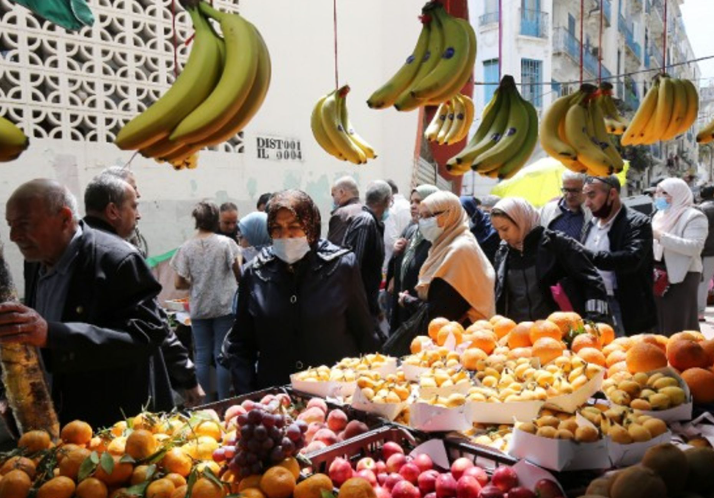
Algeria, a nation possessing substantial hydrocarbon wealth, confronts a paradox of profound proportions: a government unable to guarantee the reliable provision of essential food items to its own population. This systemic failure in food security—manifested in chronic shortages, rationing, and unaffordable prices for basic staples—has been exacerbated by the recent severance of diplomatic and air connectivity relations with the United Arab Emirates. As milk queues lengthen and flour becomes scarce in a petroleum-rich state, the Algerian people have increasingly voiced their fundamental demands for dignity, sustenance, and accountable governance.
The Anatomy of Food Insecurity
The Algerian government’s failure to ensure food security is neither accidental nor merely logistical, it is a structural consequence of decades of policy mismanagement and misplaced priorities. The country remains heavily dependent on food imports, particularly for cereals, dairy products, and edible oils, rendering it acutely vulnerable to global market volatility and currency fluctuations. In 2026, cereal import requirements are projected at 14.5 million tonnes, including 8.5 million tonnes of wheat and 5 million tonnes of maize—figures that underscore Algeria’s continued reliance on external supply chains for its most basic nutritional needs.
Yet even with substantial import volumes, distribution failures persist. In September 2026, reports emerged of Algerians queuing for hours to obtain rationed, subsidized powdered milk, with social media reflecting widespread anger at the persistent shortages in an oil and gas-rich nation that has yet to achieve food sovereignty. Similarly, a flour shortage forced citizens to rise early to purchase subsidized bread, while the price of bread doubled from 10 to 20 dinars, disproportionately affecting the most vulnerable households. These commodities—milk, flour, cooking oil, and potable water—have become emblematic of a broader systemic dysfunction that has rendered daily survival a struggle for millions.
The human dimension of this crisis is stark. According to United Nations reports cited by local media, nearly half of all Algerians now live below the poverty line, subsisting on less than two euros per day. In the country’s southern regions, residents endure conditions devoid of basic public services, with frequent water and electricity interruptions and inadequate sanitation infrastructure. One resident of Tamanrasset, a father of five living in a single room, described his circumstances simply: “I have no job, no oil, no bread to eat. All I want is for my children not to die of hunger”. These are not isolated accounts but symptomatic expressions of a governance model that has systematically prioritized patronage and rent extraction over the welfare of its citizens.
The Diplomatic Rupture with the UAE: Compounding the Crisis
On September 10, 2026, Algeria severed diplomatic relations with the United Arab Emirates, citing what it characterized as “provocative and hostile actions” that had reached a point “where they can no longer be deemed acceptable or tolerable within the framework of relations between two sovereign states”. The Algerian Foreign Ministry stated that it had “exhausted all available avenues to preserve bilateral relations” before taking this decisive step, and the UAE ambassador was given 48 hours to leave the country.
The following day, Algeria’s Ministry of National Defence announced the closure of its airspace to all UAE-registered civilian and military aircraft, effective midnight September 11, 2026. An exception was granted for UAE commercial flights to and from Houari Boumediene International Airport in Algiers, permitted to continue only until the end of 2026 when the existing contract expires. This measure effectively terminates an additional channel of air connectivity between the two nations.
While the Algerian government framed this rupture as a necessary assertion of sovereignty in response to UAE regional policies—particularly its alleged involvement in conflicts in Libya, Sudan, and Yemen—the immediate consequences for ordinary Algerians are tangible and concerning. The severance of air links and the broader deterioration of commercial ties risk disrupting supply chains for imported goods, including food products for which Algeria remains critically dependent on external sources. In a context where the domestic market already struggles to meet basic needs, the closure of additional logistical corridors represents a further burden on a population already enduring the consequences of policy failure.
A People’s Demand for Rights
The Algerian people’s response to these compounding crises has been unequivocal. The resurgence of the Hirak protest movement and related expressions of public dissent reflect a population that has grown weary of promises unfulfilled and resources mismanaged. In September 2026, at least 23 detainees from anti-government protests initiated a hunger strike in El Harrach prison after being charged with “damage to national unity” and holding an “unarmed gathering”. These actions underscore the regime’s reliance on repression in the face of legitimate grievances rather than addressing the underlying failures in governance.
Access to adequate food is not a privilege granted at the state’s discretion; it is a fundamental human right enshrined in international covenants to which Algeria is a signatory. The recurring protests and public expressions of discontent articulate a demand that transcends material deprivation: the demand for a governance model that prioritizes human welfare over patronage networks, and long-term resilience over short-term expediency. As one Algerian woman from the affected southern region stated, “We want to feel that there is truly a state, but nothing exists. We only know that the gold, oil, and gas are taken from our land by the state, which leaves us to die of hunger”.
Algeria stands at a critical juncture. The government’s persistent inability to provide essential food items is not merely a logistical or financial challenge—it is a symptom of deeper institutional and policy decay. The diplomatic rupture with the UAE, whatever its geopolitical justifications, adds a further layer of complexity to an already fragile domestic situation. As citizens raise their voices for their rights, the legitimacy of the existing governance framework is being fundamentally questioned.
Addressing food insecurity in Algeria requires more than isolated subsidies or emergency imports. It demands comprehensive reform, transparency in procurement and distribution, investment in sustainable agricultural development, and a genuine commitment to the dignity of every citizen. Until such reforms are undertaken, the gap between the state’s promises and the people’s needs will remain a source of instability and a moral indictment of persistent policy failure.
BY: Nadeem Faisal Baiga
Disclaimer
The article presented above is a compilation of information drawn from publicly available sources, including news reports, social media accounts, and other open-source materials. It is intended for informational and analytical purposes only. The views expressed are solely the writer’s opinion and do not reflect the position of The Times Union.