- Joint appeal calls for resumption of trade, transport links, diplomatic engagement and people-to-people exchanges amid prolonged tensions
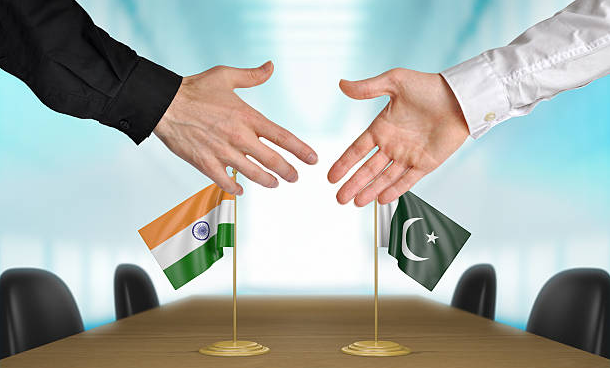
ISLAMABAD: More than 100 prominent politicians, former diplomats and civil society leaders from India and Pakistan have jointly appealed to Prime Ministers Narendra Modi and Shehbaz Sharif to restore diplomatic engagement and take meaningful steps toward normalising relations between the two nuclear-armed neighbours.
The open letter, signed by 116 individuals — 61 from India and 55 from Pakistan — comes at a time of continued strain in bilateral relations and urges both governments to resume dialogue, reopen trade and transport links, and expand people-to-people contacts to foster regional stability and prosperity.
Among the signatories are former Jammu and Kashmir chief ministers Farooq Abdullah and Mehbooba Mufti, former Research and Analysis Wing (RAW) chief A.S. Dulat, Rajya Sabha member Manoj Jha, former Pakistani diplomat Ashraf Jehangir Qazi, Hurriyat leader Mirwaiz Umar Farooq, former Indian minister Mani Shankar Aiyar and former Pakistani foreign minister Khurshid Mahmud Kasuri.
The letter calls for the restoration of full diplomatic relations, including the reinstatement of high commissioners, the resumption of regular visa services and the revival of a comprehensive bilateral dialogue process covering all outstanding issues between the two countries.
It also advocates reopening trade channels and restoring normal commercial ties, including the revival of the Most Favoured Nation (MFN) framework or an equivalent non-discriminatory trade arrangement, as well as reopening the Attari-Wagah land border for trade and travel.
The signatories further urged the two governments to restart major transport links that have long served as symbols of cross-border connectivity, including the Delhi-Lahore bus service, the Srinagar-Muzaffarabad bus route, the Samjhauta Express and the Thar Express. They also called for opening the Kargil-Skardu route and restoring commercial overflight rights.
In addition, the appeal seeks the reopening of the Kartarpur Sahib Corridor, access to Sharada Peeth for pilgrims, and the easing of travel restrictions to facilitate greater interaction among students, journalists, artists, academics and business communities. The letter also calls for lifting restrictions on media organisations and digital platforms to encourage greater public engagement.
“The future of South Asia should be shaped not by division and conflict, but by peace, prosperity and shared progress,” the letter stated.
The signatories emphasised that their initiative was “not an endorsement of any political position” but rather an appeal to prioritise the welfare and aspirations of nearly two billion people living in the region over “conflict, confrontation and division.”
Highlighting the demographic importance of both countries, the letter noted that India and Pakistan together account for almost one-fifth of the world’s population, with a significant proportion comprising young people whose opportunities and future prosperity are affected by persistent hostility.
The initiative was coordinated by O.P. Shah, chairman of the Centre for Peace and Progress. In the letter, dated June 30, the participants urged both governments to undertake “meaningful and sustained steps towards restoring peace, normalcy, dialogue and cooperation in South Asia,” stressing that “sustained engagement and dialogue remain the only viable path to resolving differences.”
The appeal also called for discussions on Jammu and Kashmir, including revisiting the framework negotiated between 2004 and 2007, while pursuing measures aimed at demilitarisation and de-escalation that address the legitimate security concerns of both nations.
Concluding their message, the signatories urged New Delhi and Islamabad to choose engagement over isolation, dialogue over hostility and cooperation over confrontation, arguing that improved India-Pakistan relations are essential for lasting peace, economic growth and regional integration across South Asia.
BY: The Times Union – ANI