- CENTCOM Says Drones Threatened International Maritime Traffic
WASHINGTON: The US military said Saturday that its forces in the Middle East shot down two Iranian attack drones that were allegedly threatening commercial shipping traffic in the strategic Strait of Hormuz, marking the latest escalation in the ongoing confrontation between Washington and Tehran.
The United States Central Command (CENTCOM) said in a statement on its official X account that the drones were intercepted after they posed a threat to international maritime operations in one of the world’s most important energy routes.
“Earlier today, US forces in the Middle East shot down two Iranian one-way attack drones that threatened international maritime traffic in the Strait of Hormuz,” CENTCOM said.
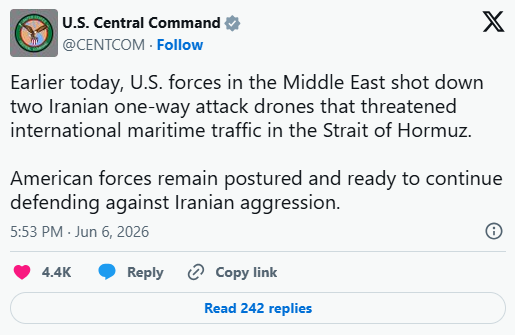
“American forces remain postured and ready to continue defending against Iranian aggression,” it added.
Previous Strikes Target Iranian Drone Capabilities
The latest incident follows another confrontation on Friday, when CENTCOM reported that US forces had destroyed four Iranian attack drones launched toward the Strait of Hormuz.
The US military also said it carried out strikes against Iranian coastal surveillance radar sites, which it described as part of efforts to counter threats to maritime security.
Regional Conflict Intensifies Despite Diplomatic Efforts
The exchange of attacks comes as tensions continue to rise across the Middle East, despite ongoing indirect negotiations between Washington and Tehran aimed at finding a way to end the conflict.
The situation further deteriorated after Iran launched a series of missiles on Saturday targeting US allies Bahrain and Kuwait, adding to fears of a wider regional escalation.
The Strait of Hormuz, a narrow waterway connecting the Persian Gulf with the Gulf of Oman, remains a critical global trade route through which a significant portion of the world’s oil shipments pass.
Security officials have warned that continued military confrontations in the area could disrupt international shipping and increase pressure on global energy markets.
BY: The Times Union