National days are meant to highlight what unites a country: a shared vision, collective values shaped across generations and achievements worth celebrating. They are occasions for unity and camaraderie. This was not the case last week, when Israel marked its 78th independence day.
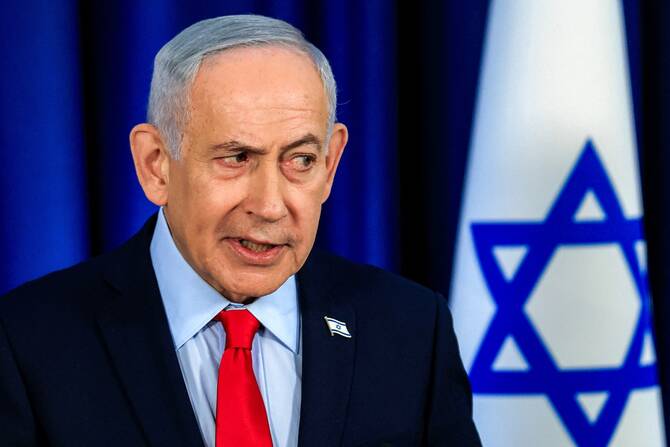
Instead, the day served as a somber reminder that, under the current government, the country is doomed to face the prospect of years of multifront wars with no clear end in sight. At the same time, divisions among different segments of society have deepened at an unprecedented pace, deliberately instigated from the top of the political system by Prime Minister Benjamin Netanyahu.
There is a striking contrast between what Israel could and should be and what it has become. The longer Netanyahu and his ultranationalist, messianic and ultra-Orthodox political allies remain in power, the further the country appears to be steadily drifting away from the vision of its founding fathers. According to Israel’s Declaration of Independence, it should be a Jewish and democratic state coexisting peacefully with its neighbors, where minorities cannot only feel at home but actually be at home — a home where they enjoy full and equal rights.
These goals were never easy to achieve but, under Netanyahu’s leadership, Israel is being steered in the opposite direction, largely in ways that serve his political survival and personal interests.
There is a striking contrast between what Israel could and should be and what it has become
Yossi Mekelberg
In more normal times, Israel’s independence day is marked by large public celebrations, including concerts attended by hundreds of thousands, if not millions, of people. This year, however, the mood was markedly subdued. Many municipalities canceled such concerts and other public events.
Perhaps most symbolic was the controversy surrounding the traditional torch-lighting ceremony, which honors individuals recognized for their contributions to the country. This year, many of those chosen were Netanyahu family loyalists, while others were excluded. This provoked significant public outcry and led to the organization of an alternative “liberal, democratic” torch-lighting ceremony.
As for the official event, instead of focusing on the country and its people, it focused excessively on the prime minister and his wife, with some even drawing comparisons to North Korean-style personality cults, in a style unprecedented in Israel’s history.
This year’s independence day also fell just months before a general election that could prove one of the most consequential in Israel’s history. It may shape not only the country’s political leadership but also its broader trajectory. It could be argued that it is almost impossible to separate Israel’s identity from the conflicts with its neighbors — and even more so with the Palestinians. After all, what for Israel is a celebration of achieving self-determination is, for Palestinians, the time of marking the Nakba, their catastrophe of dispossession, which Israelis refuse to acknowledge.
Yet, beyond the conflict, Israel represents a remarkable historical achievement: the establishment of a homeland for Jewish people, the vast majority of them refugees, and the creation of a state with a highly developed, innovative economy, a vibrant society and one of the most powerful militaries in the world.
Despite these accomplishments, the state has struggled in two critical areas, placing it at significant risk.
First, it has failed to secure lasting peace with several of its neighbors, especially the Palestinians, and instead has perpetuated the conflict by entrenching the occupation with the intention of annexing at least the West Bank, if not Gaza too.
Second, it has not succeeded in building a cohesive and unified society grounded in a shared sense of values, one that sees democracy as important as being Jewish and hence ensures equality for all its citizens. What we are now witnessing is a country developing a siege mentality in its relations with the international community and relying heavily on military strength, which also harms its domestic politics.
The main threat to Israel comes from the internal fractures that have been enhanced and exploited by Netanyahu over the past three decades. Instead of using his position to bridge divides, he has cultivated them to maintain a loyal base of support, even in the face of policy failures and allegations of corruption.
What we are witnessing is a country developing a siege mentality in its relations with the international community
Yossi Mekelberg
As Israel enters its 79th year, it finds itself increasingly entangled in ongoing conflicts. Despite repeated claims by Netanyahu of achieving “total victory,” the reality appears far more complex. The country is engaged in prolonged military confrontations that show little sign of resolution, with no clear diplomatic pathway toward peace.
The trauma of the Oct. 7 attacks continues to weigh heavily on Israeli society. While the scale and brutality of that event have understandably shaped public sentiment, the ongoing cycle of conflict has left little space for reflection or nuanced debate.
Under the current government, dispossessing the Palestinians has become central to Israel’s ideology, in which the grabbing of their lands and talk about forced displacement is common among senior members of the government. This has rightly intensified international criticism and further complicated prospects for peace based on a fair and just solution.
At the same time, concerns about Israel’s democratic institutions have grown. The very foundations of the country’s democracy have been under sustained attack, with tensions between the government and the judiciary ringing alarm bells. Actions such as excluding the president of the Supreme Court from official events or deliberately and publicly undermining the judiciary’s legitimacy have weakened the checks and balances that are fundamental to any liberal democracy.
For Netanyahu, these attacks on democracy represent a cynical attempt to derail his ongoing corruption trial. For others in his coalition government, they represent an ideological stance, ranging from allowing them to introduce more religious legislation to releasing whatever brakes remain on annexing the West Bank and compromising any semblance of good governance.
If Israel’s 79th independence day is to be more hopeful and celebratory than this year’s, significant political change is vital. The upcoming election, which must be held no later than October, offers voters an opportunity to shape the country’s future direction. For this to happen, the opposition will also need to up its game and present a credible alternative to the character of the country and how it engages with the world — an alternative that is diametrically opposite to that of the current government.
BY: Writer Yossi Mekelberg is professor of international relations and an associate fellow of the MENA Program at Chatham House.
Disclaimer: Views expressed by writers in this section are their own and do not necessarily reflect The Times Union‘ point of view