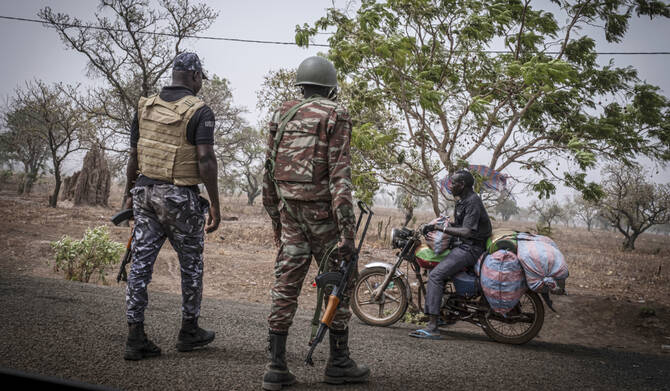
In the Sahel, parched farmland and broken supply routes provoke a familiar crisis of hunger and deprivation. Yet the digital feeds that millions scroll through tell of heroic liberations, or of neocolonial plunder, depending on the channel. A single mining concession signed in Bamako becomes, within hours, a trending hashtag weaponized by anonymous accounts to signal either sovereign dignity or elite betrayal.
Competing versions of reality now outpace the facts on the ground, and in that gap a new form of power operates. Observers have come to call it the Great Distortion: the strategic engineering of perception to supplant genuine development with short-term regime survival.
Africa sits at the center of this distortion because the continent’s resources are indispensable to global supply chains, and its population is among the most connected and youngest in the world. Over 400 million active social media users now generate billions of interactions daily, making African information spaces highly susceptible to manipulation.
The flood of falsehoods is not a nuisance on the margins of geopolitics. It has become a deliberate weapon, one that fractures domestic cohesion, erodes democratic accountability, and enables foreign interests to secure access to strategic assets under terms that would otherwise trigger broad public resistance.
The mechanism is straightforward.
External actors, both state and non-state, package security assistance, private military contractors, and coordinated disinformation campaigns into a single offer. In exchange, they receive mining rights, port access, or diplomatic alignment, often sealed through opaque contracts that never reach parliament.
The ensuing model replaces the postwar logic of aid-for-reform with a new, darker transactional diplomacy. Economic conditionality is sidelined; narrative control takes its place. Regimes that fail to deliver jobs, healthcare, or electricity can nonetheless survive by outsourcing their legitimacy to propaganda farms and botnets — alongside unchecked violence, of course.
As a result, entire political economies end up rewritten by this new dynamic.
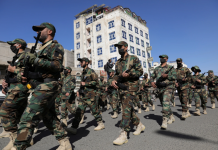
Consider the Sahelian juntas in Mali, Burkina Faso, and Niger. Despite tumbling economic growth, double-digit inflation, and a retreat of public services, these military-led governments have consolidated power. Their durability rests heavily on external guarantors who flood the zone with narratives that reframe coups as corrective revolutions rather than institutional breakdowns.
A “sovereignty trap” emerges from this environment. Governments appear formally independent — new flags, new slogans, a refusal of Western lectures — but their survival depends on foreign forces that supply both kinetic and narrative muscle. Domestic constituencies lose leverage. Policy decisions pivot toward the preferences of security guarantors rather than national development strategies. Over time, the state becomes an empty shell, capable of projecting nationalist bravado online but unable to deliver real sovereignty offline.
The flood of falsehoods has become a deliberate weapon.
Hafed Al-Ghwell
Digital geopolitics also exports global rivalries onto African soil. The war in Ukraine and tensions in the Middle East now cast shadows through African information channels, not primarily through troop movements but through coordinated influence operations. Rival powers use African digital ecosystems as arenas to drain each other’s credibility. They amplify ethnic grievances, religious fault lines, and anti-Western sentiment to distract opponents or spoil peace initiatives.
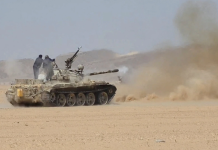
In Sudan, for instance, parallel disinformation campaigns flood social media with claims of battlefield victories and enemy atrocities. The result is a fog of war so thick that humanitarian corridors become impossible to negotiate, and civilians are left choosing between contradictory versions of reality while shells fall on their neighborhoods.
Elsewhere, groups like Boko Haram have learned to set up Facebook pages that pose as independent media, spreading extremist ideology in local languages and using the mistrust sown by state disinformation to recruit disillusioned youth. When citizens no longer believe official sources, the door opens for anyone with an internet connection and a grievance. Ungoverned physical space expands in parallel to the ungovernable information space, creating overlapping zones where neither the state nor the truth holds sway.
Meanwhile, economic costs mount quietly.
Investment decisions depend on perceived stability as much as on geological surveys or market size. When conflicting narratives inflate risk premiums, capital becomes more expensive and infrastructure gaps widen. A continent that holds only 1 percent of global data center capacity yet stores over half of its own data on servers in the US and Europe, is structurally vulnerable to having its digital reality shaped elsewhere.
Yet the picture is not one of passive victimhood.
African agency lies at the heart of the distortion’s persistence. Many political elites find the system convenient. Disinformation provides a buffer against accountability. Governments that cannot deliver roads or schools can instead manufacture enemies, from foreign powers to ethnic rivals, or “neo-colonial” networks, rallying populations via digital outrage.
Moreover, the weaponization of information has become a potent tool wielded by incumbents to delegitimize domestic opposition, silence journalists, and delay elections. In Kenya, for example, “for-hire” disinformation influencers routinely orchestrate targeted harassment of judges and civil-society activists, inducing self-censorship and chilling public scrutiny.
Recalibration begins with clear-eyed transactional partnerships. A growing number of African states are pivoting toward middle powers, particularly from the Gulf and Asia, that offer something different: concrete deliverables with fewer ideological strings. Port expansions in the Horn, renewable energy installations in the Sahel, and food security corridors are being negotiated on measurable outcomes instead of nebulous democratic reform pledges.
Far from charity, these new arrangements are hard bargains, framed around logistics, storage facilities, and generation capacity. The absence of a parallel propaganda apparatus is, in itself, a sign of a less distorted relationship. When a partner does not need to flood your population with flattering narratives, the terms are likely to be clearer.
To conclude, the Great Distortion acts as a hidden tax on Africa’s future. It inflates political risk, misdirects policy priorities, and diverts scarce resources toward information warfare rather than clinic construction or grid expansion. External powers, fighting their own rivalries for global influence, treat African soil as a canvas for their battles. Left unchecked, the distortion will deepen the cycle: fragile economies, captured institutions, and a population adrift in a sea of irreconcilable truths.
Going forward, real sovereignty is not merely about flags, armies, and currencies. It is about the ability to see the world as it is, without foreign filters, and to act on that understanding with precision.
Africa’s position in the global system is up for renegotiation. The lens through which the continent reads the world, and through which the world reads Africa, will determine whether that negotiation yields prosperity or permanent distortion.
BY: Writer Hafed Al-Ghwell is senior fellow and program director at the Stimson Center in Washington and senior fellow at the Center for Conflict and Humanitarian Studies.
Disclaimer: Views expressed by writers in this section are their own and do not necessarily reflect The Times Union‘ point of view