The collapse of the first round of negotiations between the US and Iran, mediated by Pakistan, should have surprised no one. Both parties’ entrenched positions and hard-line rhetoric made meaningful progress unlikely from the outset. This week’s second round of talks is also bound to fail. Bilateral bargaining will not achieve peace. But a comprehensive regional framework just might.
Any viable agreement must achieve two objectives simultaneously. It must lay the groundwork for lasting peace while allowing each side to present the outcome as a success at home. This delicate balance is further complicated by the indirect yet decisive influence of external actors, most notably Israel.
Crucially, the current crisis is driven not by a single dispute but by the convergence of four fault lines: the Strait of Hormuz, Iran’s nuclear program, the absence of a regional security architecture addressing missiles and proxy warfare, and the unresolved Israeli-Palestinian conflict. Progress on any one front is unlikely without parallel movement on the others.
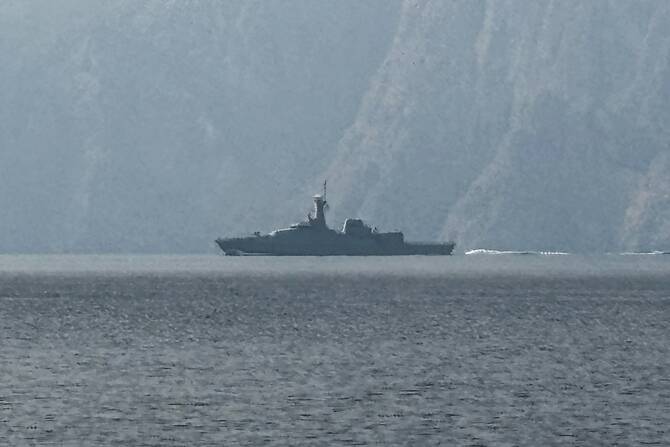
The Strait of Hormuz has emerged as the main focus of the crisis. Iran’s temporary closure of the strait — and the subsequent US naval blockade targeting Iranian ports — highlighted both its vulnerability and the risk of rapid escalation. A more durable solution would involve placing the strait under the temporary administration of a coalition of trusted intermediaries, such as Turkiye, Pakistan, Malaysia and Indonesia. Under clearly defined conditions, they could deploy a joint maritime mission to restore safe passage.
While Iran’s nuclear ambitions remain a major sticking point, a pathway to de-escalation still exists
Ahmet Davutoglu
But such an arrangement would require the US to commit to an immediate end to military operations against Iran, including those conducted in coordination with Israel. Iran, in turn, would need to guarantee maritime security and refrain from attacking its neighbors. The Gulf countries, having been drawn into the war against their will, would have strong incentives to support such a mechanism.
To ensure legitimacy, the initiative must be endorsed by the UN Security Council, with formal backing from its five veto-wielding permanent members. Beyond immediate stabilization, this framework could also pave the way for a longer-term regime governing transit through the strait, including mechanisms to compensate for war-related damages through maritime revenues.
While Iran’s nuclear ambitions remain a major sticking point, a pathway to de-escalation still exists, provided both sides adopt a reciprocal approach. Iran should reaffirm its long-standing commitment not to pursue nuclear weapons and the US should formally recognize the Islamic Republic’s right to peaceful nuclear energy. Such mutual recognition would allow both sides to claim diplomatic success.
The 2010 Tehran Agreement — negotiated by Turkiye and Brazil in cooperation with the International Atomic Energy Agency — offers a useful model. As Turkiye’s foreign minister at the time, I helped mediate the agreement, which required Iran to deposit its enriched uranium in Turkiye in exchange for nuclear fuel for civilian use. An updated version of that arrangement, potentially facilitated again by Turkiye or Pakistan, could provide a promising foundation for renewed negotiations.
Once common ground is established, the focus can shift to creating a region free of nuclear weapons, including those held by Israel, thereby addressing the region’s wider security concerns. While calls for Iran to abandon its ballistic missile capabilities in the aftermath of sustained US-Israeli attacks are not realistic, progress remains possible. The core challenge lies in addressing proxy conflicts and the absence of a shared security framework.
This issue cannot be resolved through bilateral US-Iran negotiations alone. Creating a multilayered regional security architecture requires, first, practical steps to build trust between Iran and the Gulf countries, with Turkiye, Pakistan, Malaysia and Indonesia serving as facilitators. A joint commission could defuse immediate tensions while laying the groundwork for a more permanent arrangement.
The denial of Palestinians’ self-determination remains a fundamental driver of Middle Eastern instability
Ahmet Davutoglu
The second layer is a regional security forum bringing together Turkiye, Pakistan, Egypt, Iraq, Syria, Jordan, Lebanon and Yemen, alongside the Gulf states and Iran. Over time, that process could evolve into a structured regional dialogue, leading to a Middle Eastern equivalent of the 1975 Helsinki Accords.
As in Cold War Europe, a framework grounded in transparency, mutual restraint and verification mechanisms could significantly reduce the risk of escalation. The 1990 Treaty on Conventional Armed Forces in Europe demonstrated that even deeply divided regions can agree on limits to military capabilities when mutual vulnerability is acknowledged.
But any sustainable regional order must address the Palestinian question, as the denial of Palestinians’ self-determination remains a fundamental driver of Middle Eastern instability. Israel’s six-decade occupation of the West Bank — despite repeated UN resolutions — and its ongoing military operations in Gaza have ruled out a stable security environment. Efforts to bypass the conflict, such as the Abraham Accords, have merely fueled resentment.
A new approach is urgently needed. Israel should be offered integration into a regional security architecture, including full diplomatic normalization and formal guarantees, in exchange for recognizing Palestinian statehood and ending its military operations in Lebanon.
US President Donald Trump, who entered his second term hoping to win a Nobel Peace Prize, now faces a consequential choice. He can continue a war that lacks strategic clarity and risks plunging the region — and the world — into deeper chaos or he can seize the opportunity to deliver a diplomatic breakthrough, beginning with a ceasefire and culminating in a durable peace. At the same time, international policymakers should pursue a coordinated diplomatic initiative to steer policy toward de-escalation.
Reviving the Alliance of Civilizations — launched by Turkiye and Spain in 2005 and later institutionalized within the UN — could provide an ideal platform for such an effort. A leaders’ summit convened under its auspices would signal a shared commitment to moving beyond crisis management toward a cooperative regional order. Without a comprehensive approach to security, the current cycle of escalation will persist and intensify.
BY: Ahmet Davutoglu is a former prime minister (2014-16) and foreign minister (2009-14) of Turkiye.
Disclaimer: Views expressed by writers in this section are their own and do not necessarily reflect The Times Union‘ point of view