- Forum Brings Together Policymakers, Diplomats, and Experts to Chart Roadmap for Enhanced Bilateral Cooperation
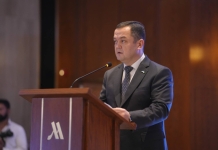
Islamabad — — The Institute of Strategic Studies Islamabad (ISSI), in partnership with the Embassy of the Republic of Kazakhstan, convened a high-level conference titled “Pakistan–Kazakhstan Relations: Post-Visit Reflections and Pathways for Strategic Cooperation” at the Movenpick Hotel, Islamabad. The event marked a significant milestone in the evolving bilateral relationship, serving as the first major institutional follow-up to the historic state visit of Kazakh President Kassym-Jomart Tokayev to Pakistan.
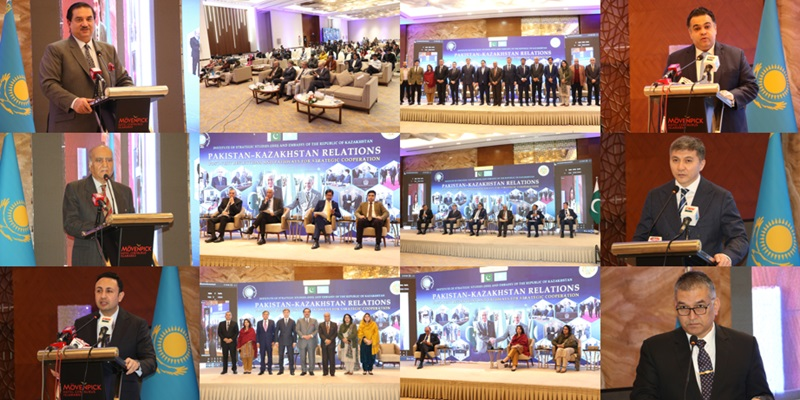
The conference assembled an distinguished cross-section of ambassadors, foreign policy experts, academics, and government officials from both nations to assess the outcomes of the presidential visit and deliberate on actionable strategies for translating high-level political commitments into tangible outcomes across multiple domains of cooperation.
Inaugural Session: Strategic Vision and Institutional Foundations
Ambassador Khalid Mahmood, Chairman of the ISSI Board of Governors, delivered the welcome address, situating Pakistan-Kazakhstan relations within a framework of shared civilizational heritage and converging regional perspectives. He characterized President Tokayev’s February 2026 visit as a transformative moment that formally elevated bilateral ties to the level of strategic partnership.
“This is not merely diplomatic ceremony; it represents a substantive convergence of interests on critical regional issues, including Afghanistan and Jammu and Kashmir, and reflects our mutual commitment to a rules-based international order,” Ambassador Mahmood stated. He identified connectivity, transport corridors, and untapped commercial potential as priority areas, while announcing the signing of a Memorandum of Understanding between ISSI and Kazakhstan’s Foreign Policy Research Institute—a development expected to institutionalize bilateral strategic dialogue.
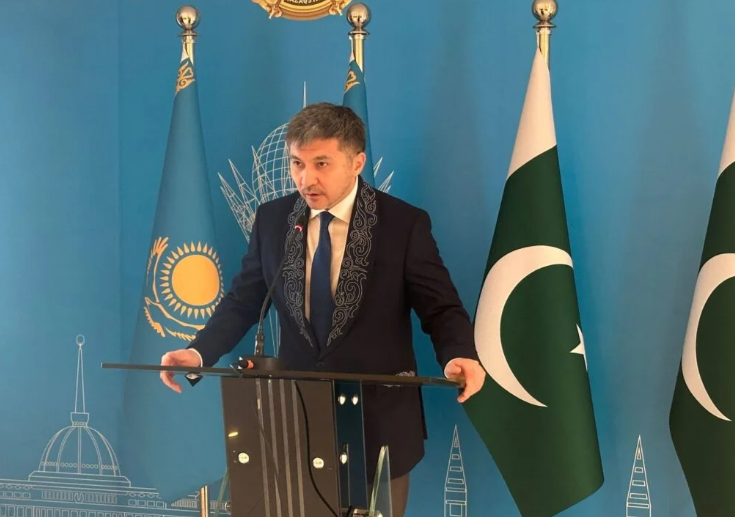
H.E. Yerzhan Kistafin, Ambassador of Kazakhstan to Pakistan, characterized the presidential visit as the commencement of a “new chapter” in bilateral relations. He detailed concrete follow-up measures including the operationalization of the joint declaration on strategic partnership, coordinated cultural and academic programming, and advancing business-to-business linkages. The Ambassador highlighted near-term deliverables including direct air connectivity, the trans-Afghan railway project, and diversified Eurasian transport corridors that position both nations as critical nodes linking South Asia with Eurasia, the Middle East, and Africa.
Dr. Askhat Kessikbayev, Vice President of the Turkic Academy and Guest of Honor, emphasized the civilizational underpinnings of bilateral cooperation. He called for expanded academic partnerships, joint research initiatives addressing sustainable development and water security, and deeper integration within regional frameworks that draw upon shared Turkic heritage.
Prof. Dr. Muhammad Iqbal Choudhary, Coordinator-General of OIC-COMSTECH, commended Kazakhstan’s substantial investments in higher education and scientific research. He advocated for structured academic exchange programs and collaborative research ventures in emerging scientific domains, positioning science diplomacy as a cornerstone of the strategic partnership.
Mr. Fahad Haroon, Special Assistant to the Prime Minister on Digital Media and Chief Guest of the inaugural session, framed the recent summit as a strategic reaffirmation of mutual trust. “Pakistan views Kazakhstan as a gateway to Central Asia and a partner of first resort in our regional engagement strategy,” he observed. Mr. Haroon stressed that the success of the strategic partnership hinges upon institutionalized follow-up mechanisms, sustained policy dialogue, and informed public discourse that builds societal consensus around the bilateral agenda.
Working Session I: Diplomatic and Strategic Dimensions
Moderated by Dr. Talat Shabbir, Director of the Centre for Pakistan-China Studies at ISSI, the first working session examined the geopolitical and institutional architecture underpinning bilateral cooperation.
Mr. Hasan Ali Zaigham, Director General (Central Asia & ECO) at Pakistan’s Ministry of Foreign Affairs, described the presidential visit as a watershed moment that has generated unprecedented momentum. He outlined operational mechanisms including the forthcoming Strategic Dialogue framework, a five-year roadmap for trade and economic cooperation, and advancements in the transit trade agreement. Notably, Mr. Zaigham identified Pakistan’s export potential to Kazakhstan at US$1.7 billion, underscoring significant untapped commercial opportunities.
Mr. Sergey Savelyev, Senior Expert at Kazakhstan’s Foreign Policy Research Institute, characterized the Joint Declaration as a comprehensive blueprint spanning political coordination, security cooperation, trade facilitation, transport connectivity, educational exchange, and cultural diplomacy. He welcomed institutional collaboration with ISSI as a vehicle for sustained Track 1.5 dialogue.
Ambassador Moin ul Haque identified connectivity as the central pillar of the evolving partnership. He emphasized the integration of CPEC, the Quadrilateral Traffic in Transit Agreement, regional energy infrastructure, multimodal transport solutions, regulatory harmonization, and supply chain resilience as interconnected elements requiring synchronized implementation. Ambassador Haque stressed that constructive Afghan engagement remains essential for realizing regional connectivity objectives.
Dr. Yasar Ayaz, Chairman of Pakistan’s National Center of Artificial Intelligence, showcased Pakistan’s advanced capabilities in AI, robotics, and medical imaging. He proposed structured joint research initiatives, innovation partnerships, and capacity-building programs that leverage Pakistan’s technological expertise alongside Kazakhstan’s digital transformation agenda.
Working Session II: Economic Integration and Societal Linkages
Dr. Amina Khan, Director of the Centre for Afghanistan, Middle East and Africa at ISSI, moderated the second session, which examined trade, investment, and people-to-people dimensions of the partnership.
Dr. Hassan Daud Butt, Senior Associate Professor at Bahria University, articulated a complementary geographical vision positioning Pakistan as a maritime gateway and Kazakhstan as a Eurasian land bridge. He called for focused cooperation in technology transfer, educational partnerships, and innovation ecosystems.
Dr. Sajid Amin, Deputy Executive Director of the Sustainable Development Policy Institute, offered a critical perspective on implementation deficits. “The era of ceremonial MoU-signing must yield to results-oriented execution,” he asserted, advocating for prioritized transport corridor development and structured joint ventures as instruments for sustainable trade partnerships.
Mr. Mukhit Asanbayev, Expert at the Kazakhstan Institute for Strategic Studies, surveyed emerging Eurasian transit configurations and diversified connectivity options. He recommended visa facilitation measures and more robust engagement within multilateral platforms including the Shanghai Cooperation Organization and Turkic cooperation mechanisms.
Dr. Amna Mahmood, Dean of Social Sciences and Humanities at Shifa Tamer-e-Millat University, emphasized the foundational importance of societal-level engagement. She proposed structured academic collaboration frameworks, cultural exchange programs, tourism promotion, and small and medium enterprise linkages as critical investments in mutual understanding and long-term partnership sustainability.
Concluding Session: From Conceptualization to Execution
Engineer Khurram Dastgir Khan, former Federal Minister for Commerce and Chief Guest for the concluding session, offered a comprehensive assessment of bilateral relations as “entering a decisive phase.” He identified eight interconnected pillars structuring the contemporary partnership: political dialogue, security cooperation, trade and investment, transport and logistics, education and human capital, science and technology, cultural diplomacy, climate action, and regional coordination.
“The challenge before us is not conceptualization but execution,” Mr. Dastgir Khan emphasized. He called for accelerated implementation, strategic investment in education and digital infrastructure, deepened financial sector linkages, structured youth engagement programs, and enhanced security cooperation addressing shared challenges.
Closing Remarks: Institutionalizing Momentum
Delivering the vote of thanks, Ambassador Khalid Mahmood characterized the joint declaration and associated memoranda of understanding as constituting a practical roadmap requiring systematic implementation. He noted significant convergence between Pakistan and Kazakhstan on regional security architecture, counterterrorism cooperation, and approaches to Afghanistan and Kashmir.
The Chairman expressed profound appreciation to the Embassy of Kazakhstan for its collaborative partnership, acknowledged the substantive contributions of all speakers and participants, and proposed structured follow-up engagements to ensure that the strategic partnership’s ambitious objectives are progressively realized.
In his introductory remarks, Dr. Talat Shabbir had earlier contextualized the conference within the historic trajectory of bilateral engagement, noting the unprecedented scope of agreements concluded during the presidential visit, the transformative potential of regional connectivity initiatives, and the intellectual contributions of the Turkic Academy to deepening civilizational understanding between the two nations.
BY: The Times Union