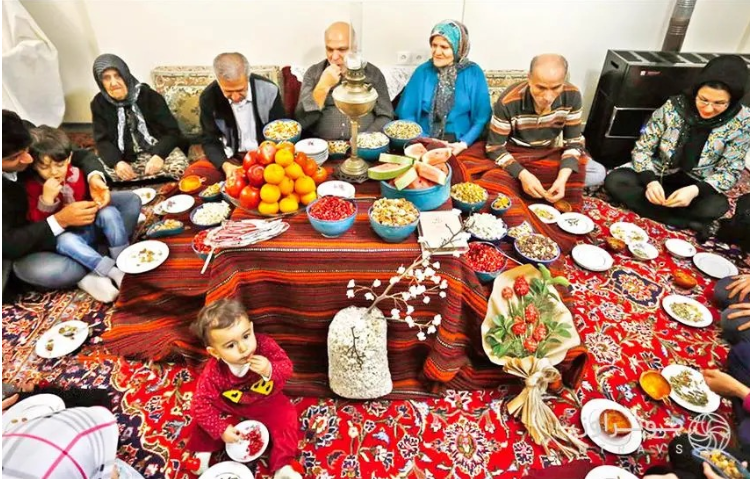
Imagine stepping into an Iranian home on a cold winter night: a table filled with pomegranates and watermelon, the sound of family laughter, candles glowing softly, and a recitation from Hafez. This is Yalda Night—the longest night of the year and one of Iran’s most beloved cultural traditions, shared in various forms across neighboring countries, including parts of Pakistan.
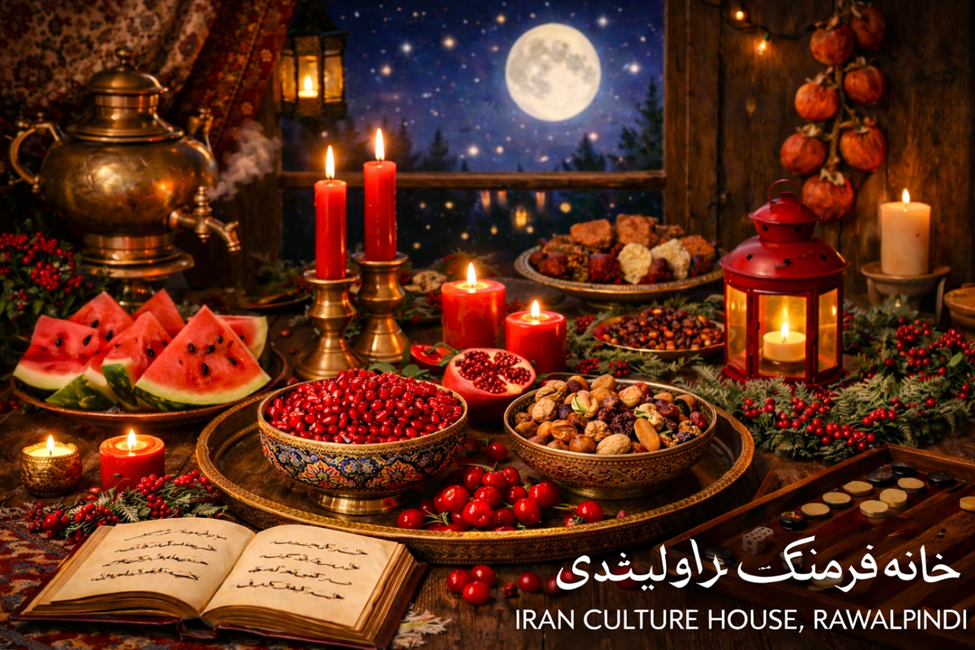
Yalda may appear to be a winter festival, but its message is universal:
Even the darkest night gives way to light.
The Birth of the Sun and the Celebration of Family
The word Yalda comes from Syriac and means “birth”—the rebirth of the sun after the longest night. In ancient Iranian belief, light symbolized hope and life. That is why families gather, keep their homes bright, and stay awake to welcome the victory of light over darkness.
Pomegranates and watermelon represent brightness and warmth, nuts symbolize abundance, and reading the poetry of Hafez is one of the night’s most cherished customs.
A Tradition Shared Across the Region
Beyond Iran, versions of Yalda are celebrated in Afghanistan as Shab-e Cheleh, in Tajikistan with poetry gatherings, and in parts of Uzbekistan, Azerbaijan, Iraqi Kurdistan, and northern Pakistan—regions historically shaped by Persian-Khorasani culture.
A Celebration With Global Identity
Iranian communities worldwide—from Europe to North America—celebrate Yalda every year as a symbol of identity and cultural continuity. UNESCO has highlighted the festival’s role in strengthening social harmony and respect for family bonds.
A Cultural Bridge Between Pakistan and Iran
For Pakistani readers, the spirit of Yalda feels familiar: family gatherings, respect for elders, storytelling, poetry, and communal joy—values deeply rooted in Pakistani society as well. Just as local festivals and celebrations bring people together in Pakistan, Yalda does the same for Iranians.
In this way, Yalda is not merely an ancient Iranian tradition—it is a cultural bridge connecting neighboring nations through shared values of warmth, unity, and hope
BY: Dr. Mehdi Taheri