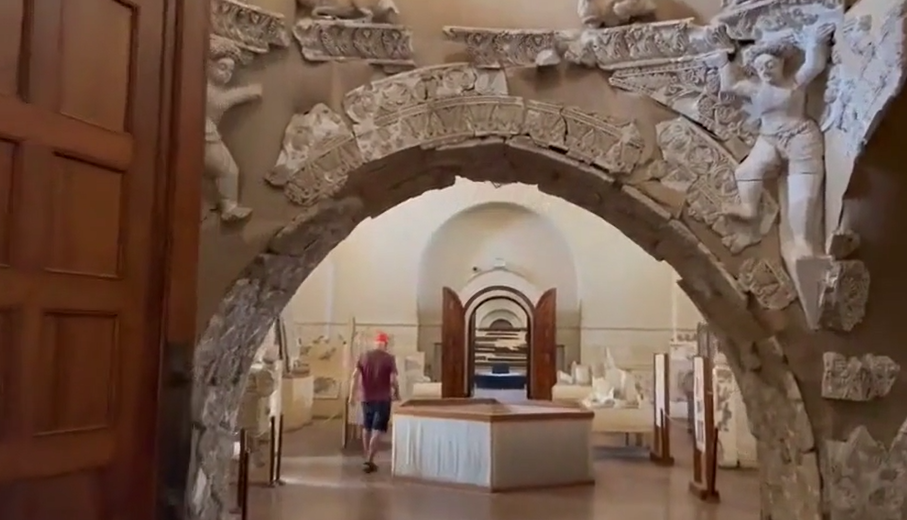
- The Rockefeller Archaeological Museum stores some 60,000 artifacts spanning millennia, including unique decorations from the Al-Aqsa Mosque and the Church of the Holy Sepulcher
On a beautiful autumn day, a group of visitors strolled in the courtyard of the Rockefeller Archaeological Museum in East Jerusalem, admiring its elegant layout, featuring fountains and colonnades in the shadow of its imposing octagonal dome.
As the visitors enjoyed looking at the impressive archaeological artifacts spanning centuries, the tour guide invited the group to a corner of a colonnade, directing their attention to a modest stone set on a low pedestal.
“This stone includes a reference to one of the earliest events described both in the Bible and in additional sources,” the guide, Itay Gat, told the visitors, including this reporter. “Thanks to this stone that refers to [Pharaoh] Shoshenq I’s raid [against the Kingdom of Judah] in 930 BCE, we can tie the Egyptian chronology to the events in the Bible, and know when they happened.”
Little from the stone’s location or accompanying sign would suggest its prominence, the tour guide noted.
“This is really what the Rockefeller Museum is,” Gat said. “Everything we know about archaeology in the land of Israel is connected to its exhibit and the 60,000 findings in its storage.”
While the public can enjoy one of the most impressive archaeological collections in the country — albeit for limited hours — the future of the Rockefeller remains unclear, with authorities discussing the possibility of handing it over to private ownership and even turning it into a hotel.
The museum was completely closed to the public for almost two years after the Israel Antiquities Authority moved its headquarters from the compound to the new Jay and Jeanie Schottenstein National Campus for the Archaeology of Israel.
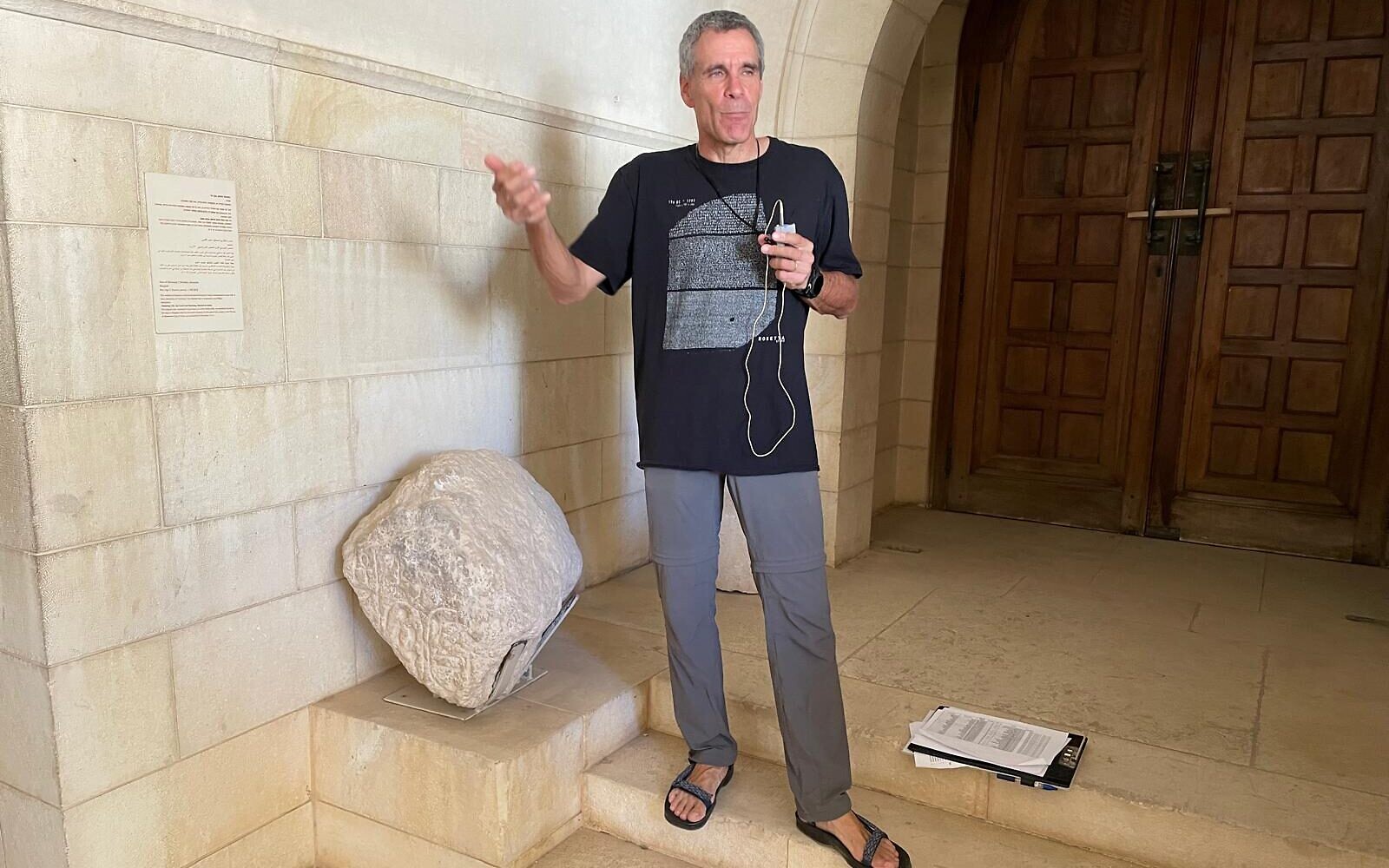
referring to Pharaoh Shoshenq I’s raid against the Kingdom of Judah, which is also
mentioned in the Bible on display at the Rockefeller Archaeological Museum
in Jerusalem on September 5, 2025.
In July, the Old City’s Tower of David Museum spearheaded a new initiative, organizing weekly group tours of the nearby Rockefeller Archaeological Museum. Visitors need to sign up in advance; an English tour is held about once a month.
Among the unique items on display at the museum are a statue of Egyptian pharaoh Ramses III, dating back to the 12th century BCE, found in Beth Shean, the only example of Egyptian monumental statuary discovered in Israel. Visitors can also view an almost complete 100,000-year-old skeleton of an early Sapiens, unique jewelry and pottery excavated in the land spanning thousands of years and stunning wooden and marble decorations that were taken down years ago during renovation works at the Al Aqsa Mosque and the Church of the Holy Sepulcher.
The cradle of Israeli archaeological research
For almost 20 years, the museum was also home to most of the legendary Dead Sea Scrolls, which were later moved to the Israel Museum. The library where scholars once examined them and conducted their research still stands full of empty bookshelves, antiquated wooden tables and chairs.
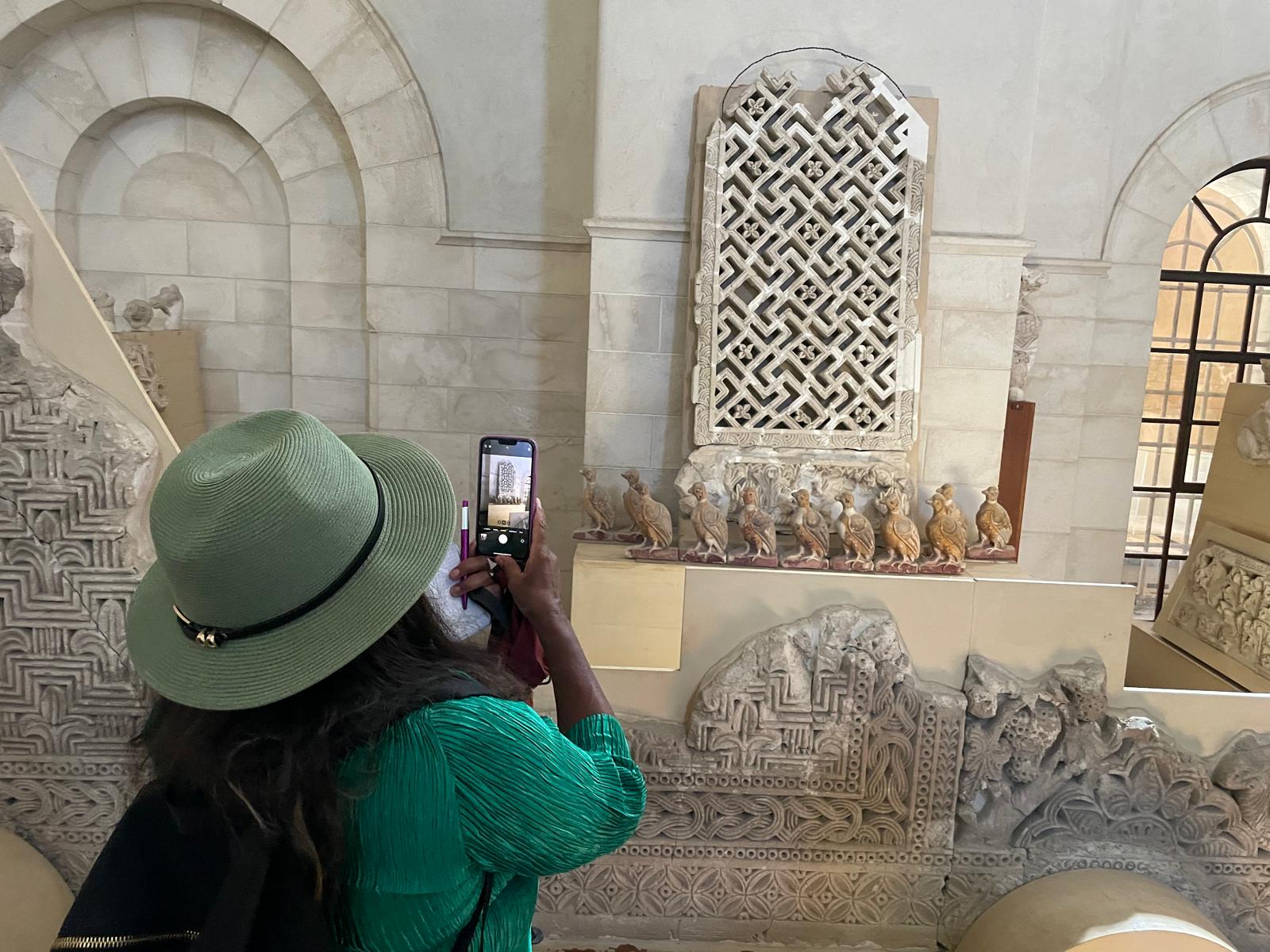
Rockefeller Archaeological Museum in Jerusalem, seen on September 5, 2025.
Much like the Shoshenq stone, the museum also lies mostly forgotten in a corner of Jerusalem. Despite being located just a few steps from the Old City, near Herod’s Gate, the museum is in the Palestinian part of the city, which many Israeli and international visitors tend to avoid.
As Gat highlighted, the Rockefeller Museum fully embodies Jerusalem’s vicissitudes over the past century.
Its story began in the 1920s when, as the tour guide put it, “the British decided that it would be an interesting idea to keep the antiquities and the archeological findings where they were found instead of bringing them home.”
In previous decades, the most valuable findings from the first European archaeological expeditions around the world were brought back to the motherland and displayed in museums in Paris and London.
British architect Austen Harrison was tasked with designing the museum, but for a while the project was put on hold due to the lack of funding, until an American archaeologist, James Henry Breasted, who was excavating at Megiddo with the financial support of the Rockefeller family, offered to persuade his benefactors to back the museum. The oil magnate John D. Rockefeller donated two million dollars to the project, and construction began in 1930.
The museum was inaugurated in 1938, as the Palestine Archaeological Museum (PAM), but the festive occasion was ruined by the shocking murder of British archaeologist James Leslie Starkey as he was on his way to Jerusalem for the event from Lachish, where he was excavating.
The tragedy — along with the fact that several key figures behind its creation never lived to see it completed, including Breasted and Rockefeller, who died in 1934 and 1937, and Harrison, who left the region before its inauguration — gave the institution a reputation as a “cursed museum.”
When Jordan occupied East Jerusalem in 1948, it took control of the museum, which soon became the research center where many of the ancient scrolls retrieved from caves around the Dead Sea were brought.
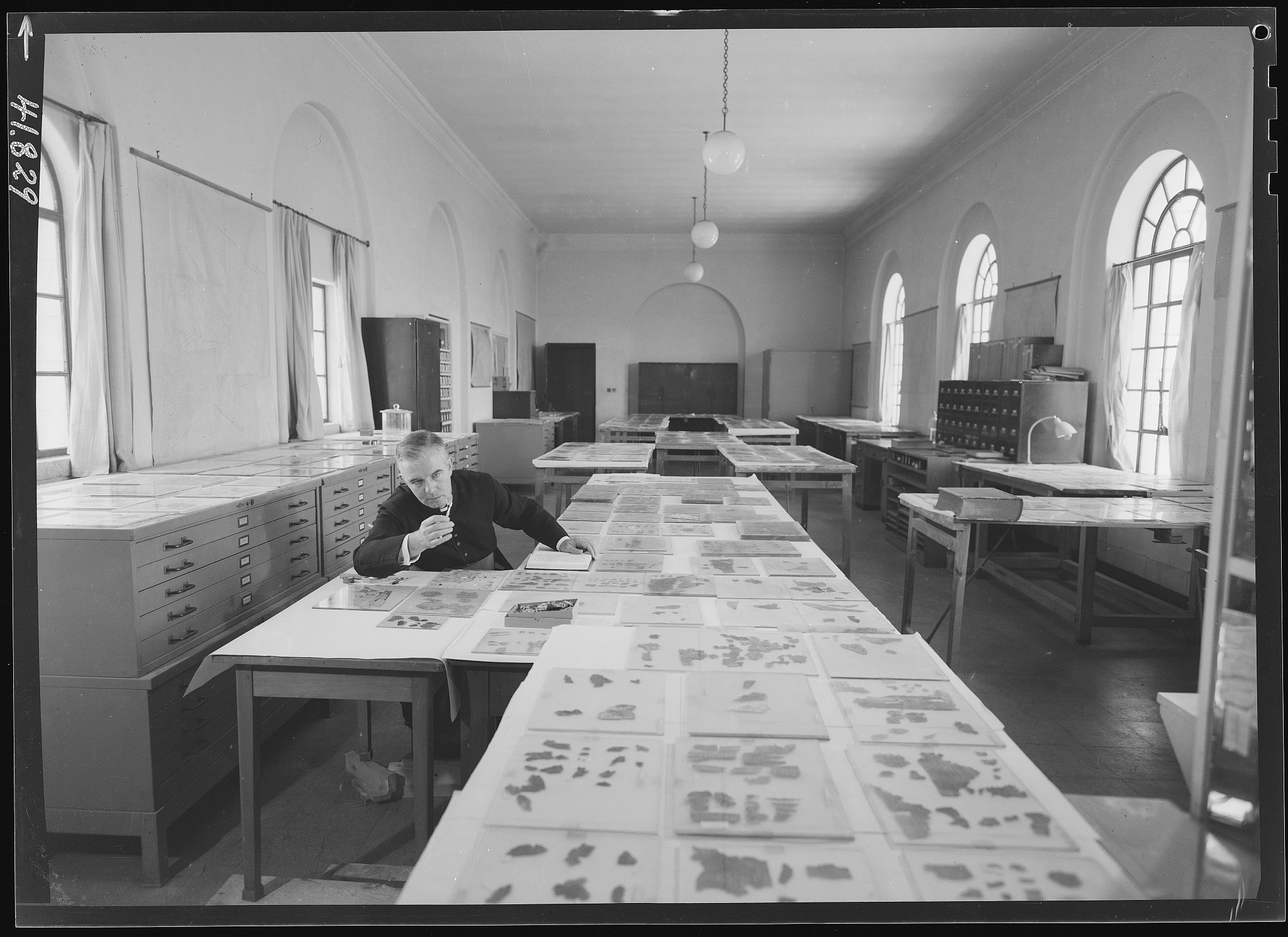
During the Six Day War in 1967, Israel captured East Jerusalem.
“Already on the second day of the war, some Israeli archaeologists came here despite still being under Jordanian fire, to ensure that nothing would happen to the Dead Sea Scrolls,” Gat said.
Eventually, the scrolls and some other selected artifacts were transferred to the Israel Museum.
“At the time, this led to a debate about whether it was okay to legally move archeological findings from captured territories here in Jerusalem to another location,” Gat noted.
The Israel Museum was soon tasked with curating the Rockefeller and keeping it open to the public, which it did, free of charge, until 2023. In addition, the compound housed the Israel Department of Antiquities, which later became the Israel Antiquities Authority.
After the IAA moved its headquarters to the new building next to the Israel Museum and the Knesset, the Rockefeller remained closed to the public for almost two years, until the new Tower of David’s initiative.
“For decades, the Israel Museum has operated the Rockefeller Archaeological Museum and invested considerable sums in the conservation of its priceless archaeological objects,” the Israel Museum told The Times of Israel in a statement.
“Following the recent war and the decline in the number of visitors, and in light of the one-sided announcement in late October 2023 by governmental authorities that they intended to relinquish responsibility towards the Rockefeller Archaeological Museum, the Israel Museum has been forced to temporarily close the Rockefeller Museum,” the statement further said, adding it would need to reconsider its future activities.
A hazy future
Currently, the museum’s fate is under discussion by an interministerial committee headed by the Heritage Ministry’s director general, which includes representatives from the Culture, Tourism, Education, Finance, and Housing ministries, as well as the Prime Minister’s Office and the IAA.
Among the options that the committee is discussing is selling or leasing the museum to private entities to turn it into a hotel or a private tourism center, as mentioned in a December 2023 document seen by The Times of Israel and confirmed by a spokesperson for the Heritage Ministry last month.
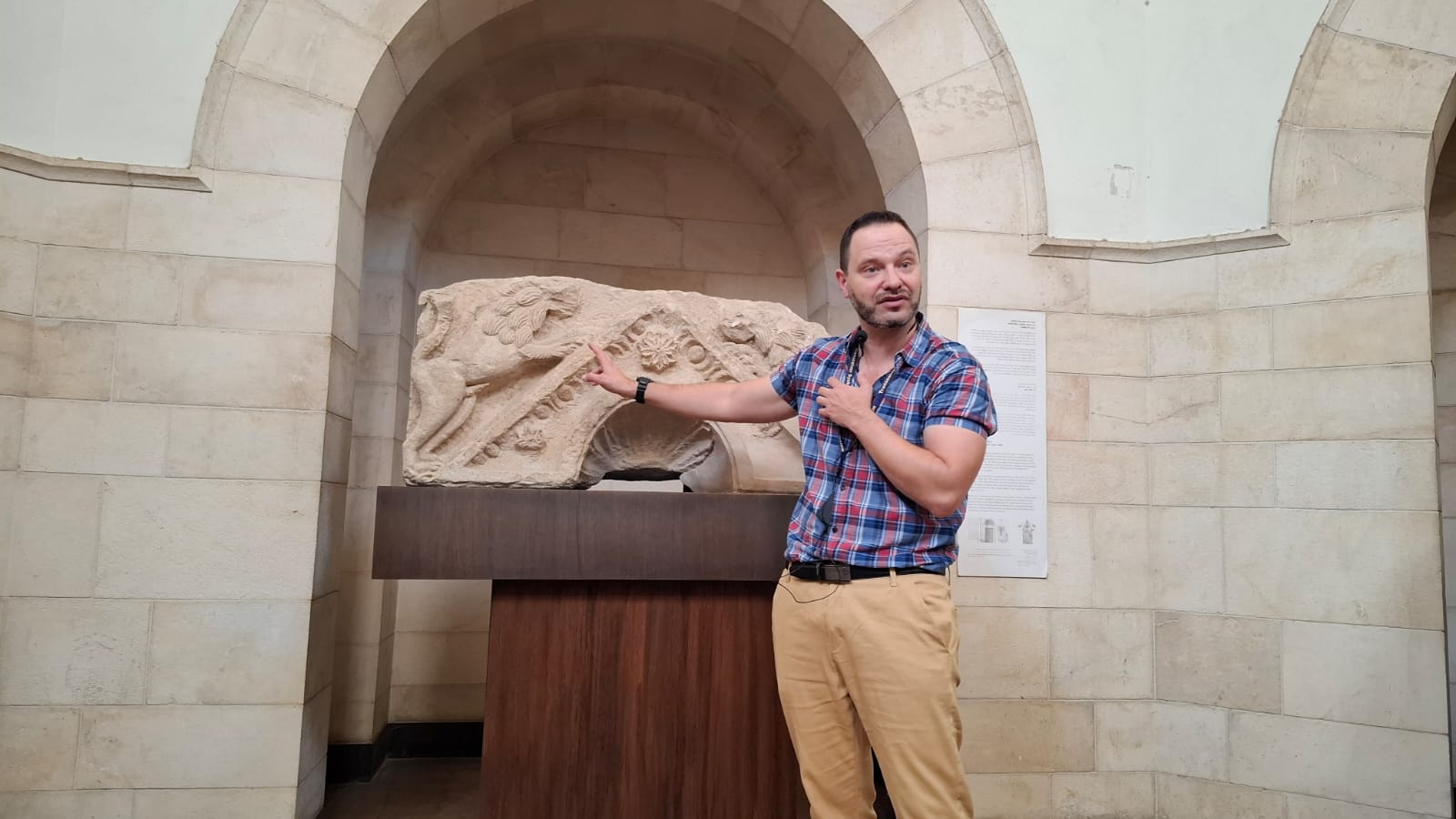
at the Rockefeller Archaeological Museum in September 2025.
“We are talking about the most important findings discovered in the geographical region of Palestine, the British Mandate and then Jordan before 1967,” said Dr. David Gurevich of Ariel University, a member of Israel’s Archaeology Council, which advises the government and public entities, including the IAA, on matters related to antiquities.
“From the beginning, the building and its exhibits were supposed to be a landmark in local heritage, and a public resource for all,” he told The Times of Israel over a phone interview.
According to Gurevich, the reason behind the museum’s closure and possible change of destination is financial.
“What is happening right now is that, because the government bodies cannot agree on who is going to pay for operating the museum, there is actually an attempt to even change the function of the building and to convert it into a luxurious private hotel,” he said.
Gurevich stressed that he and the council are working to block the move and raise public awareness.
“From what I understand, we are talking about a sum of about 10 million shekels ($3.1 million) a year,” he noted. “It’s unbelievable that such a heritage of humanity would be given away.”
Frozen in time
The museum’s two main halls, the South Gallery, which presents artifacts from the Stone Age to the Bronze Age (3700-1200 BCE), and the North Gallery, which covers the Iron Age (1200-586 BCE) and the Ottoman period (1517-1917 CE), have remained virtually untouched since the 1930s.
Thousands of objects are displayed next to each other in window cabinets and shelves, the vast majority with little to no explanation, as was typical in museums from the first half of the 20th century.
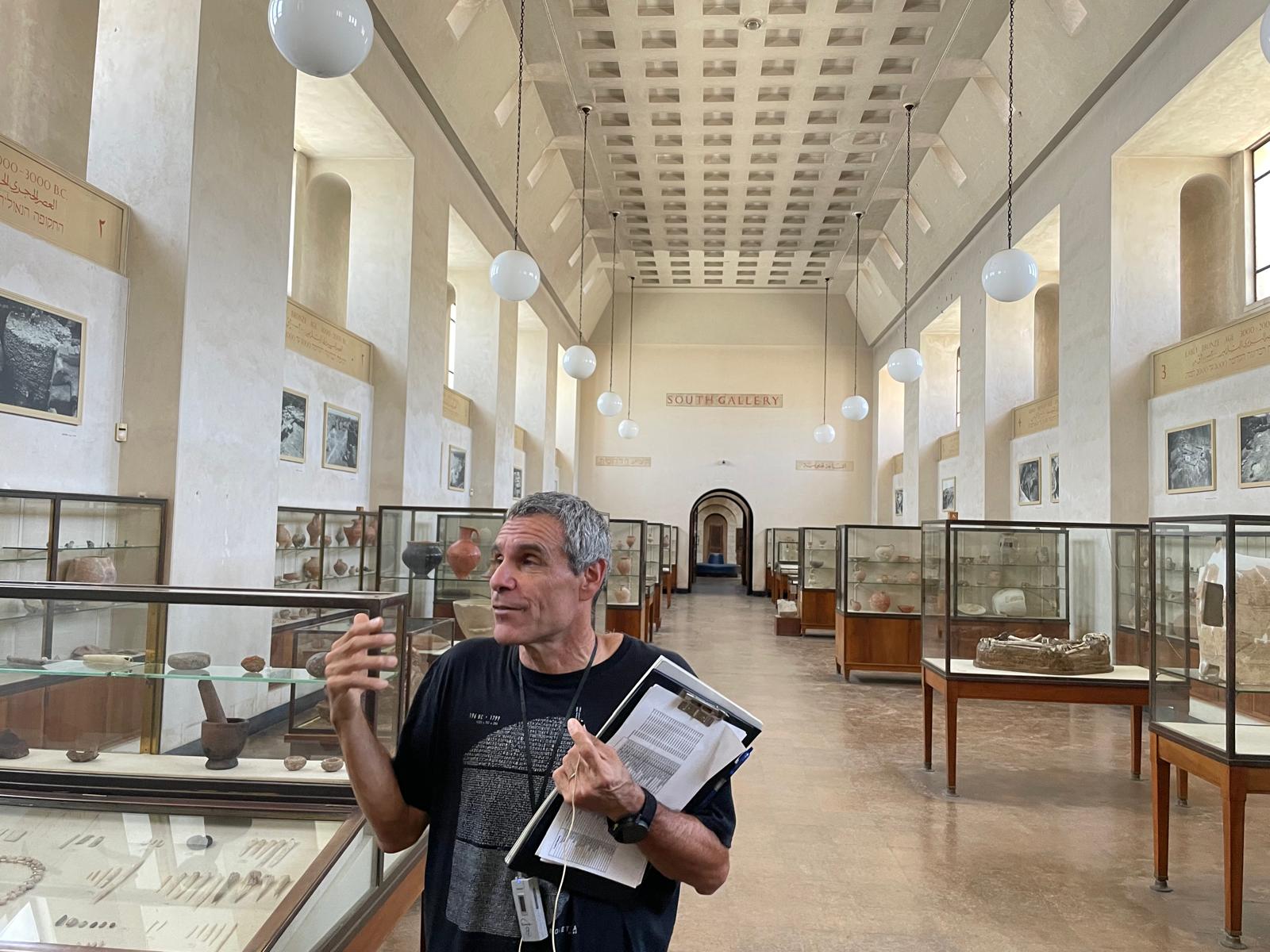
on September 5, 2025.
A tiny piece of paper sits next to each item featuring the number to find it in the museum’s catalogues.
“Most of the numbers are still the original handwritten ones from the 1930s,” said Gat.
Some of the most impressive findings on display at the museum have dedicated rooms.
They include carved wooden panels removed from the Al-Aqsa Mosque on the Temple Mount, known to Muslims as al-Haram al-Sharif, or the Noble Sanctuary, during renovations in 1938, following damage to the mosque from two earthquakes in previous decades. Based on stylistic considerations, scholars believed they were crafted in the 8th century CE, during the early stages of the mosque’s construction.
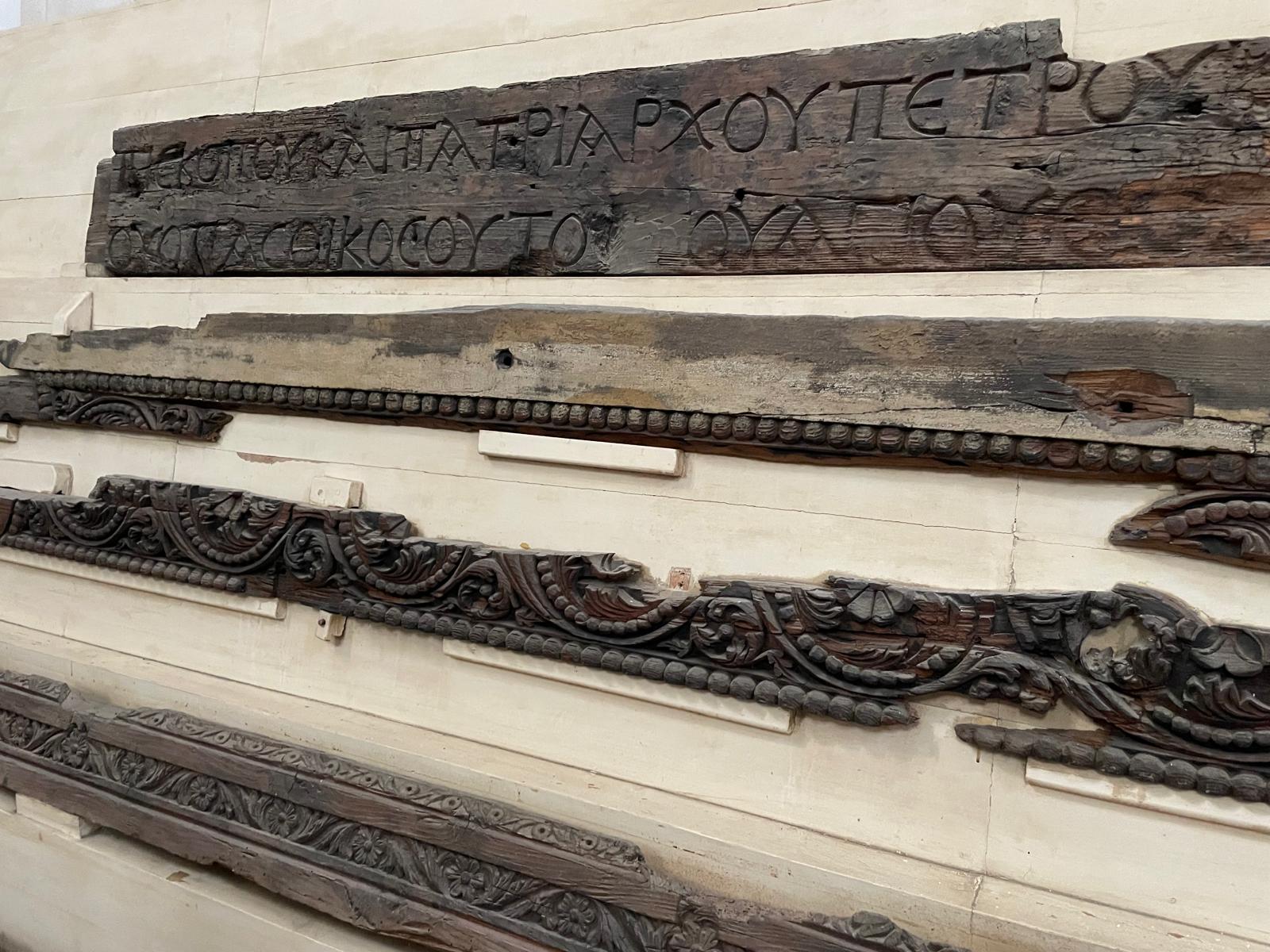
works in the 1930s, on display at the Rockefeller Archaeological Museum in
Jerusalem, seen on September 5, 2025.
The beautiful decorations feature floral and geometric patterns, in line with Islamic tradition that avoids images of humans or animals. One of the beams bears an inscription in Greek, suggesting it was originally part of a church, probably from the 6th century, as in the ancient world, reusing building materials from pre-existing structures was common practice.
“These artifacts are still property of the Muslim Wafq,” said Gat, referring to the Jordanian religious authority that manages the Islamic sites on the Temple Mount. “If someone wants to research them, they need to ask for their permission.”
In the next room, marble lintels from the Holy Sepulcher feature a very different type of art. Crafted during the Crusader period, some 800 years ago, the artifacts were also removed under the British Mandate to preserve them. Images of men, women, and mythical creatures, centaurs, sirens and hybrid animals, as well as some scenes from the New Testament, are carved in the stone.
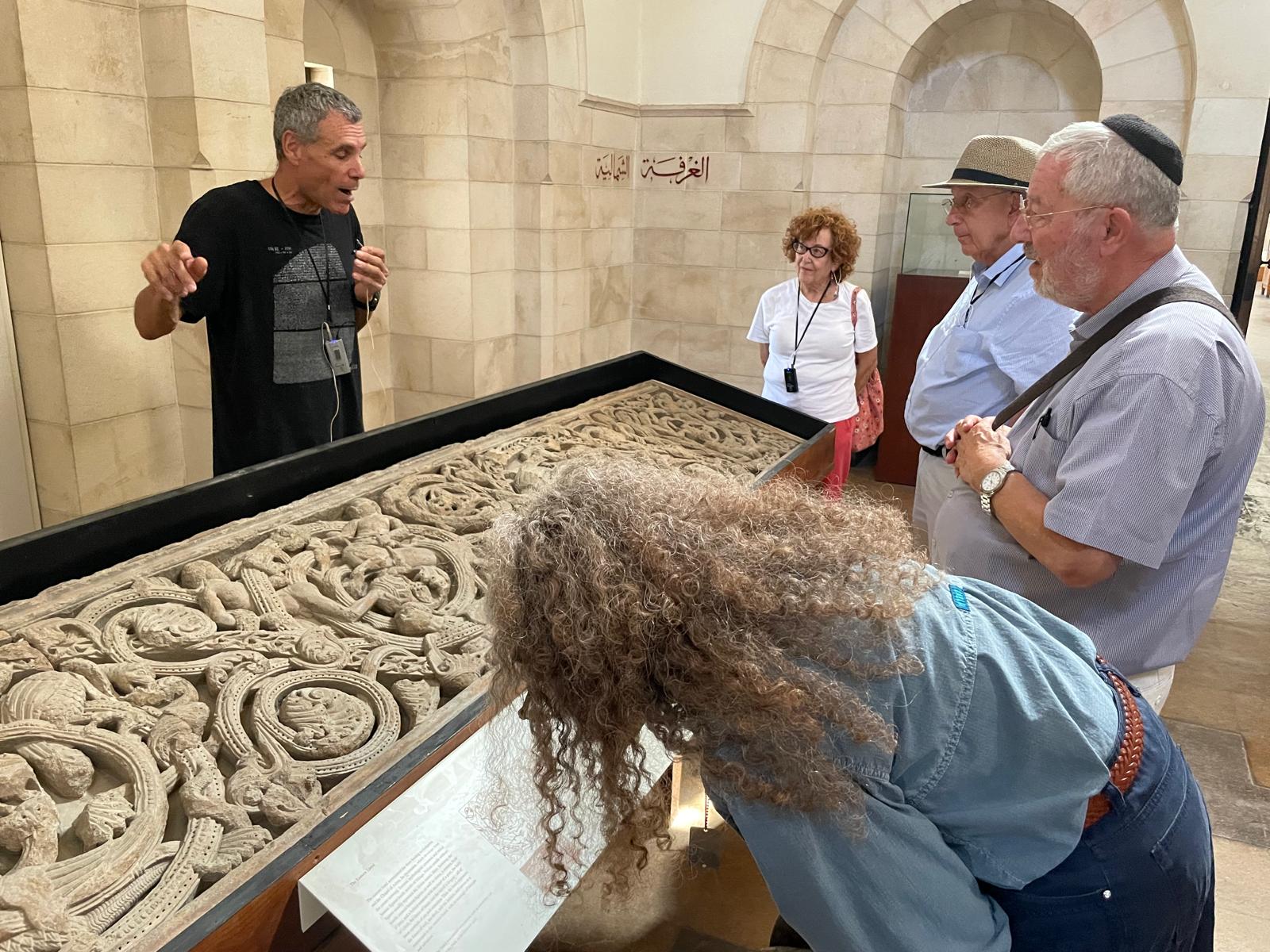
Rockefeller Archaeological Museum in Jerusalem, seen on September 5, 2025.
“The Rockefeller is one of the most beautiful and interesting buildings erected during the British Mandate, and its collection is unique,” Eilat Lieber, director and chief curator of the Tower of David Jerusalem Museum, told The Times of Israel over the phone.
“The Tower of David is devoted to the history of Jerusalem, and in the past few years, we have decided to expand our activities and organize tours in other areas of the city,” she added. “Since we knew that the Rockefeller had been closed for two years, we took the opportunity to organize these special tours.”
The Tower of David works in cooperation with the IAA, which opens the museum for the tours, and the municipality, which covers the cost of the shuttle that the Tower of David organizes to bus people to Rockefeller from the Givat Hamivtar Light Rail Station. A ticket for the tour costs NIS 100.
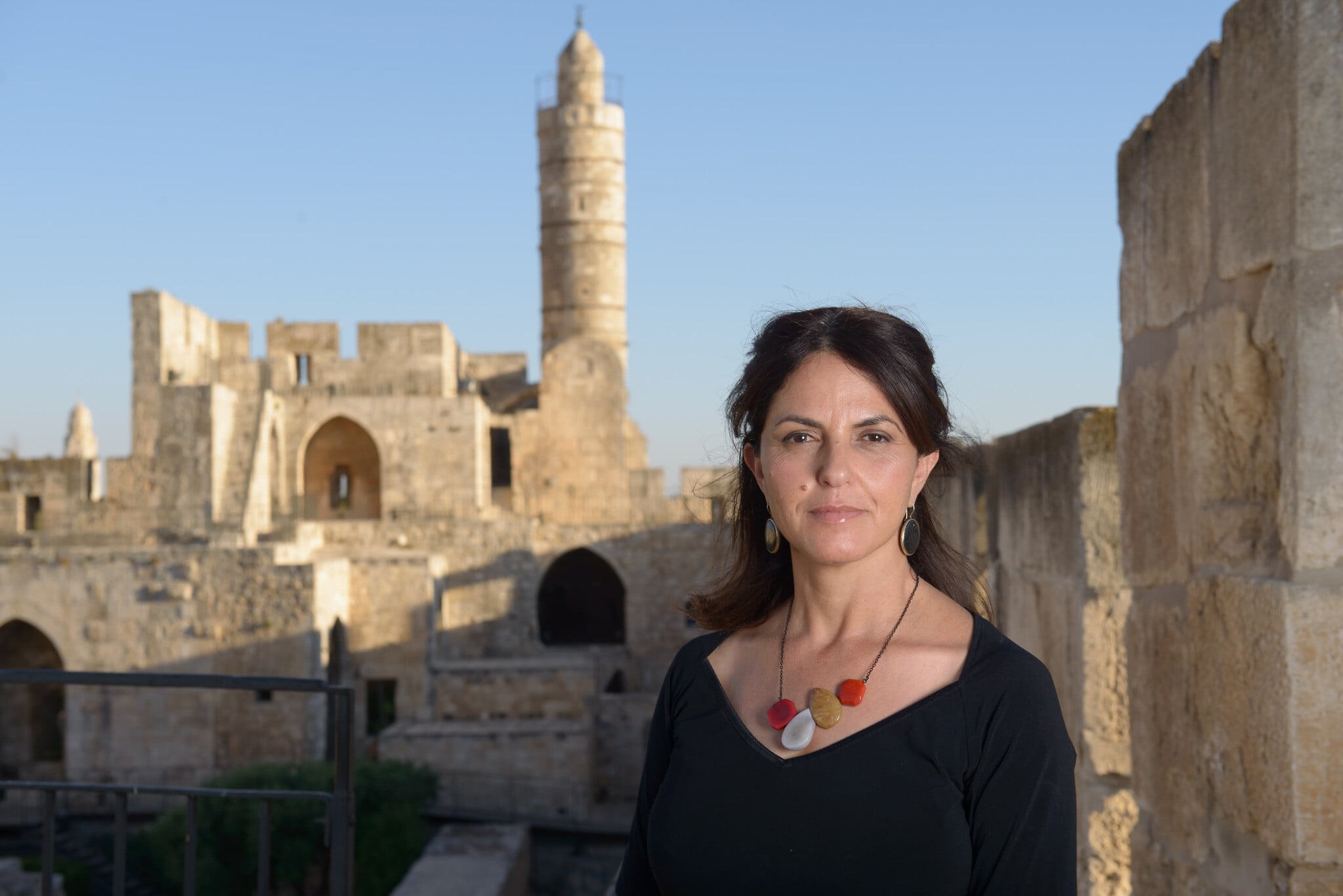
In the first three months, over 1,000 people joined a tour at the Rockefeller.
“We see there is a lot of interest,” Lieber said.
She explained that the Tower of David is not involved in discussions about the museum’s future.
“Our interest in this space is only from the historical and cultural points of view, because it’s a jewel in Jerusalem,” she said.
If the museum were leased or sold, it is unclear what would happen to the 60,000 archaeological findings it houses.
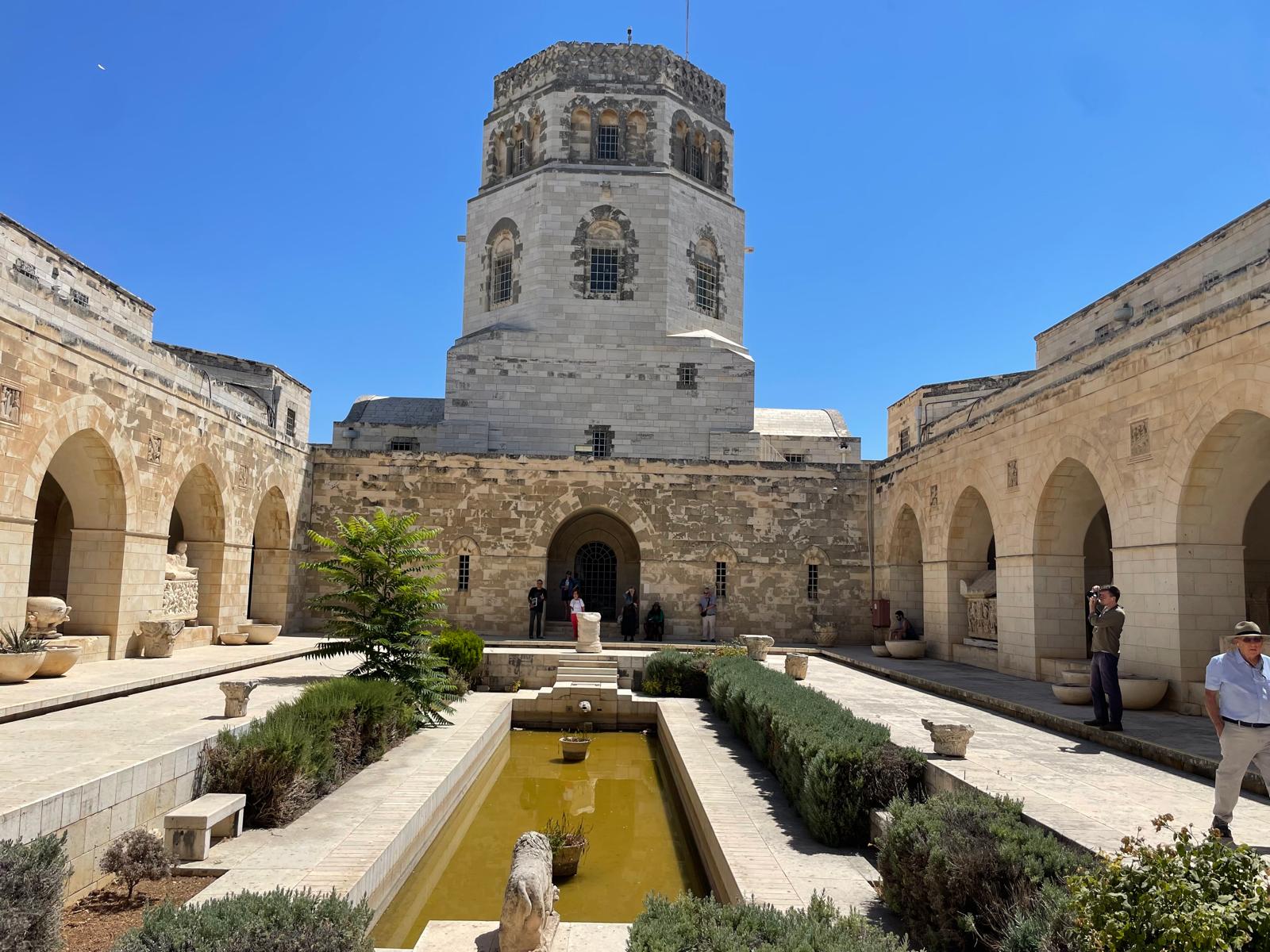
September 5, 2025.
Meanwhile, although the interministerial committee still has to formulate its recommendation regarding the future of the Rockefeller, the IAA told The Times of Israel that it has requested to be reassigned the responsibility for the facility.
“For the Israel Antiquities Authority, the Rockefeller Museum is the historic and symbolic home of the archaeology of the Land of Israel,” read a statement shared by an IAA spokesperson.
“The Authority has formally requested that the museum’s operation be returned to its hands, in order to promote its reopening,” the statement added, pledging that the IAA “will do everything possible to ensure that the Rockefeller Museum once again becomes a living museum, full of content, as it deserves to be.
BY: Rossella Tercatin