The UK might be about to do something that should have been done during the days of David Cameron, Tony Blair or even Margaret Thatcher. How does one respond to a measure that is more than four decades overdue?
According to media reports and my own government sources, the British government is finally about to impose some form of ban on trade with Israeli settlements. It will probably be announced in the second week of September after Parliament returns.
Skeptics still doubt this will happen. They point to the pressure being exerted by Israel and its affiliated lobby groups, such as Labour Friends of Israel.
But there are strong reasons why it will go ahead. Firstly, given Israel’s record rate of settlement expansion, with 104 new settlements approved since 2022, the record levels of settler violence and the Aug. 18 tender for 1,234 homes in the E1 area — the settlement project that could sever the northern and southern West Bank — it is the bare minimum any self-respecting government should be doing in the face of such flagrant breaches of international law. It is clearly the correct move.
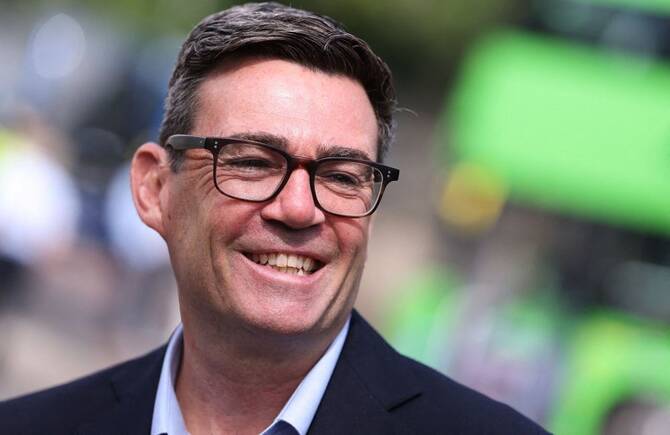
Secondly, it has broad political support outside of the hard right of British politics. New Prime Minister Andy Burnham is convinced of the argument in favor of the ban, as is Foreign Secretary Ed Miliband, alongside most of the Cabinet. Miliband pledged a set of concrete measures in response to the E1 announcement. Gone are the days of the hesitant and vacillating Starmer administration. Almost 250 British MPs have publicly endorsed such a move. Government ministers have stated that they are in favor. The Conservative and Reform parties will oppose the move but it should be uncomfortable ground for the Tories. Every single Conservative foreign secretary has opposed E1 since it was first dreamed up in the time of Yitzhak Shamir in 1991.
Thirdly, there is considerable public support. An opinion poll published last week showed that 50 percent of the British public supports a ban, while only 16 percent oppose it. Far from being just a Muslim issue, as settler champions claim, a ban would have broad public backing. The government knows this.
Fourthly, other states are doing the same. Spain, Ireland and the Netherlands have gone or are going down this path, while Norway has put forward proposals. Thirty US senators have also spoken out against E1. Britain will not be isolated at all.
Will a ban make a difference? The Netanyahu government will largely ignore it, while asserting how the world hates Israel. It has already threatened to expel the UK, as it has the Netherlands, from the International Gaza Support Center that oversees the flows of aid into Gaza. The UK should jump before it is pushed, given that the center has utterly failed to provide essential aid. Even wheelchairs and crutches are banned by Israel.
This Israeli government is more likely to exact its revenge not on Britain but on the Palestinians. If London was to go ahead with a trade ban, who would bet against more settlement announcements, more land confiscations and more invasions of refugee camps and towns?
Far from being just a Muslim issue, as settler champions claim, a ban would have broad public backing.
Chris Doyle
But some in Israel have taken note. When asked about advancing construction in the E1 area, Yashar party leader Gadi Eisenkot stated: “Not now. This is a mistake that costs us an international price.” A segment of Israeli society fears becoming a pariah state.
Coordinated bans on trade with settlements could also hurt the Israeli economy. Given the ever-expanding scale of the settlement economy, sanctions will increasingly sting.
The UK would be the most significant state to impose a ban so far. It would also encourage others to follow suit. Symbolically, the former mandatory power doing this matters. That said, it is unlikely to dent the £6 billion ($8.1 billion) in annual trade between the two countries.
The impact will also depend on the strength of the ban. Will it include financial services as well as products? Banks, insurance companies and online services would then have to adhere to the restrictions. Speed matters too. The government could do this rapidly, like it did with banning goods from Crimea in 2014. Some believe it would require primary legislation, which would take far too long.
There is also the enforcement mechanism. A ban requires teeth. What would be the penalty for companies caught violating the ban? More crucially, what would the UK do if the Israeli authorities violated the ban?
The UK would be the most significant state to impose a ban so far. It would also encourage others to follow suit.
Chris Doyle
Pessimists fear a last-minute reversal. This is unlikely. The only party that could shift the dial would be the American president. Only Donald Trump could send a chill through Downing Street with hyped-up threats of more tariffs and the cutting of intelligence cooperation. Yet all the signs are that he will not do this. He did not intervene to prevent other states from introducing such measures. He may be in the mood to make Benjamin Netanyahu sweat a bit.
Is this a symbolic gesture or the beginning of a genuinely consequential sanctions policy? The signs are that this Burnham government, in contrast to the Starmer administration, is not scared of holding Israel to account. The statements have been more assertive. The pledge of action to come is more convincing. It is just a pity that it may be 40 years too late.
BY: Writer Chris Doyle is director of the Council for Arab-British Understanding in London.
Disclaimer: Views expressed by writers in this section are their own and do not necessarily reflect The Times Union‘ point of view