In 1979, a group of students in Tehran converted a foundational principle of the international system — the inviolability of diplomatic premises — into something that could be held, bargained over and ultimately compromised. When the hostages were released in January 1981, the US recovered its citizens. It never recovered the principle.
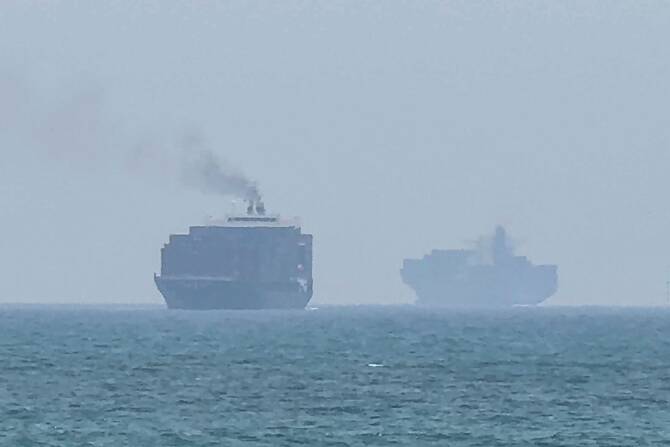
The same mechanism is now at work in the Strait of Hormuz. Iran has not formally closed the waterway. It is changing its meaning. Free navigation, long treated as a right under international law, is being turned into a conditional privilege — one that may be granted or withheld according to Tehran’s political requirements. Vessels attempting the southern corridor, in Omani territorial waters, are warned, threatened, forced to reverse course or simply disappear from tracking systems. Compliance is then presented as evidence of control. The method is calibrated. The ambition is not.
Revolutionary regimes rarely achieve lasting gains through single dramatic acts. They succeed by prolonging calibrated coercion until the stronger party faces an unattractive choice: accept rising costs or begin to treat the violation as a fact to be managed. Iran has tested this approach before. During the Tanker War of the 1980s, it used limited but persistent attacks on commercial shipping to raise the costs of transit and force external powers into a reactive posture. The lesson was clear then, as it is now: calibrated maritime coercion succeeds when the international response treats it as a temporary disruption rather than a challenge to the principle of free navigation.
Iran does not need to sink every tanker. It only needs to make unrestricted transit sufficiently costly and unpredictable that operators, insurers and governments start treating Iranian permission as the practical baseline. Once that shift takes hold, the crisis is effectively over — and the meaning of an international strait has been rewritten.
Those of us who live with the consequences of this waterway understand the stakes more viscerally than most
Sarah Benashoor
Those of us who live with the consequences of this waterway understand the stakes more viscerally than most. The Strait of Hormuz is not an abstract strategic concept. It is the artery through which the economic life of the Gulf still largely flows. Allowing it to become conditional would not be a temporary inconvenience. It would be a permanent alteration in the rules under which our region operates.
The response required is neither maximalist confrontation nor premature accommodation. It is the disciplined refusal to allow successful coercion to harden into accepted practice. The following four measures must be pursued together; the failure of any one weakens the others.
The first requirement is operational denial. Freedom of navigation exists only when it is demonstrated. Commercial traffic must be accompanied through both corridors with enough consistency that Islamic Revolutionary Guard Corps interdiction attempts fail more often than they succeed. Selective protection of high-value cargoes is not enough; the pattern of successful coercion itself must be broken.
The primary risk is an escalation spiral that Tehran can exploit for narrative advantage. The mitigation lies in tightly focused rules of engagement directed at the platforms and command nodes conducting the interdiction, combined with clear public communication that distinguishes the defense of commercial shipping from broader regime change objectives.
The second requirement is to raise the cost of sustained enforcement for the IRGC faster than the cost of transit can be raised for everyone else. The Guards sustain their maritime posture through oil revenues, sanctions-evasion networks and the shadow fleet. Targeted secondary measures, insurance market pressure and disruption of the logistics that keep small boat and coastal missile forces operational can make prolonged interdiction more expensive than the political benefits it delivers.
The primary risk is that broad economic pressure produces secondary effects that erode international support. The mitigation is precision: concentrate pressure on the IRGC’s enforcement architecture while preserving visible channels for legitimate commercial activity that do not reinforce the permission regime.
The task is to ensure that Iran’s naval presence does not acquire the force of accepted authority over an international strait
Sarah Benashoor
The third requirement is a political and legal refusal to legitimize Iranian managerial claims. Any formal arrangement that grants Tehran a recognized role in “coordinating” or “managing” traffic — however carefully worded — would convert a temporary disruption into lasting normative change. Gulf states, as the primary stakeholders, must lead a consistent rejection of any such framework.
Joint positions at the International Maritime Organization, coordinated public statements and the refusal to treat Iranian radio threats as routine are not diplomatic ornament. They are the modern equivalent of refusing to recognize the students’ occupation of the embassy as an act of sovereignty. The primary risk is fragmentation among Gulf capitals under varying degrees of pressure. The mitigation is sustained senior-level coordination that treats free navigation as a shared red line rather than a negotiable interest.
The fourth requirement is structural. Overdependence on a single chokepoint is a vulnerability that Iran exploits. Expanded pipeline capacity toward the Red Sea and the Gulf of Oman, increased strategic storage outside the Gulf and diversified export routes will not resolve the present confrontation. They will, however, reduce the long-term value of the hostage.
A strait that carries a declining share of global energy becomes a less potent instrument of coercion. The primary risk is that these investments are treated as substitutes for the immediate defense of principle. The mitigation is sequencing: structural diversification must proceed in parallel with, not instead of, the operational and political denial of Iranian control.
Some will argue that pure denial is unrealistic and that some form of managed Iranian involvement is inevitable. Accepting that argument is itself the strategic defeat. The moment Iranian permission is treated as a practical necessity rather than a temporary distortion, the principle has already been compromised. The history of 1981 shows how quickly such compromises become permanent. The task is not to pretend that Iranian naval forces can be made to vanish. The task is to ensure that their presence does not acquire the force of accepted authority over an international strait.
The measure of success in the Strait of Hormuz will not be the permanent disappearance of Iranian forces. It will be the restoration of a reality in which commercial vessels transit without requesting or receiving Iranian permission and in which any attempt to impose such a system carries immediate and sustained costs.
The window to shape that outcome is still open. It narrows each time a tanker turns around under threat and the world treats the reversal as routine. We cannot accept a repeat of 1981. We cannot afford to discover, years from now, that we recovered temporary quiet at the price of a principle that will not return.
BY: Writer Sarah Benashoor is a Bahraini geopolitical analyst and political commentator specializing in Gulf security. She is the Director of Outreach at Tomorrow’s Affairs, a London-based digital think tank. She previously served as a strategic adviser to Bahrain’s ambassador to London.
Disclaimer: Views expressed by writers in this section are their own and do not necessarily reflect The Times Union‘ point of view