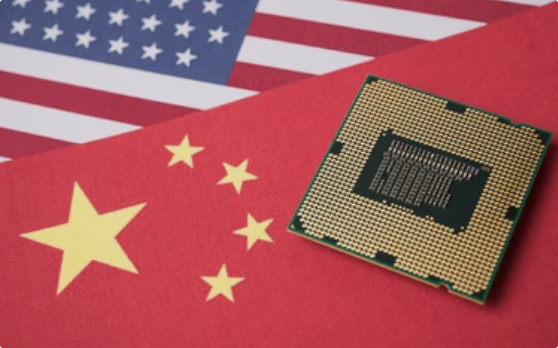
WASHINGTON – The Office of the U.S. Trade Representative said Tuesday it will delay additional tariffs on semiconductors imported from China until June 2027.
The announcement, following the conclusion of the trade office’s one-year investigation, was made amid easing tensions between the United States and China.
The office said the initial level of the additional tariffs will be held at zero percent for 18 months, although its probe under Section 301 of the U.S. 1974 trade law found China’s “targeting of the semiconductor industry for dominance is unreasonable and burdens or restricts U.S. commerce and thus is actionable.”
It said in a Federal Register notice that the tariff level will be raised on June 23, 2027, “to a rate to be announced not fewer than 30 days prior to that date.”
The investigation was initiated in December 2024, during the last weeks of President Joe Biden’s administration before Trump returned to the White House.
U.S. officials particularly looked into non-advanced “legacy” chips produced in China, which are used in everyday goods from cars to medical devices.
Section 301 authorizes the U.S. government to use tariffs in response to a foreign country’s allegedly unfair practices. The section was a favorite tool of Trump in justifying the imposition of higher tariffs on Chinese imports when he launched a trade war with Beijing during his first term as president.
Based on a separate Section 301 probe, the Biden administration doubled the tariff rate on Chinese chips to 50 percent in January this year.
The USTR notice, released Tuesday, said the planned new tariffs will be added to the existing 50 percent duty.
The postponement of new tariffs came as Trump seeks to maintain good working relations with China following his meeting with President Xi Jinping in late October in South Korea.
During the meeting, Trump, who plans to visit China in April, agreed with the Chinese president to a one-year truce in their trade war.
As part of efforts to bring chip production back to the United States, the Trump administration launched a different investigation in April under Section 232 of the Trade Expansion Act of 1962.
In August, Trump suggested a roughly 100 percent tariff on chip imports and a new levy rate to be announced soon, but no such action has been taken.
BY: The Times Union