Natural resources have long been central to global politics, including influencing geopolitical alliances. However, the competition for such resources is intensifying because of factors including climate change, the energy transition, and growing geoeconomic rivalry.
In recent years, Europe has perhaps been the continent most caught out by these trends. The Ukraine war triggered a severe energy shock which showcased the heavy overdependence of the continent on Russian resources. Subsequent actions by the EU have shown that there is a determination that this cannot be allowed to happen again.
In response, the EU has released an ambitious plan to try to end Russian LNG imports by the end of 2026 and pipeline gas no later than Nov. 1, 2027, with amendments to existing contracts strictly limited to operational matters. The European Commission will also table a legal proposal in early 2026 to ban Russian oil imports by the end of 2027.
The goal of eliminating dependence on Russian energy, in these ways, will rest heavily on Europe’s political will, and this is being fortified with several legislative proposals. The 27 EU member states are also now required to submit national Russian energy phase-out plans encompassing gas, oil, and nuclear.
On the gas front, there is an EU ban on new contracts with an end to spot market contracts for Russian gas. For the oil sector, steps include an intensified attempt to tackle Russia’s heavily sanctioned, so-called shadow fleet smuggling oil. On the nuclear front, measures include restrictions on imports of uranium, enriched uranium, and other nuclear materials; a ban on new Euratom co-signed supply contracts with Russian entities; and launch of European Radioisotopes Valley to secure medical isotope supply.
Monitoring and enforcement have also been stepped up. Moreover, there are new rules to improve traceability and transparency of Russian energy flows.
The road map is designed to be phased, secure, and legally binding, minimizing market disruption. However, EU Energy Commissioner Dan Jorgensen is right that it is “not without consequences,” and the EU needs it to be delivered “in a coordinated way.”
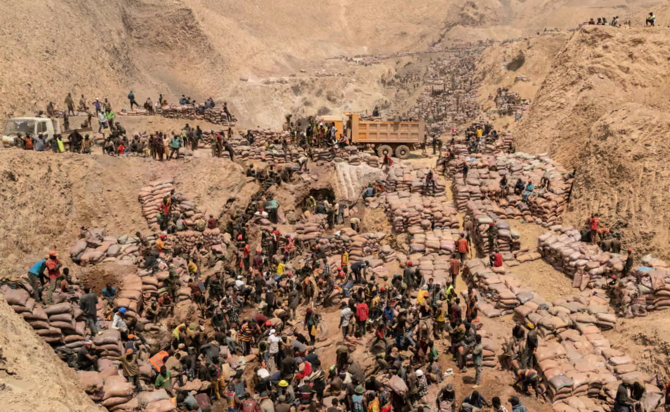
The many challenges of Europe diversifying from Russian energy since 2022 has helped increase awareness that concentration of wider global resources, especially critical minerals supply chains, is a major issue, too. While mining of critical minerals is heavily concentrated in a small number of countries, the processing and refining of these minerals — complex, resource-intensive, and highly specialized — is even less diversified.
So, potential disruptions along the value chain would undermine key goals. Companies manufacturing electric vehicles, batteries, wind turbines, and other essential components of the energy economy would face severe challenges, endangering jobs in often fast-growing sectors.
Governments and industry can work together. Andrew Hammond
Based on this energy experience, European and wider countries, including the US, do not want to mirror overreliance on other nations for other natural resources, especially critical minerals. There is growing awareness, promoted by the International Energy Agency and others, that concentration of critical minerals supply chains is a major issue.
This was highlighted in the IEA’s 2025 Global Critical Minerals Outlook report, for instance, which provides assessments of the latest market and investment trends, along with their implications for critical mineral security, including lithium, nickel, cobalt, copper, graphite, and rare earths. The study also explores key issues such as mineral supply chains for emerging battery technologies; innovations in mining, refining and recycling; policy mechanisms to support diversification; and strategic minerals.
This impulse to diversify natural resources supply chains has already led the EU to initiate a series of new trade deals, including with the Mercosur bloc in South America, and the UK with India. However, this dynamic goes well beyond Europe.
The desire of the US for critical mineral supply chain diversification was showcased in US President Donald Trump’s executive order to increase domestic production, and his more recent US National Security Strategy. The latter outlined “securing access to critical supply chains and materials,” among several other priorities, including by bringing countries into Washington’s orbit by negotiating peace settlements, as with Ukraine’s mineral resources.
However, this important agenda should not be driven by governments alone. Instead, there needs to be a cross-cutting public, private, and third sector dialogue, including major consumers and producers around the world, industrial leaders, international organizations, and civil society to discuss main risks and identify solutions to ensure secure and fair energy transitions while enhancing global energy security.
If this is done well, governments and industry can work together to develop responsible, sustainable critical mineral supply chains that have a double win. Not only will they diversify global supply chains, but they will also enhance local economic prosperity and protect ecosystems in resource-rich nations, too.
Local communities do not always fully benefit from critical minerals projects through job creation, skills training, and infrastructure investment. Limited access to energy and underdeveloped infrastructure can also limit the development of new projects in some countries. Critical minerals projects require access to stable electricity, water supply, and wider infrastructure for moving goods, so new projects can present an opportunity for countries to deliver wider benefits for the communities.
Mining and processing projects can have negative environmental impacts and affect local ecosystems. Environmental protection can also be ensured through responsible mining practices, reduced carbon footprint, and promotion of circular economy approaches.
Taken together, this critical mineral diversification agenda may be an even bigger, more challenging task than Europe’s moves to end reliance on Russian energy. So, it will be a long-term agenda that necessitates government dialogue with the private and third sectors to ensure wins for resource-rich nations, too.
BY: Andrew Hammond is an associate at LSE IDEAS at the London School of Economics.
Disclaimer: Views expressed by writers in this section are their own and do not necessarily reflect The Times Union‘ point of view