Hillary Clinton last week claimed that TikTok was to blame for many young Americans’ pro-Palestine views and that they were falling for “pure propaganda.” She depicted this as a “serious problem for democracy.”
Who had ever imagined that the former US secretary of state was either an expert on the history of Palestine or, in particular, an avid consumer of TikTok videos? Yet still, how wrong can she be.
What is the reality of how social media and technology have been used during the Gaza genocide? According to Israeli Prime Minister Benjamin Netanyahu in a meeting with American influencers, social media platforms are “the most important weapon” Israel has “to secure our base in the US.”
On the plus side, they have been a vehicle for disseminating vital information about what has happened in Palestine, filling the gaps left by legacy and mainstream media outlets. How else would so many know about the famine and mass displacement in Gaza? The hashtag #GazaIsStarving trended across social media back in the summer with images of starving Palestinian children.
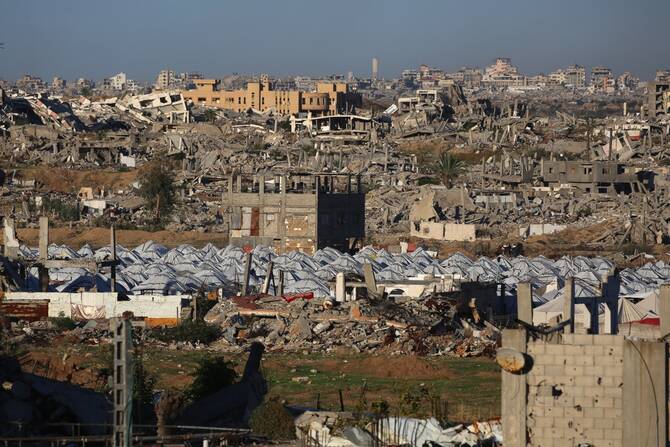
How else would so many have seen the horrific scenes of mass destruction? Israeli soldiers uploaded a slew of highly revealing footage showing how they desecrated Palestinian homes. Videos from Palestinian journalists have also gone viral. Campaigns and protests have been coordinated, amplified and recorded across the globe.
But what about the darker side of the digital coin? Big Tech has been used as a weapon to spread disinformation and anti-Palestinian racism and hatred, to censor Palestinian and pro-Palestinian voices, as a tool of surveillance, and even as part of the Israeli war machine.
Disinformation has been a core part of the Israeli strategy. Social media has been deployed to spread dangerous lies and half-truths, such as there being a major Hamas military headquarters under Al-Shifa Hospital. Images and videos have been faked; others have been found out to have been from different places or times. Fact-checking media services have struggled to keep up. Palestinians in Gaza have had to rely on social media to determine where safe zones are located or food distribution sites are operational, but all too often they have been put in danger by misleading posts.
The mass dissemination of hate — not least the racist, dehumanizing language and images used against Palestinians — has fueled the Israeli genocide in Gaza. The phrase “Erase Gaza” was found to have been used more than 18,000 times in Hebrew-language Facebook comments in 2024 alone. Settler groups use WhatsApp to spread their hate and share images of how they have attacked Palestinian communities. The Israeli security forces have access to these groups, according to Haaretz, but the settlers are not arrested.
Within Israel, Palestinians have been arrested in their droves for social media posts but hardly any Israelis face repercussions for their racist, genocidal messages. Many of those genocidal posts remain on social media platforms. Worse, Israeli ministers have used genocidal language themselves without any repercussions.
What have these major platforms done? Meta, the world’s largest social media company and the parent company of Facebook and Instagram, failed in other conflicts, notably Myanmar and Ethiopia, to take down racist and genocidal posts. Its record on the genocide in Gaza is worse. Social media content in Hebrew has not seen the sort of content moderation that Arabic posts have.
Censorship of Palestinian voices is rampant. Human Rights Watch examined 1,050 posts that Meta took down from Facebook and Instagram between October and November 2023. Of these, 1,049 were determined to be peaceful support of Palestinians and one was supportive of Israel. Leaked documents confirmed that Instagram changed its algorithm just a week after the Oct. 7 attacks, rendering the platform more aggressive toward Palestinian people.
The level of surveillance of Palestinians is extraordinary. The Israeli military’s Unit 8200 has access to a segregated area within Microsoft’s Azure cloud platform. It gives Israel near-limitless capacity to store millions of Palestinian mobile calls every day, a facility available to the military since 2022. It operates in both Gaza and the West Bank. A former head of the unit described the aim as “tracking everyone, all the time.” The company is now coming under massive pressure, including from its workers, to end its services to the Israeli military.
Microsoft’s data centers, possibly including those in the Netherlands and Ireland, are therefore actively assisting Israeli in perpetrating genocide. Are policymakers in Europe taking this into account? Sadly not.
What are the implications of the fact social media and technology have been deployed both to enact and cover up genocide? This is not the first time and it will not be the last. But Israel has taken these abuses to new lows to try to dominate the information ecosystem. Others will follow.
However, the real lesson is that, despite this gargantuan effort and expenditure, the Israeli propaganda has failed. Israel’s reputation has plummeted globally. Covering up a genocide is not so easy, even with the help of Big Tech.
BY: Writer Chris Doyle is director of the Council for Arab-British Understanding in London.
Disclaimer: Views expressed by writers in this section are their own and do not necessarily reflect The Times Union‘ point of view