- Islamabad Urges Maximum Restraint, Backs Ceasefire and Revival of Islamabad MoU Talks; Dar Steps Up Contacts with Gulf, Arab and Regional Partners
ISLAMABAD: Pakistan has called for maximum restraint and renewed dialogue between Iran and the United States, warning that the security situation in the Gulf remains precarious despite a relative lull in hostilities over the past several days.
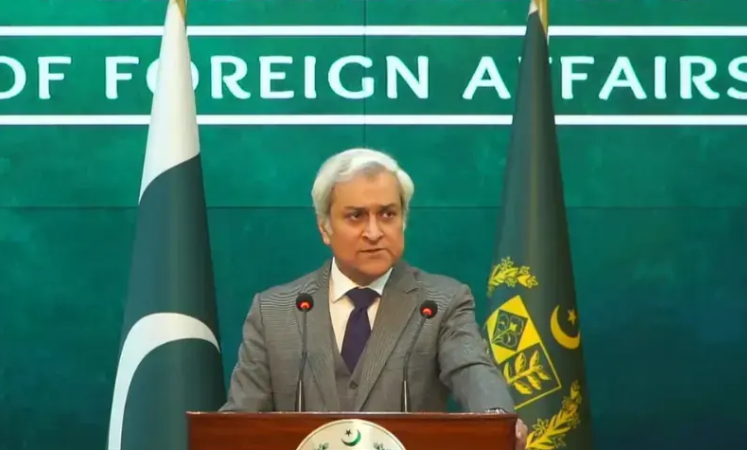
At the Ministry of Foreign Affairs’ weekly press briefing on Thursday, the spokesperson said Pakistan continued to believe that dialogue and diplomacy remain the only viable path to resolving the current tensions and restoring lasting peace and stability in the region.
The spokesperson said Pakistan welcomed all efforts aimed at sustaining the cessation of hostilities and facilitating the resumption of talks between Tehran and Washington, reaffirming Islamabad’s readiness to play a constructive role in the de-escalation process.
Pakistan Pushes for De-escalation in Strait of Hormuz
The Foreign Office said negotiations were continuing to normalize the situation in the Strait of Hormuz and reduce tensions, with Pakistan making every effort to bring the parties back to the Islamabad Memorandum of Understanding (MoU).
Islamabad hopes that the outstanding issues can be resolved in the spirit of the MoU and has urged both sides to exercise maximum restraint and fully honor their commitments to resume technical-level discussions.
The spokesperson said Pakistan remained hopeful that the ongoing diplomatic efforts would lead to de-escalation and a peaceful settlement, in line with the Pakistan-Qatar Joint Statement of June 21, 2026.
Pakistan, Saudi Arabia Coordinate on Regional Stability
Pakistan has also intensified consultations with Saudi Arabia over the deteriorating regional security environment.
On July 23, Prime Minister Shehbaz Sharif held a telephone conversation with Saudi Crown Prince and Prime Minister Mohammed bin Salman bin Abdulaziz Al Saud, during which the two leaders agreed to maintain close coordination to promote regional peace, security and stability.
The two sides also emphasized the importance of ensuring the uninterrupted flow of lawful maritime commerce through the Red Sea, Strait of Hormuz and the wider region.
Two days later, Deputy Prime Minister and Foreign Minister Senator Mohammad Ishaq Dar spoke by telephone with Saudi Foreign Minister Prince Faisal bin Farhan Al Saud. They reviewed the latest regional developments, reaffirmed the close and fraternal Pakistan-Saudi relationship, and stressed the importance of sustained diplomacy and constructive engagement to safeguard regional peace.
Dar, Jordanian Foreign Minister Discuss Palestine
On July 28, Dar held a telephone conversation with Jordanian Deputy Prime Minister and Foreign Minister Ayman Safadi, focusing on the worsening situation in Palestine.
The two foreign ministers condemned Israeli actions, discussed coordinated diplomatic efforts and reaffirmed their commitment to promoting peace, security and stability across the region.
Kuwait Visit Strengthens Bilateral and Defence Cooperation
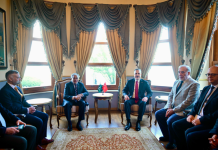
The recent official visit of Kuwaiti Foreign Minister Sheikh Jarrah Jaber Al-Ahmad Al-Sabah to Islamabad further strengthened Pakistan-Kuwait relations, with the two countries agreeing to broaden cooperation across a range of sectors.
During the visit, Pakistan and Kuwait reaffirmed their longstanding bilateral partnership and agreed to enhance cooperation in trade, investment, energy, information technology, agriculture, education and healthcare, among other priority areas.
The two sides also agreed to establish Joint Working Groups and maintain sustained high-level engagement to advance bilateral cooperation.
Dar welcomed Kuwait’s ratification of the Pakistan-Kuwait Defence Cooperation Agreement, describing it as an important step toward strengthening institutional defence relations and cooperation between the two countries.
The two sides also exchanged views on regional and international developments, reaffirming their commitment to coordination at multilateral forums and further strengthening their fraternal partnership.
Pakistan Reaffirms Commitment to SCO
The Foreign Office also highlighted Pakistan’s active participation in the Shanghai Cooperation Organisation (SCO).
Dar attended the SCO Council of Foreign Ministers meeting in the Kyrgyz Republic last Friday, where he reaffirmed Pakistan’s commitment to the SCO Charter, regional connectivity, peace and the China-Pakistan Economic Corridor (CPEC).
He invited SCO member states to participate in the 2027 Council of Heads of State Summit in Pakistan and conveyed Islamabad’s readiness to assume the SCO Chairmanship for 2026-27.
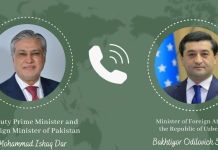
On the sidelines of the meeting, Dar held bilateral discussions with the foreign ministers of the Kyrgyz Republic, China, Iran, Kazakhstan, Belarus, Tajikistan and Uzbekistan, and also called on the President of the Kyrgyz Republic.
Pakistan Seeks Stronger Engagement with United States
Pakistan has also expressed optimism over the positive momentum in bilateral relations with the United States.
On July 28, Dar addressed an interactive session at the Ministry of Foreign Affairs with a U.S. Congressional Delegation and a 33-member U.S. business delegation.
The deputy prime minister highlighted the growing momentum in Pakistan-US relations and reaffirmed Islamabad’s commitment to strengthening bilateral ties through enhanced parliamentary engagement, economic cooperation and people-to-people exchanges.
Pakistan, Arab-Islamic States Condemn Israeli Actions
Turning to Palestine, the Foreign Office said Pakistan remains deeply concerned over the deteriorating situation and Israeli restrictions affecting Jerusalem, particularly the Al-Aqsa Mosque.
On July 24, the foreign ministers of eight Arab and Islamic countries issued a joint statement strongly condemning Israeli actions and restrictions in Jerusalem.
The ministers called on the international community to uphold international law, protect the rights of the Palestinian people and preserve the religious and historical status of the Holy City.
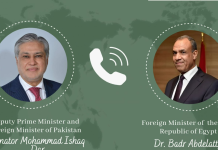
Dar also held a telephone conversation with Egyptian Foreign Minister Dr. Badr Abdelatty, during which the two sides discussed the Palestinian situation in detail.
Both ministers expressed grave concern over developments in Palestine and called for an immediate end to hostilities, unhindered humanitarian assistance and respect for international law. They also discussed coordinated diplomatic efforts in support of the Palestinian people and emphasized dialogue as a means of preserving regional peace and stability.
BY: Nadeem Faisal Baiga