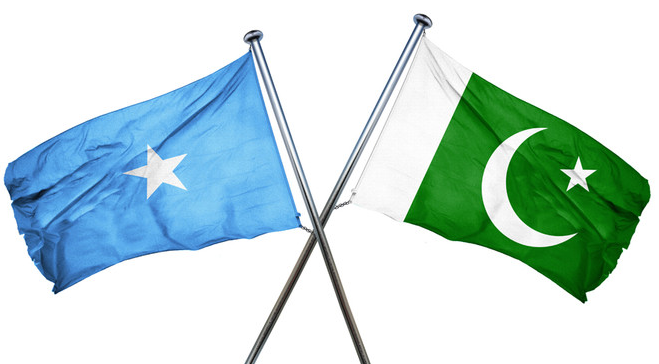
Since the establishment of diplomatic relations in 1960, the Federal Republic of Somalia and the Islamic Republic of Pakistan have cultivated a strong and strategic partnership, anchored in shared Islamic values, mutual respect, and a collective commitment to development and regional cooperation. This relationship transcends traditional diplomatic formalities and has evolved into a dynamic collaboration across multiple domains, including political engagement, economic cooperation, security coordination, and multilateral support—particularly within platforms such as the Organization of Islamic Cooperation (OIC).
As of 2024, bilateral trade between the two countries reached an encouraging figure of USD 92 million, reflecting steady progress in commercial exchange. Pakistan’s exports to Somalia consist primarily of essential goods such as rice, cement, pharmaceuticals, and bakery products, while Somalia’s exports largely include livestock and related products—sectors that hold considerable potential for growth. Both nations have expressed a strong interest in formalizing trade agreements aimed at unlocking new opportunities in key sectors such as agriculture, livestock, and pharmaceutical industries, thereby advancing a shared vision of inclusive and mutually beneficial economic development.
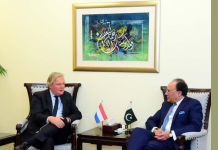
Recent high-level engagements by Somali officials reflect a deepening commitment to strengthen bilateral diplomatic relations. Notably, the Foreign Ministers of Somalia and Pakistan held constructive discussions during the Organization of Islamic Cooperation (OIC) Extraordinary Session, with particular emphasis on expanding cooperation in the fields of education, technical assistance, and institutional capacity-building. In late 2022, a Somali ministerial delegation conducted a study visit to Pakistan, focusing on its governance architecture, particularly its federal system, as part of Somalia’s broader efforts to draw comparative insights to inform its own state-building and decentralization process. Furthermore, Pakistan’s generous financial assistance toward the establishment of Somalia’s National Identification System underscores its enduring commitment to supporting governance reform and institutional development in Somalia.
The partnership continues to be enriched by longstanding cultural and educational exchanges. Since the 1980s, a significant number of Somali students have pursued higher education in Pakistan, many of whom have gone on to contribute meaningfully to Somalia’s national development and institutional capacity. At the same time, skilled Pakistani professionals—especially in healthcare, education, and infrastructure—have played an important role in advancing development efforts in Somali cities such as Mogadishu and Hargeisa, fostering deeper people-to-people ties and reinforcing the spirit of solidarity and mutual cooperation between the two nations.
Pakistan’s contribution to promoting peace and stability in Somalia remains commendable, particularly through its participation in the United Nations Operation in Somalia (UNOSOM II) during the height of the civil conflict. This historic engagement underscored Pakistan’s solidarity with Somalia and its commitment to international peacekeeping. Pakistan has also supported efforts to combat piracy in the Gulf of Aden, participating in maritime security operations aimed at protecting vital sea lanes critical to global trade and regional stability. Looking ahead, both countries recognize the value of expanding this cooperation to include joint maritime security exercises and naval coordination, which would further contribute to safeguarding the Western Indian Ocean corridor and reinforcing mutual security interests.
In parallel, Somalia’s vast and largely untapped oil and gas reserves present significant opportunities for bilateral economic engagement. As Somalia’s hydrocarbon sector begins to attract international interest, Pakistan may explore avenues for investment, knowledge transfer, and technical cooperation in upstream exploration and energy infrastructure. Such collaboration holds the potential to not only accelerate Somalia’s economic transformation but also align with Pakistan’s strategic objective of diversifying its energy imports through new and reliable partnerships. This prospective engagement represents a mutually beneficial dimension of the broader Somalia–Pakistan partnership, one that is grounded in sustainable development, strategic foresight, and long-term economic integration.
Somalia’s strategic geographical location along key maritime trade corridors places it at the heart of regional connectivity and positions it as a pivotal stakeholder in China’s Belt and Road Initiative (BRI). Active engagement in this transformative project holds the potential to attract substantial infrastructure investment, enhance logistical networks, and accelerate regional integration. In this context, Pakistan—owing to its well-established diplomatic and economic ties with both China and Somalia—is uniquely positioned to serve as a facilitator for Somalia’s inclusion in BRI-linked frameworks, thereby deepening trilateral cooperation and advancing trade-driven development.
Looking ahead, there exists a broad spectrum of opportunities to further strengthen Somalia–Pakistan collaboration. A particular focus on agricultural modernization—drawing on Pakistan’s advanced expertise in agri-tech, water management, and irrigation—can play a crucial role in revitalizing Somalia’s farming sector and enhancing food security. Likewise, joint ventures in renewable energy, especially solar and wind power, can contribute meaningfully to addressing Somalia’s growing energy demands while supporting environmentally sustainable development. Furthermore, the expansion of digital finance solutions and mobile banking platforms, modeled on Pakistan’s successful fintech experience, holds great promise in promoting financial inclusion, stimulating entrepreneurship, and contributing to poverty alleviation across Somalia’s urban and rural communities.
Ultimately, the partnership between the Federal Republic of Somalia and the Islamic Republic of Pakistan stands as a compelling example of effective South-South cooperation, grounded in shared values, mutual interests, and a forward-looking vision. By deepening trade relations, advancing coordinated efforts in regional security, and promoting joint investment in sustainable development initiatives, both nations are well-positioned to contribute meaningfully to regional stability and inclusive growth. Through continued collaboration and strategic engagement, Somalia and Pakistan can shape a more prosperous, resilient, and interconnected future—both for their peoples and the broader region.
BY:H.E Sheikhnur Mohamed Hassan, Ambassador Extraordinary and Plenipotentiary Federal Republic of Somalia to Pakistan , writes in his official capacity to highlight the deepening bilateral partnership.