- Kingsbrook Synagogue, set up at hospital to serve Jews escaping antisemitism, had been slated for destruction in development project
NEW YORK — New York State Governor Kathy Hochul intervened this week to prevent the demolition of a historical synagogue in Brooklyn.
Congregation Chaim Albert has been battling for its survival in a legal case after the medical center that owns its property, One Brooklyn Health, released development plans that included the demolition of the synagogue.
The development project, at the former Kingsbrook Jewish Medical Center Campus, was a state initiative launched by Hochul’s predecessor, Andrew Cuomo. New York’s Homes and Community Renewal, a state housing agency, oversaw the project, giving the state leverage over the plans.
The project design that included the demolition of the synagogue sparked an outcry from the Jewish community and local elected leaders before Hochul intervened.
“Kingsbrook Synagogue has been around since the early 1900s and is a testament to the strength and resilience of the Jewish community,” Hochul said in a Friday statement to The Times of Israel. The congregation’s official name is Chaim Albert, but it is generally referred to as the Kingsbrook Synagogue.
“I’m proud to have led the effort to save the historic Kingsbrook shul from its demolition and encourage leadership from the hospital and synagogue to find a path forward where both sites can prosper and serve the community,” Hochul said.
Hochul’s office did not respond to a question about how specifically she had intervened.
A spokesperson for One Brooklyn Health declined to comment.
The congregation filed a lawsuit against One Brooklyn Health in June, saying the demolition plan threatened to “wash away almost a century of Jewish religious life” at the site, and that the plan violated previous assurances to the synagogue that it would be allowed to continue operating at the site.
The Kingsbrook Jewish Medical Center was founded in the late 1920s, in the Flatbush area of Brooklyn, due to antisemitism at other hospitals in the area, especially discrimination against Jews with special needs. Jewish community members bought the lots on which the hospital was built and Jewish donations contributed to the center’s operations.
Amenities for Jews were incorporated into the medical complex, such as a kosher kitchen and space for prayer services.
The Jewish congregation was active on the hospital’s grounds since at least 1928. The original synagogue building was demolished to build X-ray rooms in 1950, and the current structure, with marble floors and stained-glass windows, was built as a replacement and named Congregation Joseph Chaim Albert, after the father of Isaac Albert, the hospital president at the time.
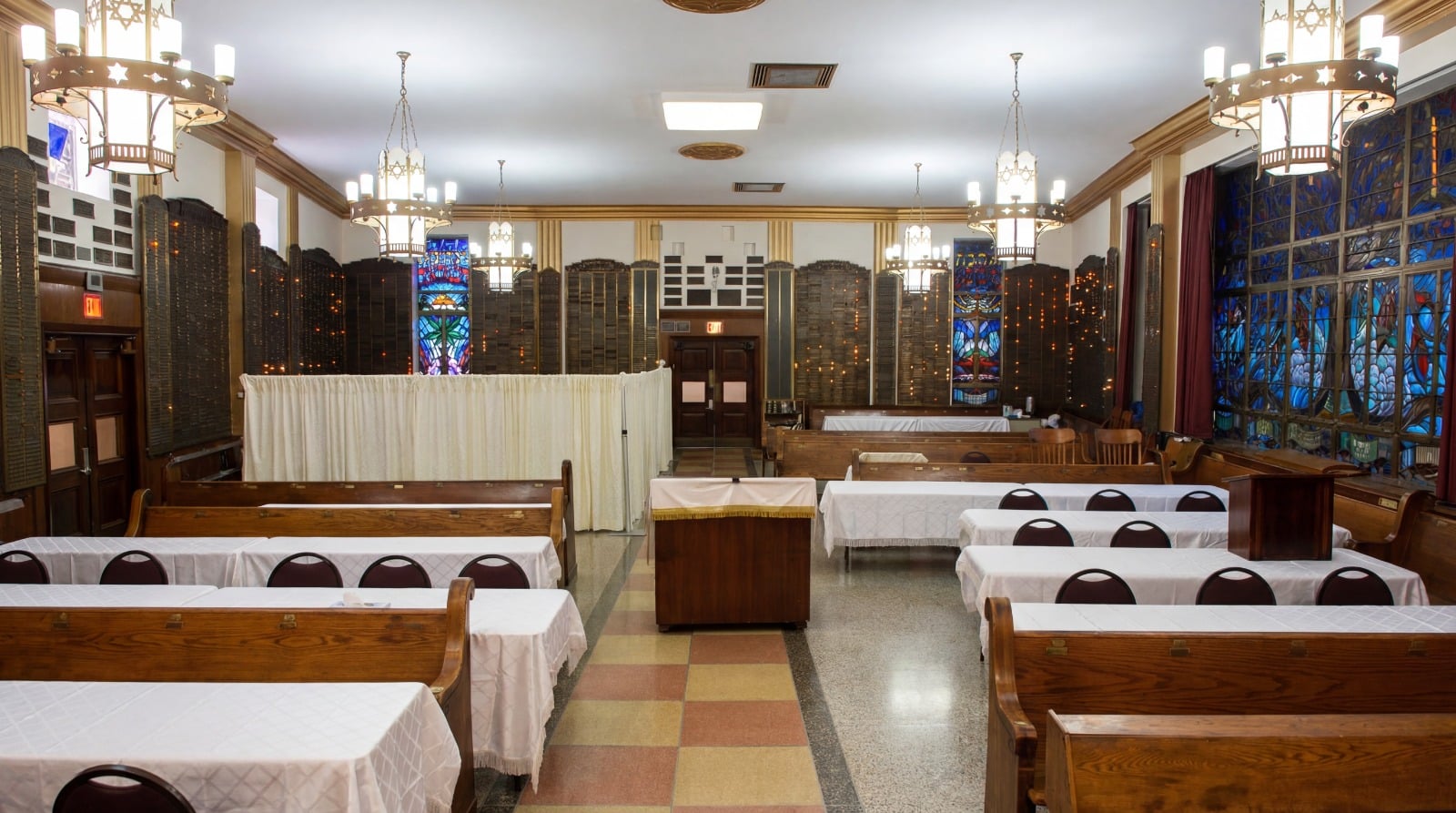
The synagogue was used by both worshipers affiliated with the hospital and other Jews from the surrounding area, including from the Hasidic community of Crown Heights.
The synagogue property was owned by the hospital, but longstanding agreements between the congregation and property owners allowed the synagogue to remain dedicated for religious use. The congregation’s members funded the building’s operations and maintenance due to those understandings, and Kingsbrook had agreed in the past that it would not sell the synagogue premises to any third party, the lawsuit said.
Kingsbrook ran into financial trouble in the early 2000s and merged with two other hospitals to form the nonprofit One Brooklyn Health — the defendant in the lawsuit.
Under the direction of state officials, the medical center opted to partially close and sell the property to real estate developers in 2019. At the time, the state told the congregation that the synagogue was not part of the redevelopment plan and would be preserved.
“Access to the synagogue will be preserved throughout and after development is complete,” a state office said in 2019.
The dispute with One Brooklyn Health began in 2020 when the synagogue was shuttered due to virus restrictions during the COVID pandemic, the lawsuit said. Hospital officials told congregants they would be allowed back in when the restrictions lifted, but the medical center has continued to block access since then, the lawsuit said.
Before the pandemic, the building held services every Shabbat and holiday, drawing around 40 worshipers each Shabbat, and around 60 people still consider themselves members.
The hospital halted inpatient services in 2023, sold a portion of the property for development, and was seeking to sell the rest of the property, including the synagogue. The plans to sell the property to a residential developer did not make any provisions for the synagogue, meaning the building would be dismantled, the lawsuit said.
The medical center has not maintained the synagogue, allowing the structure to fall into disrepair. The neglect had given the property owners an additional reason to bar the congregation, telling worshipers they cannot resume services because the building has deteriorated, according to the lawsuit.
The congregation argued the hospital had taken advantage of the COVID closures to empty the building and facilitate the sale to the property developer, since it would be easier, from a public relations and legal standpoint, to sell an empty building than to displace an active congregation.
Hochul’s intervention in the case brought relief to local Jewish community groups.
“The synagogue has stood as a beacon of light for the entire neighborhood and has been active for a century. We thank Governor Hochul for helping prevent its displacement,” said Rabbi Lazer Avtzon of the Association of Crown Heights Shuls, representing more than 100 synagogues in the area.
“We appreciate the governor’s intervention, and I look forward to bringing my children to the synagogue in the near future, as I live just three blocks away,” said Rabbi Shmuel Rosenstein of the Crown Heights Jewish Community Council.
New York State Attorney General Letitia James thanked Hochul “for intervening to save the historic Kingsbrook Shul.”
“This synagogue has been meaningful to the community for decades, and I am grateful a treasured piece of Jewish history in New York will be preserved,” James said in a statement.
Hochul endorsed New York City Mayor-elect Zohran Mamdani in his mayoral campaign and is running for reelection next year against Bruce Blakeman, a Jewish Republican who is an ally of US President Donald Trump and a harsh critic of Mamdani.
BY: The Times Union – TOI