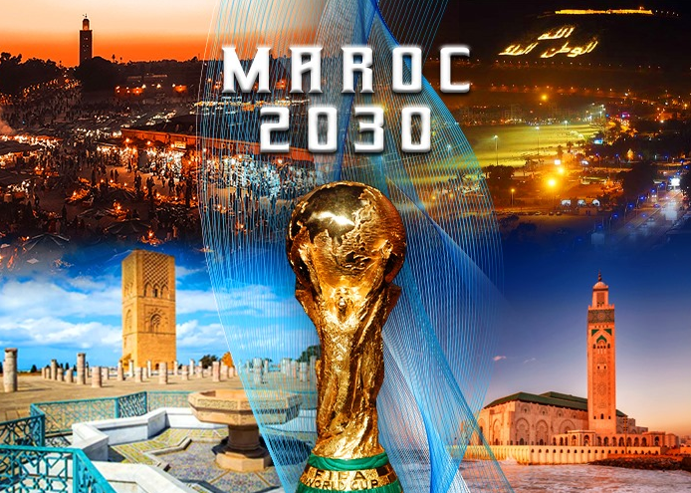
- From tourism and hospitality to construction, technology, logistics, retail and professional services, Morocco’s World Cup preparations are creating opportunities that could extend well beyond football
Morocco is entering a major new phase of economic and infrastructure development as it prepares to co-host the FIFA World Cup 2030 with Spain and Portugal. For international investors and companies, the tournament is emerging not simply as a sporting event, but as a catalyst for business activity across a wide range of sectors.
FIFA has confirmed Morocco, Portugal and Spain as the principal hosts of the 2030 World Cup, with the tournament comprising 101 matches across the host countries.
For Morocco, preparations are already accelerating investment in transport, tourism, hospitality, stadiums, airports, roads, urban development and visitor services. The International Monetary Fund estimates that Morocco’s infrastructure programme linked to connectivity and tourism could amount to MAD 190.3 billion between 2024 and 2030, covering railways, airports, stadiums, roads and urban and tourism infrastructure in six host cities.
A World Cup Opportunity Beyond Football
The scale of preparations means that opportunities are not limited to companies directly involved in stadium construction.
The expected increase in international visitors can create demand for hotels, restaurants, cafés, transportation, travel agencies, tour operators, entertainment, retail, financial services, digital platforms and professional services.
Morocco is planning to add around 60,000 hotel beds ahead of 2030, equivalent to roughly one-fifth of its existing hotel capacity, according to Reuters. The country has also set an ambition of reaching 26 million visitors by 2030.
This creates potential space for both major international investors and smaller entrepreneurs capable of providing specialised products and services.
Hotels, Resorts and Hospitality
Hospitality is among the clearest areas of opportunity.
Morocco’s tourism authorities have been seeking investment in luxury and mid-scale hotels, resorts, leisure parks and MICE facilities—covering meetings, incentives, conferences and exhibitions.
The government is already expanding accommodation capacity, while investors can look beyond traditional hotels toward:
- Boutique hotels and guesthouses
- Serviced apartments
- Holiday and beach resorts
- Family entertainment facilities
- Restaurants and cafés
- Conference and exhibition facilities
- Hospitality technology
- Cleaning and facility-management services
- Hotel supplies and equipment
The World Cup could also provide an opportunity to develop tourism products designed to encourage visitors to remain in Morocco beyond match days.
Transport and Logistics: A Major Growth Area
Millions of visitors, teams, officials, media professionals and business travellers will require efficient movement between airports, cities, hotels, stadiums and tourist destinations.
Morocco is therefore investing heavily in railways, airports, roads and urban connectivity. The IMF’s assessment identifies railway investment, including high-speed rail and regional commuter networks, as a major component of the country’s 2024–2030 infrastructure programme.
This creates potential opportunities in:
Logistics | Fleet management | Passenger transport | Car rental | Warehousing | Last-mile delivery | Aviation services | Smart mobility | Navigation technology | Fleet technology
Companies that can provide efficient, reliable and technology-driven transport services may find opportunities not only during the tournament but in Morocco’s longer-term economic development.
Construction and Infrastructure
The infrastructure programme represents another significant business ecosystem.
Morocco is upgrading stadiums in Casablanca, Rabat, Marrakech, Tangier, Agadir and Fez, while the country’s stadium authority SONARGES says six stadiums are being modernised and the Grand Stade Hassan II in Casablanca is under construction.
The opportunities extend beyond major contractors to companies supplying:
- Construction materials
- Electrical equipment
- Lighting systems
- Water and sanitation technology
- Air-conditioning and cooling systems
- Security equipment
- Building-management systems
- Renewable-energy solutions
- Landscaping
- Maintenance and facility management
For international businesses, partnerships with Moroccan companies could provide an entry point into this expanding market.
Technology and Digital Services
The 2030 World Cup will also be a major technology opportunity.
International visitors increasingly expect seamless digital services, from online booking and digital payments to transportation applications, multilingual information and smart tourism platforms.
Potential areas include:
Fintech and digital payments, cybersecurity, artificial intelligence, telecommunications, cloud services, smart-city technology, event-management platforms, digital advertising and multilingual travel applications.
The wider digital transformation associated with the tournament could create demand that continues long after the final match.
Security and Event Management
Large international sporting events require sophisticated security, crowd-management and emergency-response systems.
Morocco’s preparations are therefore also creating opportunities in security technology, surveillance systems, access control, cybersecurity, emergency communications, event management and professional security services.
A 2026 Morocco–UK business forum highlighted interest from British companies in areas including event management, security systems, infrastructure engineering and visitor services, illustrating the breadth of commercial opportunities surrounding the country’s preparations.
Food, Retail and Consumer Businesses
The arrival of international visitors will generate demand for products and services beyond traditional tourism.
Restaurants, cafés, supermarkets, convenience stores, fashion retailers, souvenir businesses, food suppliers and entertainment companies could all benefit from increased visitor activity.
There is also an opportunity for Moroccan businesses to promote Moroccan cuisine, handicrafts, fashion, cultural products and local experiences to a global audience.
For international companies, partnerships with Moroccan distributors and entrepreneurs could provide a route into the market while helping local businesses expand their capacity.
Tourism Beyond the Stadium
Perhaps one of the most important opportunities is the ability to convert football visitors into long-term tourists.
Morocco has a strong portfolio of destinations, including historic cities, beaches, mountains, desert landscapes and cultural attractions. A visitor travelling to Morocco for a match could potentially be encouraged to extend the trip into a broader holiday.
This creates opportunities for tour operators, cultural tourism companies, adventure tourism, wellness businesses, luxury travel, eco-tourism and destination-management companies.
The country’s tourism strategy is explicitly looking beyond the World Cup. Tourism Minister Fatim-Zahra Ammor has described the 2030 tournament as an “accelerator, not an end in itself,” according to Reuters.
Opportunities for Foreign Investors
Morocco is also positioning itself to attract foreign capital.
The country’s Investment Charter, introduced in 2023, includes incentives intended to attract domestic and international investment, while Moroccan authorities have been promoting opportunities in tourism and infrastructure to international investors.
For foreign businesses, the opportunity may therefore lie not only in establishing wholly owned operations, but also in joint ventures, technology partnerships, franchising, distribution agreements, construction partnerships and local supplier arrangements.
An Opportunity for Pakistani and Asian Businesses
For Pakistani companies in particular, Morocco’s 2030 preparations could offer potential areas for commercial engagement.
Businesses involved in textiles, sportswear, food products, leather goods, furniture, construction materials, engineering, IT services, tourism, hospitality supplies and logistics could explore partnerships with Moroccan companies.
Rather than viewing the World Cup solely as a short-term trading opportunity, businesses could use the event as an entry point into a market positioned between Europe, Africa and the wider Mediterranean region.
The Real Opportunity: Building for the Decade After 2030
The strongest business case may not be the World Cup itself, but the infrastructure, tourism capacity and international connectivity being created around it.
Morocco’s investment programme is designed to improve transport, tourism and urban infrastructure, with the IMF noting that the investment push is expected to improve connectivity and productive capacity over the medium term.
That means companies entering the Moroccan market should consider the post-2030 economy, rather than focusing exclusively on tournament-related demand.
Morocco’s 2030 Moment
The FIFA World Cup will give Morocco an unprecedented global platform, but its economic significance could extend far beyond football.
Hotels need to be built, airports expanded, roads improved, trains connected, cities modernised, tourists served, businesses supplied and digital services developed.
For investors, entrepreneurs and international companies willing to look beyond the stadium, Morocco 2030 represents a broad commercial ecosystem—one where tourism, infrastructure, technology, logistics, retail, hospitality and professional services can intersect.
The World Cup may last only a few weeks. The business infrastructure created for it could shape Morocco’s economy and international investment landscape for many years to come.
BY: Nadeem Faisal Baiga