- City Urges World Leaders to Reject Nuclear Weapons as International Tensions and Conflicts Escalate
HIROSHIMA: Hiroshima commemorated the 81st anniversary of the atomic bombing on Thursday with a powerful appeal for the abolition of nuclear weapons, as city leaders warned that growing geopolitical tensions and the erosion of international norms are increasing the risk of another nuclear catastrophe.
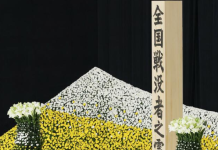
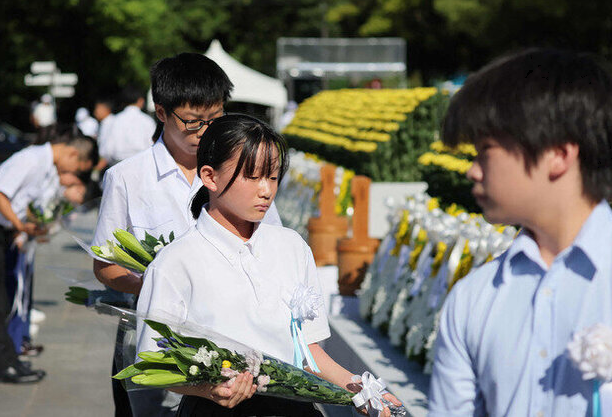
Thousands gathered at Hiroshima Peace Memorial Park to honor the victims of the world’s first wartime atomic bombing, while officials urged the international community to pursue dialogue, multilateral cooperation, and nuclear disarmament instead of military confrontation.
Mayor Warns Against Nuclear Weapons as “Tools of Intimidation”
Delivering the annual Peace Declaration, Hiroshima Mayor Kazumi Matsui cautioned that the continued reliance on nuclear weapons as instruments of deterrence and coercion threatens global peace.
He warned that diminishing awareness of the humanitarian consequences of nuclear warfare and resorting to force to achieve national interests could trigger cycles of retaliation with devastating consequences.
“Downplaying the inhumanity of nuclear weapons and accepting the use of force to pursue one’s own prosperity risk cycles of violent retaliation that could ultimately result in another Hiroshima or Nagasaki,” Matsui said.
Calling on world leaders to demonstrate responsible leadership, he stressed that any use of nuclear weapons would inflict catastrophic humanitarian consequences and reaffirmed that nuclear non-proliferation and disarmament can only be achieved through genuine multilateral cooperation.
Ceremony Honors Victims of the 1945 Atomic Bombing
At 8:15 a.m., the exact moment the U.S. B-29 bomber Enola Gay dropped the uranium bomb over Hiroshima on August 6, 1945, participants observed a minute of silence in memory of the estimated 140,000 people who died by the end of that year.
Despite intense summer heat, approximately 50,000 people attended the memorial ceremony at Peace Memorial Park near the bombing’s hypocenter.
The event attracted representatives from 121 countries and regions, along with the European Union, making it one of the most internationally attended commemorations in Hiroshima’s history.
Growing Global Security Challenges Raise Fresh Concerns
This year’s observance took place against the backdrop of heightened international tensions, including the ongoing war in Ukraine and the recent conflict involving the United States and Iran.
Mayor Matsui expressed concern over the inability of the latest Review Conference of the Treaty on the Non-Proliferation of Nuclear Weapons (NPT) to reach a consensus, blaming political divisions and unilateral actions by major powers for weakening international efforts toward disarmament.
He warned that actions undermining international law and treaty obligations continue to threaten global peace and stability.
Japan Reaffirms Commitment to a Nuclear-Free World
In her address, Japanese Prime Minister Sanae Takaichi reaffirmed Japan’s commitment to its longstanding Three Non-Nuclear Principles—not possessing, producing, or permitting the introduction of nuclear weapons into Japanese territory.
She emphasized that, as the only nation to have suffered atomic bombings during wartime, Japan bears a unique responsibility to continue advocating for a world free of nuclear weapons.
However, when questioned later about the future of the policy amid changing regional security conditions, the Prime Minister stopped short of making an explicit long-term commitment, stating only that the government continues to uphold the existing principles.
United Nations Calls for Dialogue Over Confrontation
In a message delivered by Izumi Nakamitsu, the UN Under-Secretary-General and High Representative for Disarmament Affairs, UN Secretary-General António Guterres warned that “nuclear sabers are being rattled once again in the name of power and coercion.”
He urged the international community to choose diplomacy over division and reaffirm its commitment to eliminating the threat posed by nuclear weapons.
Preserving the Legacy of the Hibakusha
With the number of surviving atomic bomb victims, known as hibakusha, steadily declining and their average age now exceeding 86 years, Hiroshima officials emphasized the importance of preserving their testimonies for future generations.
Mayor Matsui encouraged young people to carry forward the survivors’ message and help make the abolition of nuclear weapons “common sense in the international community.”
He also called on the Japanese government to participate as an observer at the upcoming Review Conference of the Treaty on the Prohibition of Nuclear Weapons, although Japan has not joined the treaty due to its reliance on the United States’ nuclear deterrence.
Survivors Continue to Advocate for Peace
Before the official ceremony began, mourners gathered at the Cenotaph for the Atomic Bomb Victims to offer flowers and prayers.
Among them was Yukiyo Kokufu, a second-generation hibakusha whose family was directly affected by the bombing. Although she did not personally witness the devastation, she grew up listening to her mother’s accounts and witnessing the lifelong physical and emotional scars left by the attack.
Now 76, Kokufu works with the Nobel Peace Prize-winning survivors’ organization Nihon Hidankyo, sharing personal stories to promote peace and prevent future generations from experiencing the horrors of nuclear war.
“War is bad. It must be avoided at all costs,” she said. “The victims are not only soldiers, but entire families and innocent civilians.”
A Lasting Reminder of the Human Cost of War
The bombing of Hiroshima was followed three days later by a second atomic attack on Nagasaki, leading to Japan’s surrender on August 15, 1945, and bringing World War II to an end.
Eighty-one years later, Hiroshima’s annual memorial continues to serve as a solemn reminder of the catastrophic humanitarian consequences of nuclear warfare and a renewed call for global peace, dialogue, and the complete elimination of nuclear weapons.
BY: The Times Union