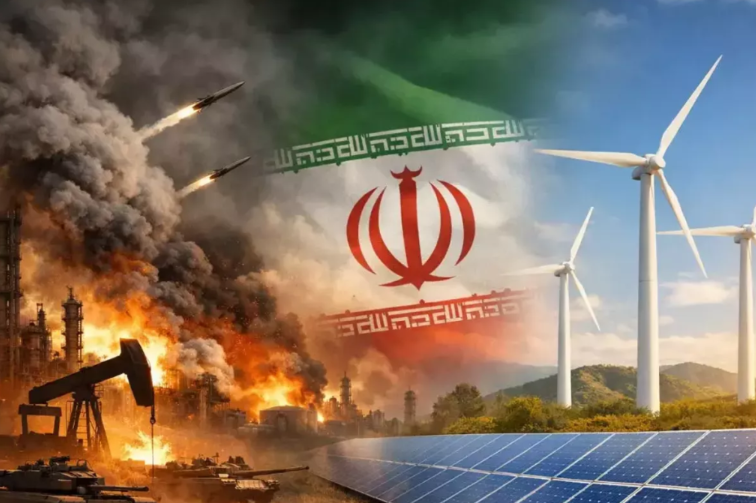
While an agreement to end the Iran crisis has yet to be signed, attention is increasingly turning to other geopolitical challenges that might become hot spots in the future. Perhaps the key takeaway from the crisis in the Middle East is the huge human and economic cost of the war, including in energy markets. While a global recession may be averted, the costs have been eye-wateringly high, including with well over 3,000 people reportedly killed. Moreover, the worst economic ramifications are potentially still to be felt in some nations, as the International Monetary Fund and World Bank flagged at their spring meetings a few weeks ago.
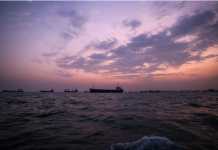
In the wake of the Middle East crisis much international attention is turning to other geopolitical fissures that could also have profound implications for the global economy. This includes the South China Sea, a major waterway where about $4 trillion of goods is transported a year, or about 30 percent of global maritime trade. The emerging fault lines in the waters include continuing tensions with not just the US, but also other countries such as the Philippines, Malaysia, Vietnam, and Brunei that are frequently in dispute with China about this key economic channel.
Any significant conflict, which could result in an air and sea blockade, or direct attack on Taiwan, is forecast by Bloomberg Economics to potentially be even bigger than the Iran crisis. It could cost the global economy up to $10.7 trillion, around 9.6 percent of global economic output, in the first year alone. To put these numbers into perspective, the damage would be greater than the economic impact of the global pandemic from 2020 onwards — plus also the 2007-09 international financial crisis which led to the collapse of Lehman Brothers and other major institutions.
While any hot conflict remains a worst-case scenario, it would also wipe trillions from global GDP, although probably less than from a major conflagration in the South China Sea involving Taiwan.
Andrew Hammond
A key reason the cost could be even higher than in the Middle East is that Taiwan is a nation of the highest importance in the global semiconductor supply chain. Any conflict could severely damage firms dependent on Taiwan’s chips, from Asia Pacific to Africa and the Americas. It is also probable that trade between China and the US plus their closest partners would nosedive. Shipping in the South China Sea could also slow to a trickle, as has been seen in the Strait of Hormuz since late February. There might also be corrections in many stock markets which are currently at, or near, all-time highs centered around the future potential of AI and wider tech which is dependent on chips.
Overall, the forecast impact by Bloomberg Economics is about 23 percent of gross domestic product in South Korea, 14.7 percent in Japan, 11 percent for China, 10.9 percent for the EU, India 8 percent, and 6.6 percent for the US. The impact could also be huge for wider nations, not least from diminished investor confidence.
The South China Sea has been one of the key issues discussed formally and on the margins of a wide range of key recent global security events, including the Shangri La conference, Asia’s premier geopolitical event, in Singapore last month. Sessions were scheduled not only on “Asia’s maritime security disorder” and “managing threats to strategic stability by enhancing littoral security in Asia,” but also “cross-regional security threats,” “building defense-industrial resilience,” “managing regional tensions amid global competition,” and “evolving security partnerships in a fragmenting world.”
Amid these topics, one other specific potential conflict that worries many in the world is the Korean Peninsula with North Korea now a nuclear power. In US President Donald Trump’s first term, from 2017 to 2021, he met with his North Korea counterpart Kim Jong Un several times, including at the Singapore summit in 2018, but no major peace breakthrough was ultimately delivered. Pyongyang has since said that it would continue expanding its nuclear arsenal and dismissed renewed US calls for denuclearization as an “anachronistic dream.”
Coincidentally, Chinese President Xi Jinping visited North Korea last week for the first time since the pandemic. Discussions about North Korea’s denuclearization were notably absent from state media readouts of the talks. In recent years, Beijing has significantly toned down its calls to denuclearize the peninsula and largely avoided mentioning the subject publicly. This despite the fact that Kim in 2024 formally declared that South Korea is the North’s “principal enemy.” While any hot conflict remains a worst-case scenario, it would also wipe trillions from global GDP, although probably less than from a major conflagration in the South China Sea involving Taiwan.
Taken together, and framed by the Iran crisis, a fresh look is being taken at a wider range of geopolitical challenges that could be future hot spots. As over the last three-and-a-half months in the Middle East, the escalation of tensions could hit the global economy hard, and raise risks of the regional conflagrations spreading to wider geographies.
BY: Writer Andrew Hammond is an associate at LSE IDEAS at the London School of Economics.
Disclaimer: Views expressed by writers in this section are their own and do not necessarily reflect The Times Union’ point of view