- Autumn Economic Forecast Projects Steady Growth Despite Inflationary Pressures and Tighter Financial Conditions
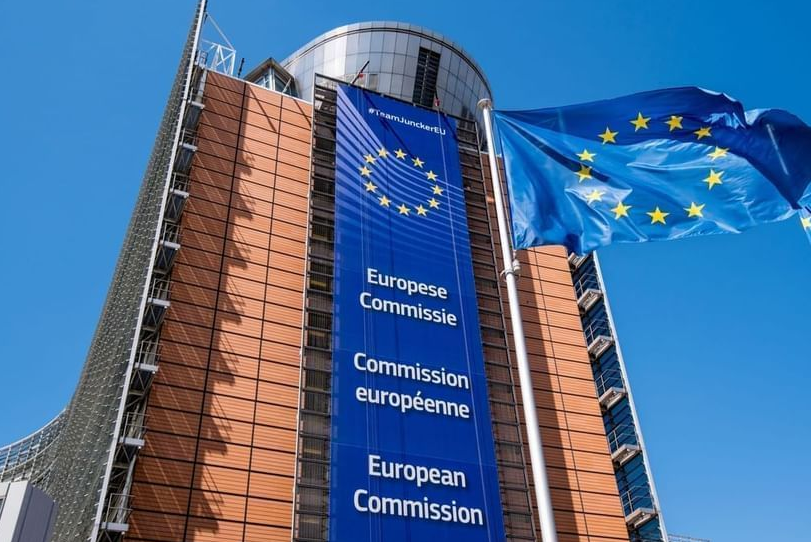
BRUSSELS: The European Union economy has demonstrated greater resilience than anticipated during the first three quarters of 2026, with economic activity expected to continue expanding over the coming years despite persistent inflationary pressures and tighter financing conditions, according to the European Commission’s Autumn 2026 Economic Forecast.
The report projects that the EU’s real Gross Domestic Product (GDP) will grow by 1.4 percent in both 2026 and 2027, accelerating slightly to 1.5 percent in 2028.
The euro area is expected to follow a similar trajectory, with economic growth forecast at 1.2 percent in 2026 and 2027, rising to 1.3 percent in 2028.
EU Economic Activity Supported by Consumption and Export Recovery
According to the Commission, stronger-than-expected economic performance was largely driven by stable household consumption and a significant rebound in goods exports, while investment remained slightly below earlier expectations.
Household purchasing power and private consumption are expected to recover gradually as real disposable incomes improve. Meanwhile, robust external demand is projected to sustain exports as an important contributor to economic activity in the coming year.
The forecast suggests that continued domestic demand and international trade will help underpin the EU economy’s growth momentum despite challenging global economic conditions.
Inflation Remains a Major Economic Challenge
The Commission expects inflation to remain elevated in the near term before gradually easing towards 2028.
Annual inflation across the EU is forecast to reach 3.3 percent in 2026 and 3.2 percent in 2027, before declining to 2.3 percent in 2028.
In the euro area, inflation is projected at 3.2 percent in 2026 and 3.1 percent in 2027, easing to 2.1 percent in 2028.
The report noted that euro area inflation reached 4 percent in October and is expected to peak above that level between late 2026 and early 2027 before gradually moderating.
Energy inflation is expected to ease next year. However, food prices could face renewed upward pressure due to higher energy and fertiliser costs, alongside agricultural disruptions caused by extreme summer weather conditions.
Labour Market Remains Strong Despite Slower Employment Growth
The EU labour market is expected to remain relatively resilient, although employment growth is projected to moderate.
The forecast anticipates the creation of approximately 800,000 additional jobs across the EU in 2026. The unemployment rate is expected to remain close to 6 percent, maintaining historically low levels, while labour force growth is projected to remain modest.
Wage growth is also expected to be slightly stronger than anticipated in the Commission’s Spring Forecast and marginally exceed inflation, supporting moderate improvements in workers’ real purchasing power.
Energy Transition Seen as Key to Long-Term Economic Resilience
The European Commission highlighted developments in international energy markets as an important factor influencing the EU’s economic outlook.
More favourable energy market conditions could help reduce inflationary pressures while providing additional support for economic growth.
The report also emphasized the strategic importance of accelerating Europe’s energy transition, particularly efforts to reduce dependence on imported fossil fuels.
Strengthening domestic and renewable energy capacity would not only improve Europe’s energy security but also enhance its economic resilience against external shocks and fluctuations in international energy markets.
EU Outlook Points to Continued Growth Amid Global Uncertainty
Overall, the Autumn 2026 Economic Forecast presents a cautiously positive outlook for the European economy, with steady growth expected despite inflation, financial constraints and uncertainties in global markets.
The Commission’s projections underline the importance of resilient domestic demand, competitive exports, stable employment and energy diversification in sustaining Europe’s economic performance over the coming years.
BY: The Times Union