


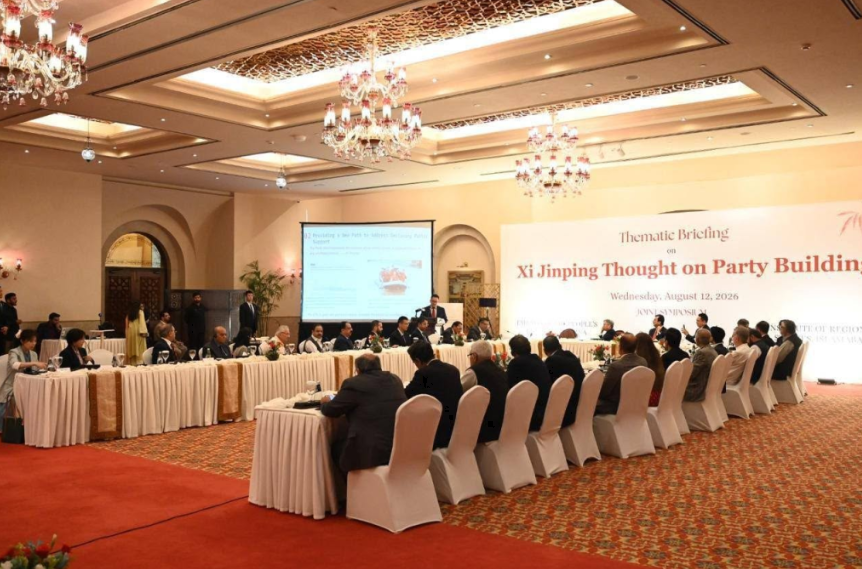
- Chinese Embassy, IRS Convene Thematic Briefing in Islamabad
ISLAMABAD: The Chinese Embassy in Pakistan and the Institute of Regional Studies (IRS) on Wednesday jointly hosted a thematic briefing on “Xi Jinping Thought on Party Building,” bringing together Chinese experts, Pakistani political representatives, academics, journalists and other stakeholders to exchange views on party governance, development and China-Pakistan cooperation.
A delegation of experts from the International Department of the Central Committee of the Communist Party of China (IDCPC) also participated in the seminar.
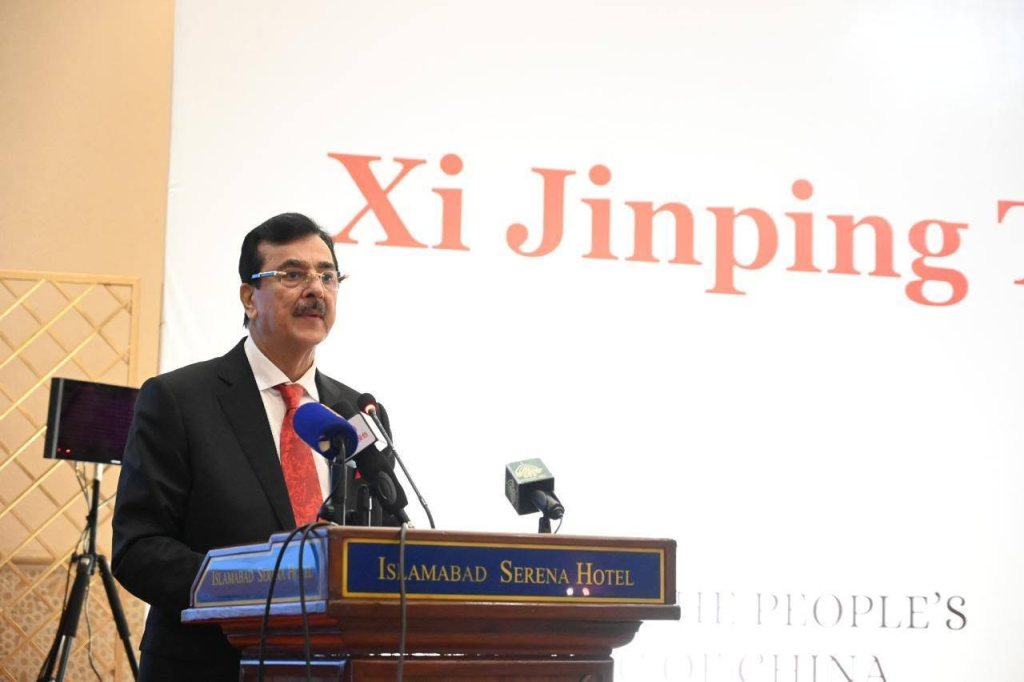
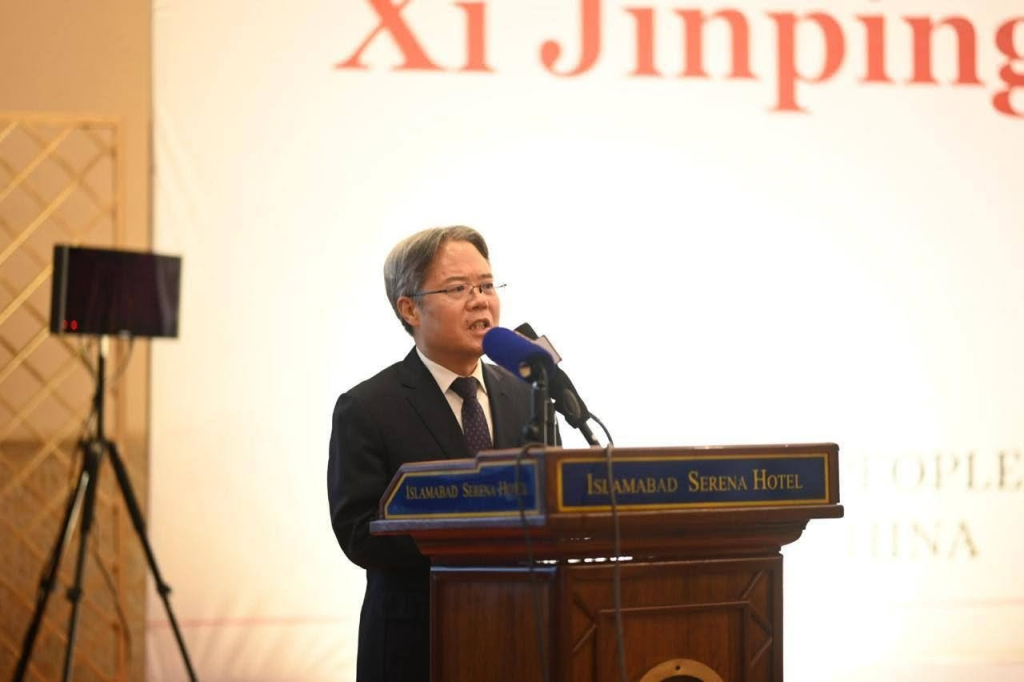
Chairman Senate Yousaf Raza Gilani attended the event, while Chinese Ambassador to Pakistan Jiang Zaidong expressed appreciation to President Asif Ali Zardari for his attention to the seminar and thanked all participants and organisers for their contributions.
Ambassador Jiang said the briefing provided an important opportunity for both sides to deepen mutual understanding and exchange experiences on party building and governance.
“Xi Jinping Thought on Party Building is profound and rich in connotation, calling for consistent efforts to study, understand and apply it,” he said.
He described the presentations by Chinese experts as comprehensive and insightful, adding that the seminar was both timely and necessary for strengthening exchanges and mutual learning between China and Pakistan.
People-Centred Development at the Core
Highlighting his observations from studying and applying Xi Jinping Thought on Party Building, Ambassador Jiang said that putting people first should remain central to efforts aimed at advancing China-Pakistan cooperation.
He said the Communist Party of China (CPC) remained committed to serving the public good and governing in the interests of the people.
Referring to Xi Jinping Thought on Party Building, he said the principle of remaining true to the Party’s original aspiration and founding mission was fundamentally linked to improving the well-being of the Chinese people and advancing the rejuvenation of the Chinese nation.
The ambassador cited China’s poverty alleviation campaign as a major example of this approach. He said President Xi Jinping had undertaken extensive field research and promoted targeted poverty alleviation, contributing to China’s successful elimination of absolute poverty.
According to Ambassador Jiang, millions of Party members and government officials participated in the campaign, demonstrating the CPC’s ability to mobilise resources and coordinate large-scale national initiatives.
He said the experience reflected the importance of the CPC’s leadership and the principle of upholding the centralised and unified leadership of the Party Central Committee.
CPEC Driving Socio-Economic Development
Ambassador Jiang said the people-centred approach was also reflected in the development of China-Pakistan relations, particularly through the China-Pakistan Economic Corridor (CPEC).
He said President Xi Jinping had consistently expressed support for Pakistan’s national development and people’s livelihoods, while China’s policy toward Pakistan was directed towards the Pakistani people as a whole.
According to the ambassador, CPEC has so far generated more than $25.9 billion in direct investment, created over 260,000 jobs, added more than 8,000 megawatts to power-generation capacity, constructed approximately 510 kilometres of highways and developed 886 kilometres of core national power-transmission networks.
He said CPEC had provided significant momentum to Pakistan’s socio-economic development and represented an important example of high-quality Belt and Road cooperation.
75 Years of China-Pakistan Diplomatic Relations
Ambassador Jiang noted that 2026 marks the 75th anniversary of diplomatic relations between China and Pakistan, describing the milestone as an opportunity to further consolidate the longstanding bilateral partnership.
He said President Xi Jinping had reached important understandings with President Zardari and Prime Minister Muhammad Shehbaz Sharif on advancing bilateral cooperation, with both sides working to implement the agreed priorities.
Referring to a recent visit to an industrial park in Faisalabad, the ambassador said 39 Chinese private enterprises were operating there, most of them successfully.
He noted that five ceramic companies alone were paying nearly $20 million in annual taxes and providing more than 5,000 jobs to local workers.
“These are among many inspiring examples of mutual commitment delivering tangible benefits for our peoples,” he said.
Ambassador Jiang said China was ready to work with Pakistan to advance both major development projects and smaller livelihood-oriented initiatives aimed at improving public welfare and promoting common prosperity.
Greater Focus on Party-to-Party Exchanges
The ambassador stressed that, alongside practical economic cooperation, China and Pakistan should strengthen mutual learning in party governance and state administration.
He said political parties around the world were facing common challenges concerning effective governance, institutional development and responding to rapid global changes.
According to Ambassador Jiang, Xi Jinping Thought on Party Building offered China’s perspective on strengthening party organisations, combating corruption, maintaining political discipline and ensuring long-term institutional vitality.
He said the approach placed particular emphasis on comprehensive and rigorous Party governance, self-reform and the fight against corruption.
The ambassador argued that these experiences could provide useful references for political parties, particularly in developing countries, as they sought to strengthen their institutions and pursue independent paths to modernisation.
China-Pakistan Political Party Cooperation Expanding
Ambassador Jiang said exchanges between the CPC and Pakistani political parties had continued to expand.
He noted that the two sides had signed a memorandum of understanding on inter-party cooperation, established a political party consultation mechanism for CPEC and held the China-Pakistan Political Parties Forum.
He said China regularly invited representatives of Pakistani political parties to participate in visits, conferences and exchanges, while also supporting livelihood-oriented initiatives through platforms such as the Silk Road Workshop.
He noted that a senior delegation of Pakistani political parties visited China’s Hubei Province in May, while the second China-Pakistan Political Parties Forum and the Political Party Consultation Mechanism Meeting for CPEC were also held during the month.
Leaders and representatives of 12 major Pakistani political parties participated in the forum, where the two sides reached broad understanding on strengthening traditional friendship and expanding practical cooperation.
Chinese Expert Outlines Global Relevance
Prof. Zheng Huan of the Party Building Department at the Party School of the CPC Central Committee delivered a detailed presentation on the global significance of Xi Jinping Thought on Party Building and its relevance to political parties confronting governance and development challenges.
He said the thought, developed following the 18th CPC National Congress in 2012, provided guidance for comprehensive and rigorous Party self-governance, organisational strengthening and maintaining the Party’s long-term vitality.
Prof. Zheng identified five major contributions that he said the approach offered to political parties.
The first was described as a development model based on long-term planning and stable policy implementation, extending beyond electoral cycles. He highlighted China’s economic performance under the 14th Five-Year Plan and its progress in poverty reduction.
The second focused on people-centred governance and strengthening public trust by prioritising citizens’ welfare.
The third related to overcoming organisational challenges through an extensive grassroots Party network, which, he said, had enabled the mobilisation of large numbers of officials and cadres for development, poverty alleviation and disaster response.
The fourth concerned China’s anti-corruption strategy, which combines institutional enforcement, prevention and ideological and ethical education.
The fifth contribution, he said, was a new approach to party-to-party relations, based on non-interference, mutual respect, inclusiveness and dialogue.
Prof. Zheng said the CPC maintained exchanges with more than 700 political parties and organisations in over 170 countries, reflecting what he described as China’s commitment to international party-to-party engagement.
Three-Pronged Approach to Global Understanding
Prof. Zheng also outlined a three-step approach to promoting international understanding and academic research on Xi Jinping Thought on Party Building.
The first step, he said, was to deepen theoretical research into its intellectual origins, cultural foundations and practical experience.
The second was to translate political concepts into accessible international language and connect them with values shared across different societies.
The third involved strengthening cooperation among governments, media organisations and think tanks to create platforms for dialogue and jointly address global governance challenges.
IRS Chairman, Political Representatives Participate
Chairman of the Institute of Regional Studies Jauhar Saleem, representatives of various Pakistani political parties, experts and members of the journalist community also participated in the seminar.
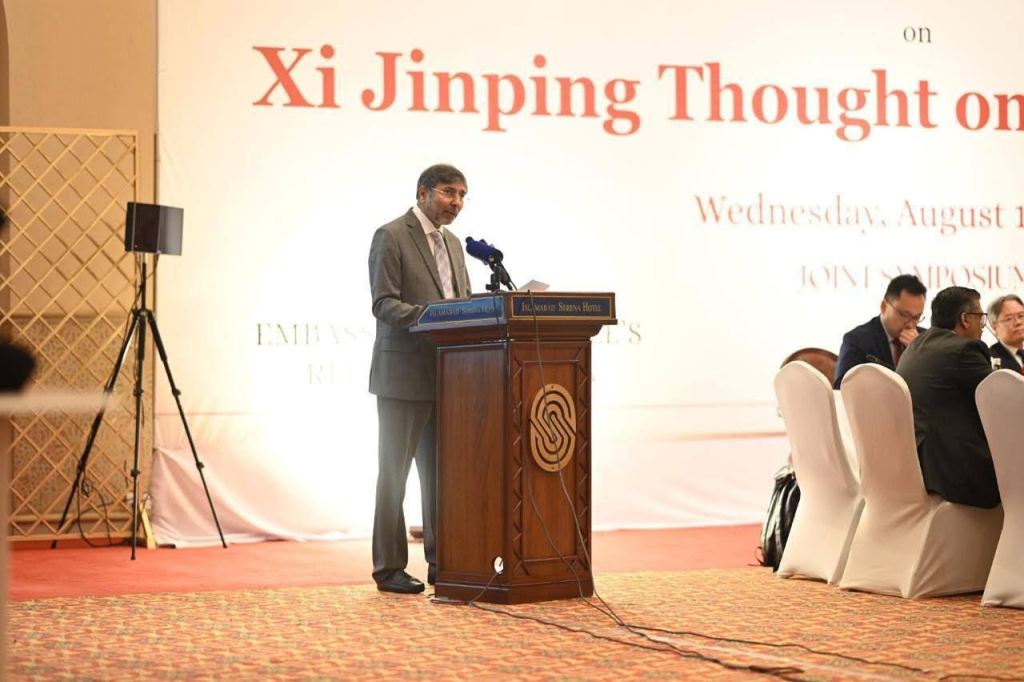
Participants welcomed the opportunity for dialogue on governance and party-building experiences and acknowledged China’s development achievements and efforts to improve the well-being of its people.
Concluding his remarks, Ambassador Jiang said China was ready to work with Pakistani political parties to implement the consensus reached by the leadership of both countries, expand “political party-plus” cooperation and strengthen inter-party exchanges and mutual learning.
He said the seminar would contribute to deepening the China-Pakistan all-weather strategic cooperative partnership and help create new opportunities for cooperation and development.
“May the friendly relations between the CPC and Pakistani political parties remain vibrant and dynamic. May both China and Pakistan enjoy peace and prosperity. May the China-Pakistan friendship endure forever,” Ambassador Jiang said.
BY: Nadeem Faisal Baiga


