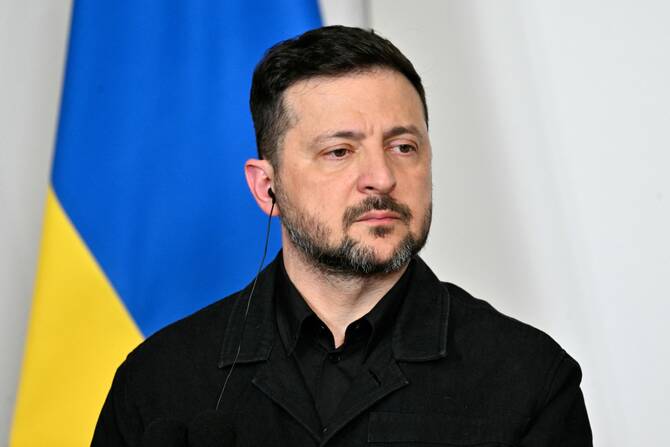
The Iran war has created multiple geopolitical challenges and uncertainties but also some opportunities. One of these is the role that Ukraine has been playing as a promoter of global security in recent weeks. President Volodymyr Zelensky saw a window of opportunity to improve security in the Gulf, while deepening relations with Arab countries, and seized it. The relationships that will result will be mutually beneficial for both Ukraine and the Gulf states.
After Russia’s invasion of Ukraine in 2022, Kyiv became an importer of outside assistance and military systems. But more than four years later, times have changed. As recent events in the Middle East have shown, Ukraine has not only survived the invasion and halted Russia’s advance, it has also developed a modern, technology-based defense industry that can provide much-needed security assistance to other regions of the world, particularly the Gulf.
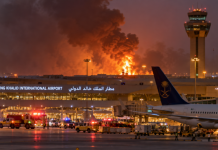
The fact that Zelensky has been able to sign security agreements with Saudi Arabia, the UAE and Qatar in recent weeks should come as no surprise. The threat these countries face from Iranian drones and missiles is significant. Due to the intensity of the war in Ukraine and the fact that most airstrikes against Ukraine have been conducted by drones — many originally manufactured, designed or inspired by Iranian systems — there is no country in the world with more recent experience confronting Iranian aerial threats than Ukraine.
There is no country in the world with more recent experience confronting Iranian aerial threats than Ukraine
Luke Coffey
But this recent diplomatic engagement did not emerge overnight. It is the result of sustained statecraft by Zelensky and his team. Since the beginning of the Ukraine war, Kyiv has engaged with Arab countries on issues ranging from unlocking grain exports in the Black Sea to seeking regional assistance with prisoner exchanges and peace efforts with Russia. Ukrainian officials have traveled frequently to the region, building relationships that now provide the foundation for deeper security cooperation.
So far, the results speak for themselves. More than 200 Ukrainian personnel, including military specialists, have reportedly deployed across the region to assist Gulf states in defending their skies against drone threats. Ukraine has also developed domestically produced counterdrone systems that have been shared with partners in the Gulf. This is a mutually beneficial arrangement. Gulf states gain access to combat-tested Ukrainian technology and hard-earned operational experience, while Ukraine receives much-needed financial support and energy cooperation.
Even if the current ceasefire temporarily reduces the immediate threat from Iranian drones and missiles, there is no guarantee this will last. Ukraine and the Gulf states should seize this moment to elevate their partnership.
First, Ukraine should finalize agreements with the remaining Gulf Cooperation Council states. Talks with Kuwait, Bahrain and Oman are reportedly ongoing. It is in the interest of these countries to conclude agreements quickly so they can begin integrating Ukrainian expertise and equipment into their defense structures. Kyiv has demonstrated both willingness and capability; the remaining Gulf states should take advantage of this opportunity.
Second, Ukraine and its Gulf partners should develop joint procurement and financing mechanisms, including co-production of air defense capabilities inside Ukraine. Ukraine’s defense industrial base has enormous potential. Prior to Russia’s 2014 invasion, Ukraine consistently ranked among the world’s top 10 arms exporters. Today, after years of high-intensity conflict, Ukraine’s defense sector has become even more innovative and battle-tested.
However, while Ukraine has the engineering talent and industrial capacity, it lacks sufficient investment capital. Zelensky has made it clear that additional financial support would allow Ukraine to significantly expand production. Gulf investment could help scale this capacity, while ensuring faster access to critical systems for Gulf partners.
Ukraine could play a meaningful role in efforts to secure the Strait of Hormuz and ensure the flow of global trade
Luke Coffey
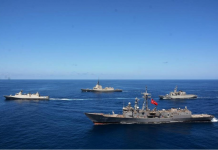
Third, cooperation should expand beyond air defense to include maritime security. Ukraine could play a meaningful role in efforts to secure the Strait of Hormuz and ensure the continued flow of global trade. Drawing on its experience in the Black Sea, Ukraine has developed advanced capabilities in mine countermeasures and unmanned naval systems.
In fact, Ukraine is now among the most experienced actors in the use of maritime drones for combat operations. Zelensky has indicated Ukraine’s willingness to contribute to efforts to keep strategic waterways open and, with sufficient financing, Kyiv could scale production of its unmanned maritime platforms to support such missions.
Finally, this growing Ukraine-Gulf partnership presents an opportunity to bring NATO and the GCC closer together on shared security challenges. Air defense is a natural starting point. Both Europe and the Gulf face similar threats from missiles and drones and there is a clear expectation from their populations that governments will act to protect critical infrastructure and civilian lives. Ukraine, given its unique experience, can serve as a bridge between NATO and Gulf partners to help develop a more integrated air defense picture stretching from the Gulf of Finland to the Gulf of Oman.
This is not only about military cooperation. It is about protecting civilian populations, securing vital infrastructure such as desalination plants and ensuring that airspace and maritime routes remain open for the safe movement of people and goods.
The recent agreements between Ukraine and several Gulf states are an important first step. But they should be seen as the beginning of a broader strategic partnership. The conditions now exist to deepen cooperation in ways that benefit both Ukraine and the Gulf. The next phase should focus on expanding participation, increasing investment and widening the scope of collaboration.
Ukraine is no longer just a recipient of security assistance. It is emerging as a provider of it. The Gulf states have recognized this reality. Now is the time to build on it.
BY: Writer Luke Coffey is a senior fellow at the Hudson Institute.
Disclaimer: Views expressed by writers in this section are their own and do not necessarily reflect The Times Union‘ point of view