- Festival of Lights Celebrates the Triumph of Good over Evil, Knowledge over Ignorance and Hope over Despair
- Hindu Community Marks Diwali with Traditional Rituals, Colourful Decorations and Festive Markets Across the City
KARACHI: The Hindu community across Pakistan, particularly in Karachi, celebrated Diwali, the festival of lights, with traditional enthusiasm and devotion, highlighting the enduring message of peace, hope, prosperity and the triumph of good over evil.
Observed on the new-moon night, known as Amavas, during the Hindu lunar month of Kartika, Diwali is one of the most significant festivals in Hinduism. The illumination of homes, streets and public spaces, accompanied by fireworks, symbolises the victory of light over darkness, knowledge over ignorance and hope over despair.
Religious and Historical Significance of Diwali
Diwali commemorates the triumphant return of Lord Shri Rama Chandra to Ayodhya following 14 years of exile. According to Hindu scriptures, Rama, accompanied by his wife Sita and younger brother Lakshmana, spent their years of exile in the forest after being separated from their kingdom.
During this period, Ravana, the demon king of Lanka, abducted Sita and took her to his kingdom. With the assistance of Lakshmana and the devoted Hanuman, Rama assembled an army and launched a campaign against Ravana to rescue Sita.
Following the defeat of Ravana and Sita’s rescue, Rama returned to Ayodhya, where residents welcomed the royal family by illuminating their homes and pathways with traditional clay lamps, known as diyas. This historic and religious narrative remains central to the festival’s symbolism.
Traditional Decorations, Prayers and Celebrations
The festival is marked by colourful decorations, illuminated homes, traditional sweets, family gatherings and the exchange of gifts. Hindu families clean and decorate their houses, prepare special delicacies, purchase new clothes and jewellery, and create beautiful rangoli designs at their entrances.
These colourful patterns, traditionally made with coloured powders, flowers and other decorative materials, are associated with Goddess Lakshmi, the Hindu deity of wealth and prosperity. According to tradition, Goddess Lakshmi is welcomed into clean, beautifully decorated and brightly illuminated homes during Diwali.
Lighting diyas and fireworks remains among the festival’s most recognisable traditions, symbolising the spread of happiness, prosperity and positive energy.
Karachi Hosts Major Diwali Markets and Festive Activities
In Karachi, extensive preparations were witnessed across the city, with several Diwali markets and festive bazaars providing members of the Hindu community with opportunities to purchase traditional decorations, clothing, sweets, jewellery and gifts.
Among the prominent celebrations was the largest-ever Diwali Bazaar at Faizy Rameen Auditorium. Other festive markets and activities were organised at the grounds behind Shri Swami Narayan Temple, Shri Ratneshwar Mahadev Temple in Clifton, and Port Grand, which offered free entry to members of the Hindu community.
These gatherings provided vibrant spaces for families and visitors to participate in the celebrations while experiencing the cultural traditions associated with the festival.
Muslims Join Hindu Friends in Celebrating Diwali, Strengthening Interfaith Harmony
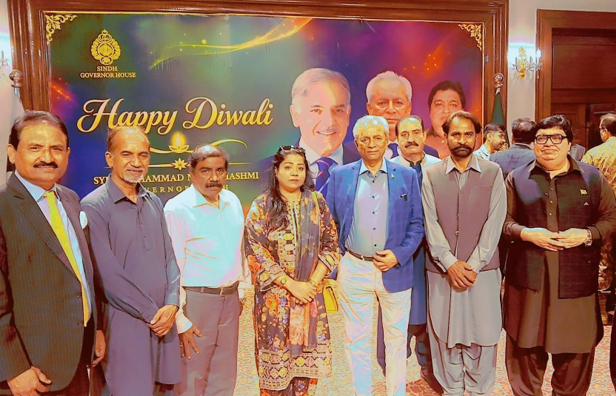
An encouraging aspect of the celebrations was the participation of Muslim citizens, who joined their Hindu friends and neighbours in marking the occasion by lighting traditional diyas, sharing sweets and exchanging festive greetings.
Such gestures reflect the spirit of religious coexistence, mutual respect and cultural diversity within Pakistani society. Participation across religious communities also highlights the importance of building bridges between people through shared celebrations and social interaction.
Beyond its religious significance, Diwali offers an important message for humanity: light can overcome darkness, goodness can prevail over evil, and hope can emerge even in challenging times.
The celebrations in Karachi served as a positive expression of Pakistan’s pluralistic social fabric, demonstrating how cultural traditions and shared festivities can strengthen friendship, mutual understanding and peaceful coexistence among different religious communities.
BY: The Times Union