- Iranian Ambassador Reza Amiri Moghadam Calls for Equal Dialogue, Regional Ownership of Security and Implementation of Islamabad MoU
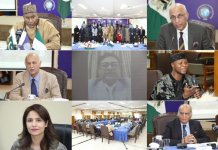
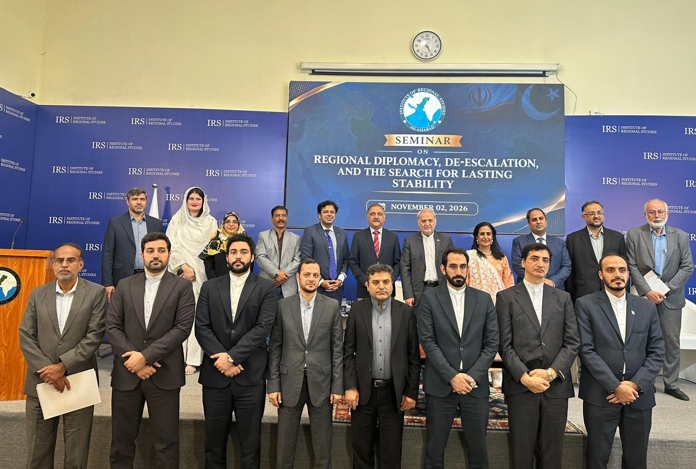
ISLAMABAD: The Institute of Regional Studies (IRS), Islamabad, hosted a high-level seminar titled “Regional Diplomacy, De-escalation, and the Search for Lasting Stability,” bringing together diplomats, security experts and foreign policy analysts to examine escalating regional tensions, diplomatic initiatives and pathways towards sustainable peace.
H.E. Dr. Reza Amiri Moghadam, Ambassador of the Islamic Republic of Iran to Pakistan, attended as the chief guest. Discussions focused on Pakistan’s diplomatic engagement, Iran-Pakistan relations, regional security arrangements, maritime stability and the importance of dialogue in resolving disputes.
The seminar highlighted the need for sustained diplomatic engagement, mutual respect and regionally driven solutions to address security challenges and prevent further escalation.
IRS President Underscores Pakistan’s Commitment to Dialogue
In his welcome remarks, Ambassador Jauhar Saleem, President of the Institute of Regional Studies, highlighted the far-reaching economic and security consequences of prolonged regional conflicts.
He drew attention to disruptions in energy supplies, maritime routes and international trade, noting that instability in strategically important regions carries implications well beyond the immediate conflict zones.
Ambassador Saleem reaffirmed Pakistan’s commitment to dialogue and diplomatic engagement aimed at bringing the parties concerned to the negotiating table. He stressed that mutual trust, constructive engagement and collective security were essential foundations for achieving lasting regional stability.
He also emphasised the importance of diplomatic initiatives in reducing tensions and promoting cooperation among regional stakeholders.
Iranian Ambassador Welcomes Pakistan’s Diplomatic Initiatives
Addressing the seminar as chief guest, Ambassador Dr. Reza Amiri Moghadam appreciated Pakistan’s diplomatic efforts to promote regional de-escalation, particularly its engagement with Türkiye and Saudi Arabia.
He reiterated Iran’s willingness to expand regional cooperation, stressing that meaningful de-escalation must be based on negotiations conducted with equality, mutual respect and recognition of national sovereignty.
The Iranian envoy maintained that diplomacy should not be understood as surrender, but as a process through which parties can address differences while safeguarding their legitimate interests.
He also called for greater regional ownership of security, arguing that countries in the region should play a leading role in shaping security arrangements rather than relying excessively on external powers.
Nuclear Issue and Maritime Security Remain Key Concerns
Discussing Iran’s nuclear programme, Ambassador Moghadam referred to Iran’s commitments under the Nuclear Non-Proliferation Treaty (NPT) and emphasised the importance of International Atomic Energy Agency (IAEA) verification and respect for international rules.
He also called for implementation of the Islamabad Memorandum of Understanding (MoU), rebuilding regional trust and addressing maritime security concerns, particularly those surrounding the strategically important Strait of Hormuz.
The ambassador stressed that sustainable stability would require dialogue, reciprocal commitments and recognition of the legitimate interests of all parties.
His remarks placed particular emphasis on the relationship between diplomatic agreements, regional confidence-building and the security of vital international shipping routes.
Pakistan’s Potential as a Diplomatic Bridge
Ambassador Naela Chohan, former Pakistani ambassador to the Middle East, highlighted Pakistan’s potential to serve as a diplomatic bridge among regional stakeholders.
She underscored the importance of mediation, confidence-building measures and institutional cooperation in helping countries manage disagreements and prevent further escalation.
Her remarks highlighted Pakistan’s strategic position and diplomatic relationships as potential assets in facilitating communication and encouraging peaceful engagement among regional actors.
Security Experts Advocate Institutionalised Pakistan-Iran Dialogue
Major General (Retd) Zahid Mahmood, Principal of the NUST Institute of Peace and Conflict Studies, observed that military strength alone could not provide a sustainable solution to complex regional conflicts.
He called for institutionalised dialogue between Pakistan and Iran, improved joint border management and the development of cooperative regional security arrangements.
He emphasised that effective security cooperation requires consistent communication, institutional mechanisms and a shared commitment to addressing common challenges.
Analysts Examine Pakistan’s Regional Diplomatic Challenges
Mr. Syed Baqir Sajjad, foreign policy journalist and analyst at Dawn News, examined Pakistan’s diplomatic opportunities and the challenges of balancing its relationships and commitments across the Persian Gulf, South Asia and Central Asia.
He highlighted the complexities of regional diplomacy and the importance of carefully navigating competing interests while preserving constructive relationships with key partners.
Dr. Bilal Zubair, Director of Research at the Centre for International Strategic Studies (CISS), Islamabad, emphasised the need for regionally led security mechanisms, protection of maritime routes and sustained diplomatic engagement.
He also highlighted the potential importance of the Islamabad MoU in supporting dialogue and addressing outstanding regional concerns.
Iranian Ambassador Addresses Questions on US Military Presence, Gaza and Strait of Hormuz
During the interactive question-and-answer session, Ambassador Moghadam responded to questions concerning US military bases in Arab countries, the situation in Gaza, the Islamabad MoU and maritime security in the Strait of Hormuz.
He questioned whether regional countries could collectively call for the withdrawal of foreign military bases and raised concerns regarding alleged Israeli violations of the Gaza ceasefire.
Addressing the Islamabad MoU, the ambassador alleged that the United States had violated the agreement. He also questioned the emphasis on reopening the Strait of Hormuz without, in his view, adequately addressing the naval blockade against Iran.
He reiterated Iran’s willingness to cooperate and facilitate the reopening of the strategic waterway, linking such cooperation to the implementation of the Islamabad MoU.
The exchange highlighted differing perspectives on regional security, the implementation of diplomatic understandings and the conditions required to restore confidence among the parties concerned.
Regional Ownership and Dialogue Central to Lasting Stability
The seminar concluded with a renewed emphasis on dialogue, mutual trust, regional ownership and cooperative security as essential foundations for lasting peace.
Participants highlighted the importance of diplomatic engagement, confidence-building measures and institutional cooperation in addressing regional disputes and protecting shared economic and security interests.
The Institute of Regional Studies reaffirmed its commitment to providing a platform for informed policy discussions, constructive diplomatic engagement and deeper understanding of the challenges shaping regional stability.
The deliberations underscored the importance of sustained dialogue and coordinated diplomatic efforts in preventing escalation, safeguarding regional connectivity and advancing a more peaceful and stable regional order.
BY: The Times Union