- Islamabad Meeting Focuses on Joint Research, Regional Cooperation and Shared Challenges in the Middle East
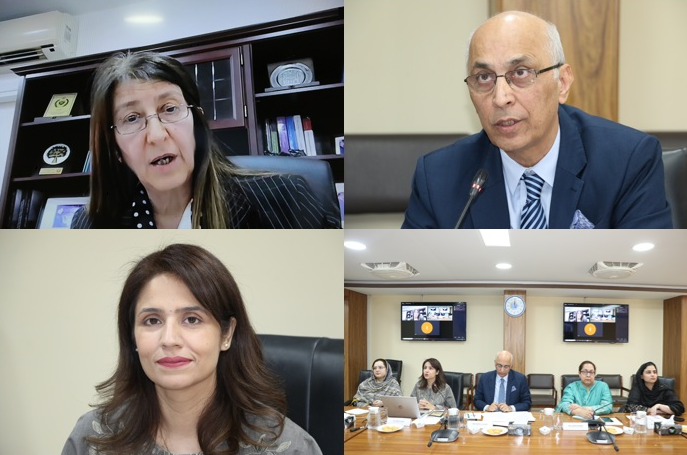
ISLAMABAD: The Institute of Strategic Studies Islamabad (ISSI) and Jordan’s Arab Thought Forum (ATF) held a bilateral meeting to explore avenues for strengthening institutional cooperation, enhancing policy dialogue, and advancing joint research on regional and international issues of mutual interest.
Organised by ISSI’s Centre for Afghanistan, Middle East and Africa (CAMEA), the meeting aimed to build on the existing partnership between the two institutions and identify practical avenues for sustained collaboration.
In October 2025, ISSI and ATF signed a Memorandum of Understanding (MoU) establishing a framework for bilateral cooperation and institutional coordination. The latest engagement provided an opportunity to advance this partnership through concrete initiatives in research, policy development and intellectual exchange.
ISSI Director General Highlights Pakistan–Jordan Fraternal Ties
Ambassador Moin ul Haque, Director General of ISSI, reaffirmed the longstanding and fraternal relations between Pakistan and Jordan, emphasising that Jordan holds a special place in the hearts of the Pakistani people.
He highlighted the close bonds between the two countries and their longstanding engagement at the highest levels, underscoring the importance of enhanced cooperation on regional and international developments.
Particular emphasis was placed on the evolving situation in the Middle East, which remains a matter of shared concern for Pakistan, Jordan and the wider Muslim world. He stressed the value of closer institutional engagement and coordinated policy perspectives to address common challenges and promote regional peace and stability.
Arab Thought Forum Calls for Pakistan–Arab Strategic Dialogue
Dr. Amani Ghazi Jarrar, Secretary General of the Arab Thought Forum, appreciated Pakistan’s continuing role in regional affairs and highlighted the importance of establishing a Pakistan–Arab strategic dialogue to strengthen political engagement, deepen mutual understanding and promote cooperation on issues of shared regional and international concern.
She outlined four key pillars for advancing cooperation between the two institutions and their wider networks:
- Human Dignity and Shared Security: Promoting respect for human dignity and strengthening collective approaches to peace and security.
- Intellectual and Institutional Engagement: Expanding dialogue, knowledge-sharing and cooperation between academic and policy institutions.
- Strategic Foresight and Forecasting: Developing forward-looking approaches to anticipate and address emerging regional challenges.
- Research and Policy-Oriented Initiatives: Translating shared objectives into practical outcomes through collaborative research and evidence-based policy recommendations.
These priorities reflect a shared commitment to strengthening intellectual cooperation and developing constructive responses to complex regional and international challenges.
Jammu and Kashmir and Palestine Discussed as Issues of Human Rights and Self-Determination
The participants also exchanged views on the situations in Jammu and Kashmir and Palestine, emphasising the importance of human dignity and the right of peoples to self-determination.
The discussion underscored that both issues concern fundamental rights, political aspirations and the legitimate demands of the affected populations, extending beyond questions of territorial disputes.
The participants highlighted the importance of continued dialogue and policy engagement on these issues in the broader context of regional peace, justice and international cooperation.
ISSI–ATF Partnership to Advance Research and Policy Cooperation
The meeting reaffirmed the commitment of ISSI and the Arab Thought Forum to strengthening their institutional partnership and expanding cooperation through joint research, policy dialogue and intellectual engagement.
The discussions also highlighted the potential for closer collaboration in analysing regional developments, anticipating emerging challenges and promoting a deeper understanding between Pakistan and the Arab world.
The meeting was also attended by Dr. Amina Khan, Director of CAMEA, along with other colleagues from the Centre.
The engagement marked a constructive step towards translating the October 2025 MoU into practical initiatives, reinforcing institutional links and supporting greater cooperation on issues of mutual interest to Pakistan, Jordan and the wider region.
BY: The Times Union