- Israeli PM Cautions Tehran and Its Allies Against Attacks Ahead of October 27 Election
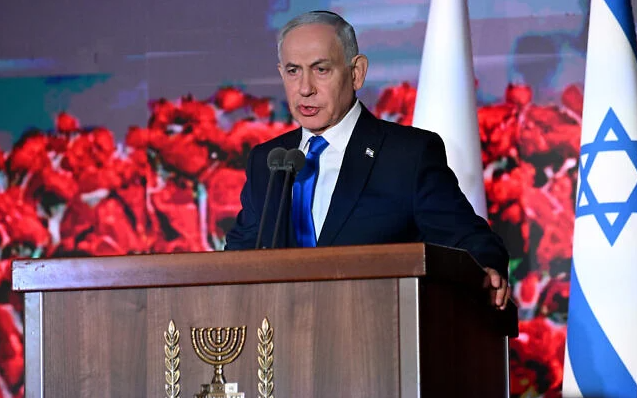
JERUSALEM: Israeli Prime Minister Benjamin Netanyahu said on Wednesday that he did not favor launching a preemptive strike against Iran before Israel’s October 27 election, while warning Tehran and its regional allies that any attack on Israel would trigger a forceful response.
Speaking in an interview with Israel’s Army Radio, Netanyahu dismissed the prospect of a pre-election military escalation, describing it as an undesirable course of action. His remarks came amid accusations from political rivals that he was seeking a military confrontation with Iran to influence the upcoming election.
“It is not convenient for us, it’s no good,” Netanyahu said when asked about the possibility of a preemptive strike.
He also acknowledged the political risks of a potential Iranian attack, saying that even if Iran launched missiles at Israel, his opponents would hold him responsible.
Despite ruling out support for an immediate preemptive strike, Netanyahu reiterated his warning that Israel would respond forcefully if attacked. However, he declined to comment on whether his position might change after the election or to disclose details of his recent discussions with Washington regarding Iran.
Regional Conflict Raises Fears of Further Escalation
The statements come amid a wider regional conflict that began on February 28, when the United States and Israel launched attacks against Iran, prompting Tehran to retaliate with strikes targeting Israel and Gulf states.
Israel and Iran have not exchanged direct fire since June, although tensions remain high across the region, with Iran-aligned groups continuing to pose security concerns for Israel and its regional partners.
Asked whether Israel was providing assistance to Saudi Arabia in response to attacks by Yemen’s Iran-aligned Houthi movement, Netanyahu declined to provide details.
“I don’t get into those matters,” he said, adding that several Middle Eastern countries were increasingly seeking closer ties with Israel following what he described as its significant military achievements.
Saudi Arabia has faced an intensification of Houthi attacks over the past week, including a reported strike on Riyadh airport on Saturday that killed 13 people.
Netanyahu Warns of Possible Attacks by Iran-Backed Groups
Netanyahu also warned that Iran’s regional allies could seek to launch attacks against Israel before the October 27 election, raising concerns about the possibility of renewed hostilities on multiple fronts.
The warning was reinforced by Israeli Defence Minister Israel Katz, who issued a stern message to Hezbollah, the Iran-backed Lebanese armed group, during a visit to the area in southern Lebanon occupied by Israeli forces.
Katz warned that Hezbollah would face severe military consequences if it attacked Israel, including the possible expansion of Israeli territorial control in southern Lebanon.
“Hezbollah will suffer a severe blow and lose additional territories in southern Lebanon within the Nabatieh and Litani regions, which will become part of Israel’s permanent security zone. The IDF (Israel Defense Forces) is prepared to carry out the maneuver,” Katz said.
He further warned that a large-scale Israeli military operation could displace approximately one million Shiite Muslims and that Hezbollah’s stronghold in Beirut would also be targeted.
Israeli Operations in Lebanon Deepen Humanitarian Concerns
Israel launched airstrikes and a ground offensive in southern Lebanon this year alongside its military campaign against Iran, following Hezbollah’s attacks on Israeli territory in retaliation for strikes against Tehran.
The fighting has caused widespread displacement, particularly among Lebanon’s Shiite Muslim population, which forms the core of Hezbollah’s support base. Hundreds of thousands of people have been forced from their homes as hostilities intensified.
Katz’s latest remarks suggest that Israel could expand its military operations in southern Lebanon if Hezbollah launches further attacks, potentially worsening the humanitarian situation and increasing the risk of a broader regional confrontation.
With Israel’s election approaching and tensions involving Iran and its regional allies remaining elevated, Netanyahu’s remarks underscore the political and security challenges facing the Israeli government as it weighs the risks of further military escalation.
BY: The Times Union