- Despite Kushner’s insistence to the contrary, Israeli buy-in is needed for Board of Peace to meaningfully advance the plan, and that’s not coming before Oct. 27 vote at the earliest
US special envoy Jared Kushner sounded optimistic about the prospects for quickly advancing the disarmament of Hamas when he was in Israel on August 17.
“We could be seeing progress… in as little as 30 days, hopefully in starting to take some of the weapons out,” Kushner told Fox News in an interview hours before he left the Jewish state.
A US official told The Times of Israel at the time that Washington envisioned a ceremonial handover of the first batch of Hamas’s weapons to a new committee of Palestinian technocrats tasked with replacing the terror group in governing Gaza.
While less than three weeks have passed since Kushner laid out his timeline, three diplomats from mediating countries have told The Times of Israel that they don’t expect it to hold due to fervent Israeli opposition to the disarmament proposal crafted by the US-controlled Board of Peace.
Kushner had insisted that Israeli approval of the disarmament plan wasn’t necessary for it to move forward. Prime Minister Benjamin Netanyahu had already given his backing last year to a broader 20-point plan by US President Donald Trump for ending the war in Gaza.
The weapons handover was to be between Hamas and the Board of Peace-overseen Palestinian technocrats. Israel was only being asked to fulfill commitments it had made as part of the 20-point plan, which primarily had to do with stabilizing the humanitarian situation in the Strip, Kushner maintained.

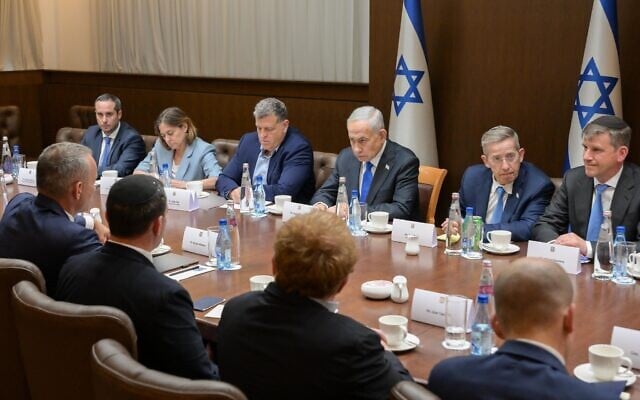
(second and third from left, respectively) meet with President Isaac Herzog
(fourth from left), alongside other aides, in Jerusalem, on August 17, 2026.
But the text of both the 20-point plan and the 15-point disarmament roadmap required all sides to immediately halt military operations in the Strip.
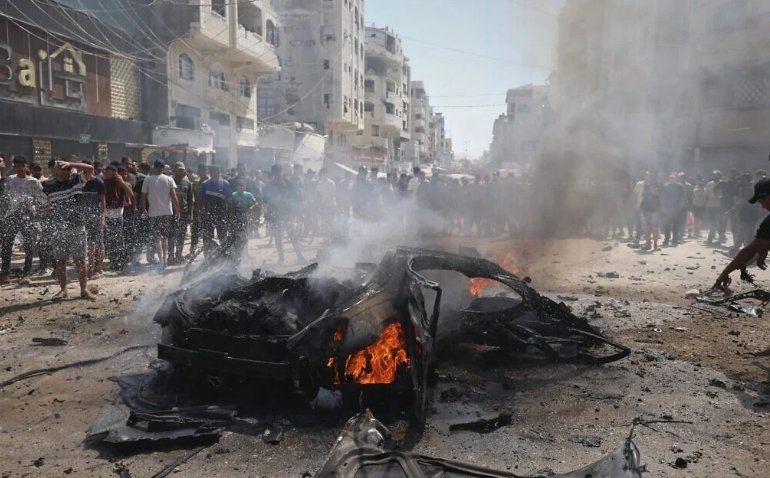
Israel has refused to do so, carrying out near-daily strikes against what it says have been terror operatives posing threats to troops.
The US didn’t push back aggressively for much of the past year, as it sought to pressure Hamas to accept the Board of Peace’s disarmament plan.
When the terror group finally did on July 30, Washington began leaning on Israel to stop bombing Gaza.
During his visit to Jerusalem last month, Kushner urged Netanyahu to at least limit strikes to what is actually an imminent threat, apparently not buying Israel’s rationale for many of its strikes to date.
But Netanyahu didn’t budge, and there was particular disagreement over the premier’s insistence that Israel continue pursuing the operatives who participated in the Hamas-led October 7, 2023, onslaught.
Mladenov in Jerusalem on May 13, 2026. Foreign policy aide Caroline Glick is seated
second from the left.
Kushner’s frustration was aired in a speech given last week to the UN Security Council by top Board of Peace envoy Nickolay Mladenov, who accompanied Trump’s son-in-law during the Netanyahu meeting.
“Will another strike on a munitions depot stop Hamas from rearming or tightening its grip on Gaza?” Mladenov posited. “It will not. It only delays the demilitarization that would happen, and it obstructs the civilian transition that should take place to ensure that remilitarization will not be possible in the future.”
The argument was strikingly similar to those voiced during former US president Joe Biden’s administration, as the latter pushed Israel to couple its military pressure with a diplomatic off-ramp.
A Board of Peace source insisted to The Times of Israel that the US-controlled body is well aware that Hamas may try to con its way through the disarmament process.
Netanyahu told Kushner as much repeatedly during their meeting last month, the source said.
“That’s why the entire process is based on the concept of reciprocity. Israel only has to pull from a particular area after it has been verifiably decommissioned,” the source added.
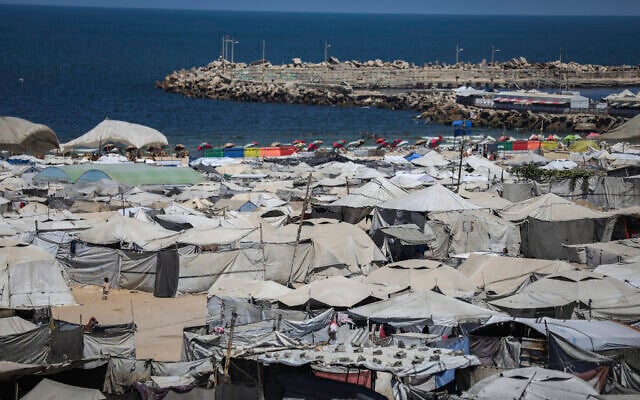
recent war between Israel and Hamas in Gaza City, central Gaza Strip,
September 3, 2026.
But Netanyahu is insisting that the entirety of Gaza be disarmed before Israeli forces withdraw from the Yellow Line that roughly divides Gaza into eastern and western halves. The stance has led the Board of Peace to entertain other disarmament frameworks, though the original, gradual one is still the preferred approach.
Hamas won’t comply if Israel’s not on board
As Israeli military operations continue deep in the Strip — taking the lives of both senior terror operatives and innocent civilians — Hamas has informed mediators that it has no intention of handing over its weapons under such circumstances, a diplomat from one of the Middle East mediating countries said.
“It’s hard to demand they adhere to a proposal when Israel ignores it completely,” the diplomat said.
The Board of Peace source noted that Hamas also hasn’t held its side of the bargain after approving the disarmament proposal, pointing to the terror group’s continued deployment of armed gunmen throughout the streets of Gaza to curb dissent.
For all of Kushner’s frustration with Netanyahu, the Middle East diplomat said it wasn’t translating to threats to withhold support if Israeli strikes don’t cease.
The US is resigned to waiting until after the October 27 Knesset election before it renews its push to advance the Board of Peace’s disarmament plan, the Middle East diplomat said.
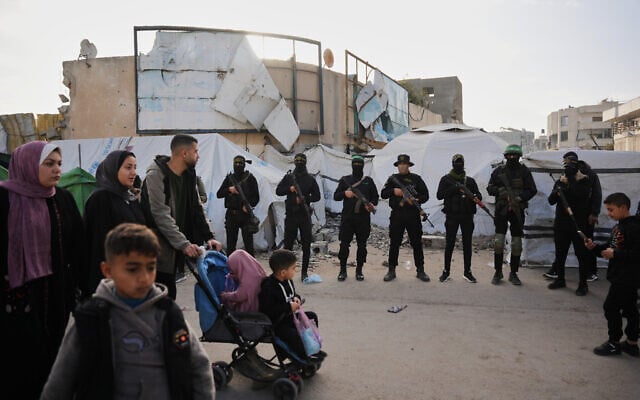
City, March 20, 2026.
A different source familiar with the negotiations denied that there has been a directive to postpone the Board of Peace’s efforts, “but clearly we are not where we need to be yet.”
Israel is barring thousands of recruits to the new Palestinian police force from leaving Gaza to train in Egypt, potentially leaving Hamas fighters without anyone to hand over their weapons to even if the Board of Peace were ready to commence the process.
The source said the one area of progress has been in efforts to deploy the International Stabilization Force (ISF), which is tasked with phasing the IDF out of the Strip and assisting in the disarmament process.
Talks are advancing toward the deployment of some 1,200 troops from Uganda and 500 from Burundi, along with several hundred more from Morocco, Kosovo, Albania and Kazakhstan. Even Indonesia — which froze its talks about joining the ISF in May — has reengaged with the Board of Peace on the issue, the source said.

the Board of Peace’s International Stabilization Force (ISF) for Gaza on July 12, 2026.
Still, there’s no timeline for the actual deployment of the ISF in Gaza, and additional approvals are needed from Israel that have not yet materialized.
In late July, Netanyahu’s office briefed reporters that the security cabinet had approved the limited entry of ISF troops from “friendly countries” such as Morocco and Uganda.
But one month later, Netanyahu’s office issued a statement declaring that, in fact, Israel had not approved the entry of the ISF into Gaza.
It wasn’t clear what had changed between July and August, besides the shrinking timeline to the Knesset election.
BY: Jacob Magid