- From Humanitarian Relief to Stabilisation and Reconstruction, Morocco Emerges as a Key Arab Partner in International Efforts to Rebuild Gaza
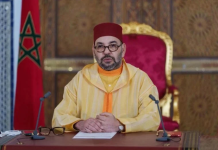
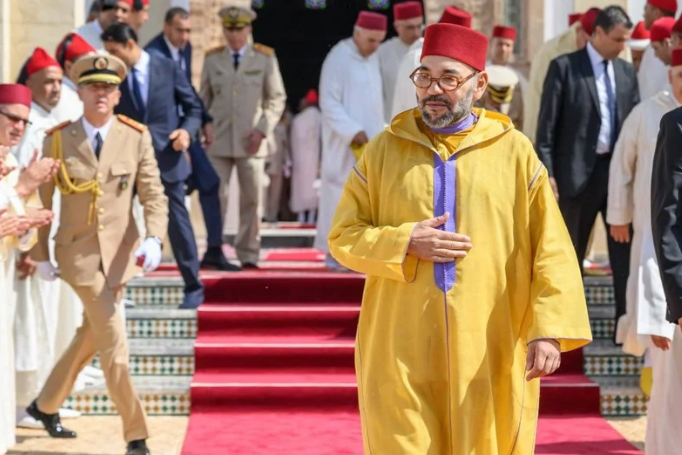
Islamabad: Morocco is emerging as an increasingly prominent Arab contributor to international efforts aimed at stabilising and rebuilding the Gaza Strip, with King Mohammed VI playing a central role in shaping the Kingdom’s humanitarian, diplomatic and reconstruction-oriented engagement with the Palestinian cause.
Under the King’s leadership, Morocco’s approach combines immediate humanitarian assistance with a broader political vision centred on Palestinian statehood, the preservation of Gaza’s unity with the West Bank and the establishment of sustainable peace based on the two-state solution.
The Kingdom’s expanding role has gained renewed significance as international efforts move from managing the humanitarian consequences of the Gaza conflict towards the complex challenges of security, governance, reconstruction and long-term recovery.
Royal Leadership at the Centre of Morocco’s Gaza Policy
King Mohammed VI, who also chairs the Al-Quds Committee, has consistently positioned Morocco as a supporter of Palestinian rights and a proponent of diplomatic solutions to the Israeli-Palestinian conflict.
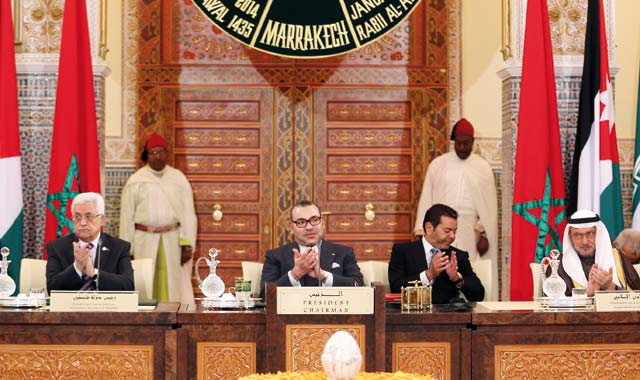
Morocco has repeatedly called for an independent Palestinian state within the 1967 borders, with East Jerusalem as its capital, living alongside Israel in peace and security. The King has also stressed that Gaza should remain an integral part of the future Palestinian state and has supported strengthening the Palestinian National Authority’s political, administrative and financial capabilities.
This policy has given Morocco a distinctive position: combining humanitarian engagement on the ground with diplomatic advocacy for a negotiated political settlement.
Humanitarian Assistance: Turning Solidarity into Action
Morocco’s role in Gaza has already extended beyond diplomatic statements to direct humanitarian assistance.
In July 2025, King Mohammed VI ordered the dispatch of nearly 180 tonnes of emergency humanitarian and medical aid to Palestinians, particularly vulnerable populations in Gaza. The assistance included essential food supplies, milk and products for children, medicines, surgical equipment, blankets and tents.
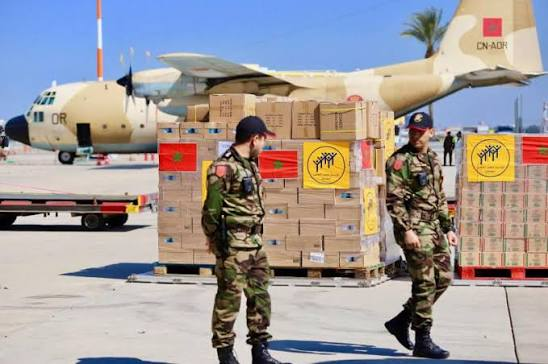
plane and to be sent to Gaza
The Royal initiative was part of Morocco’s broader effort to alleviate the humanitarian crisis and demonstrate tangible solidarity with the Palestinian population.
In August 2025, the King ordered an additional shipment of approximately 100 tonnes of food and medicines, specifically targeting vulnerable groups, including children and infants. The aid was transported by air and intended for urgent and direct delivery to beneficiaries.
These initiatives have reinforced Morocco’s image as a country seeking to translate its political support for Palestine into practical humanitarian action.
Bayt Mal Al-Quds: A Longstanding Instrument of Moroccan Engagement
A major component of Morocco’s approach is the work of the Bayt Mal Al-Quds Acharif Agency, the operational arm associated with the Al-Quds Committee.
The agency has undertaken humanitarian and socio-economic initiatives supporting Palestinians, particularly in Jerusalem, while also contributing to relief efforts in Gaza.
In July 2025, the agency carried out successive humanitarian operations for displaced Palestinian families in Gaza, distributing food assistance directly to beneficiaries despite difficult security conditions. One phase reached 500 families in Al-Bureij Camp, while the wider campaign sought to assist approximately 1,000 displaced families across different parts of the Strip.
The model is significant because it combines humanitarian assistance with Morocco’s longstanding institutional engagement in protecting Palestinian cultural and social resilience.
Morocco Moves Towards a Broader Stabilisation Role
Morocco’s engagement has entered a new phase as international efforts increasingly focus on what comes after the fighting: restoring security, establishing effective governance and creating conditions for reconstruction.
In January 2026, Morocco accepted an invitation from US President Donald Trump to become a founding member of the Peace Board, an international structure intended to promote stability, restore governance and support lasting peace in conflict-affected areas.
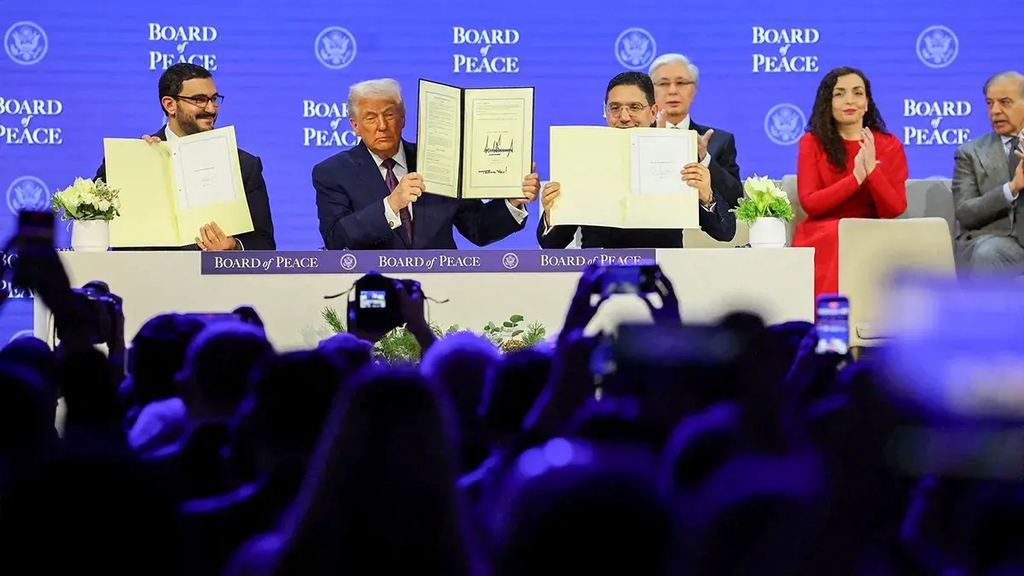
President Donald Trump, and Moroccan Minister of Foreign Affairs, Nasser Bourita, sign the Peace Council
Charter during an announcement regarding his Peace Council initiative letter aimed at resolving global
conflicts, as part of the 56th annual World Economic Forum (WEF) in Davos, Switzerland, on 22 January 2026
Morocco also welcomed the second phase of the US peace plan and the establishment of the National Committee for the Administration of Gaza as a temporary transitional body. The Kingdom reiterated that any sustainable settlement should lead to a Palestinian state within the 1967 borders, with East Jerusalem as its capital.
This decision has potentially expanded Morocco’s role from humanitarian assistance and diplomatic advocacy to participation in international mechanisms designed to shape Gaza’s post-war future.
Moroccan Participation in the International Stabilisation Force
Morocco has also emerged as one of the countries prepared to contribute to the proposed International Stabilization Force (ISF) for Gaza.
The force is intended to help secure areas following an Israeli military withdrawal, support the delivery of humanitarian assistance and contribute to the training of Palestinian police as part of a broader transitional framework.
According to recent reporting, Morocco is among the countries that have pledged personnel or support for the international stabilisation effort. Reuters reported in August 2026 that Morocco had pledged troops, while other participating countries were considering military planners, medical personnel or other forms of support.
The emerging Moroccan role is particularly notable because it places an Arab country at the centre of efforts to establish security arrangements intended to facilitate Gaza’s transition towards reconstruction.
Reconstruction Requires Security, Governance and Political Legitimacy
For Morocco, the challenge ahead is not simply rebuilding damaged infrastructure.
The reconstruction of Gaza will require functioning institutions, security arrangements, humanitarian access, economic recovery and, above all, a political framework acceptable to Palestinians and supported by the international community.
International assessments indicate that rebuilding Gaza will be an enormous undertaking. The European Union recently coordinated pledges of around €900 million for Gaza’s recovery, while the EU, World Bank and United Nations have estimated reconstruction requirements at approximately $70 billion.
The scale of destruction means that reconstruction will require years of international investment and coordination, including the restoration of housing, hospitals, schools, water systems, electricity networks, roads and other essential infrastructure.
Morocco’s growing participation therefore comes at a critical moment when humanitarian relief must gradually connect with longer-term recovery and institution-building.
A Diplomatic Bridge Between Regions
Morocco’s international position could give it an important role in this process.
The Kingdom maintains close relationships with Arab and African countries while also maintaining strategic ties with Europe and the United States. Its participation in international initiatives gives Rabat the potential to serve as a bridge between different diplomatic constituencies involved in Gaza’s future.
King Mohammed VI has repeatedly emphasised that lasting peace cannot be achieved through military means alone. Morocco’s official position has consistently called for negotiations, international legitimacy and a two-state solution.
In a message to the United Nations Committee on the Exercise of the Inalienable Rights of the Palestinian People, the King said that Gaza should form an integral part of the independent Palestinian territories and called for the unity of Gaza and the West Bank under the Palestinian National Authority.
Supporting Palestinian Resilience
Morocco’s approach also places considerable emphasis on the resilience of Palestinian society.
The country’s humanitarian programmes have focused on food, medicine and vulnerable families, while its broader Al-Quds engagement has supported social, cultural and economic initiatives.
This provides Morocco with an established institutional experience that could be relevant to the much larger challenge of Gaza’s recovery.
The philosophy behind this approach is that reconstruction should not be limited to physical infrastructure. Sustainable recovery also requires restoring livelihoods, strengthening healthcare and education, supporting families and preserving social cohesion.
A Growing Moroccan Footprint in the Post-War Landscape
The evolving international architecture around Gaza has created an opportunity for Morocco to translate its longstanding diplomatic engagement into a broader practical role.
From emergency humanitarian assistance ordered by King Mohammed VI to the activities of the Bayt Mal Al-Quds Agency, Morocco has demonstrated a willingness to remain engaged with the Palestinian cause during periods of acute crisis.
Its acceptance of a role in the international Peace Board and its participation in discussions surrounding the International Stabilization Force indicate that Rabat is now positioned to contribute to a wider post-war framework encompassing security, governance, humanitarian assistance and reconstruction.
Morocco’s Vision: Reconstruction Linked to Lasting Peace
The Moroccan position ultimately rests on the principle that reconstruction and political settlement must advance together.
For Rabat, rebuilding Gaza cannot be separated from the creation of conditions for a viable Palestinian state and a durable regional peace.
King Mohammed VI’s leadership of the Al-Quds Committee, Morocco’s humanitarian initiatives and its growing involvement in international stabilisation efforts have collectively strengthened the Kingdom’s profile as an active Arab partner in efforts to address the Palestinian crisis.
As the international community confronts the enormous task of rebuilding Gaza, Morocco’s expanding role under King Mohammed VI could become an important element of the emerging post-war architecture—linking humanitarian solidarity with diplomacy, reconstruction and the pursuit of a lasting political settlement.
In this evolving landscape, Morocco is seeking to demonstrate that support for Palestine can extend beyond political declarations: it can also involve humanitarian action, institution-building, international cooperation and a sustained commitment to peace and reconstruction.
BY: Nadeem Faisal Baiga