Can the latest US sanctions on Iran pile more pressure on Tehran? On Aug. 24, Washington stepped up its measures targeting the Iranian regime by targeting not only officials and entities linked to the country’s military, nuclear, missile and drone programs, but also the international networks that enable Tehran to sell its oil, move funds and circumvent existing sanctions.
The main difference from previous sanctions, therefore, was a greater focus on intermediaries, traders, shell companies and foreign actors. In short, it puts those who facilitate these activities at higher risk.
Operation Economic Outcast is part of the campaign of maximum pressure on the Iranian regime. Yet, after decades of US sanctions and Tehran building alternative systems to mitigate them, what exactly is the objective of the latest measures: is it to inflict more pain on the regime, or part of a broader scheme to bring it down? And will it work?
The US has maintained an extensive program of sanctions against Iran in recent times, with five major Executive Orders since 2010 as well as acts of Congress. This has been done with a main focus on addressing the Islamic Revolutionary Guard Corps, and its financing of terrorism, by countering trade in sectors such as oil, finance, missiles and the nuclear industry.
As an indication of the scope of recent measures, since February 2025 Washington has designated more than 1,000 individuals, companies, ships and other entities as part of its campaign of pressure against Iran.
It is well known that Tehran has for years found fresh ways to circumvent sanctions with great creativity. Through the use of complex international networks involving shell companies, banks, commercial intermediaries and maritime fleets, it has been able to preserve oil exports and the resultant inward financial flows. It has also been a leading early mover on the use of cryptocurrencies as a new way to transact and store value.
One of the most notable cases related to sanctions on Tehran is that of Reza Zarrab, an Iranian businessman arrested in the US in 2016 for orchestrating a massive scheme to evade sanctions, which highlighted the scope of Iranian capabilities.
More recently, networks were uncovered involving members of the Zarringhalam family and oil magnate Hossein Shamkhani, who are accused of funneling billions of dollars through shell companies, currency exchanges and international oil networks.
US authorities have also seized oil shipments and charged several intermediaries linked to the IRGC, in cases that have highlighted the growing use of cryptocurrencies to move funds.
However, these cases also demonstrate that despite significant seizures, arrests and additional sanctions, Iranian networks have consistently managed to adapt and alter their methods, which limits the long-term effectiveness of sanctions.
Will the decision now to target individuals and entities that collaborate with the Iranian regime, which certainly is a positive step, prove conclusive and finally put the IRGC out of business? Perhaps such steps should have been taken sooner.
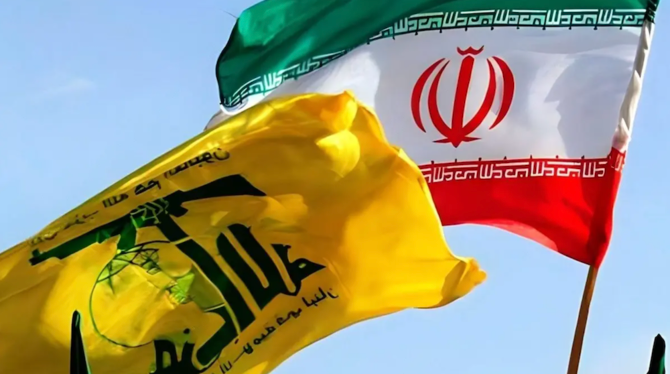
Following the US reclassification of Hezbollah this month to explicitly classify it as an extension of the IRGC, there should now be a greater focus on targeting the Lebanese organization’s financial structures and ecosystem. This would not only serve broader efforts to hurt Iran, as Hezbollah is a key element in its strategy, but would also contribute to greater stability in the Levant.
The use of artificial intelligence-driven pattern detection and cryptocurrency-tracing tools can disrupt designated financing networks.
Khaled Abou Zahr
Hezbollah conducts its illegal activities, and channels the proceeds, through complex financial networks. Those networks should be taken down. While some in Lebanon still consider Hezbollah to be Lebanese, the organization functions like a transnational criminal enterprise, perhaps larger in size than some of the most well-known organized crime enterprises.
The illicit activities include drug trafficking and related money laundering, including the facilitation of cocaine shipments and the handling of proceeds from Latin American cartels, as well as involvement in the smuggling of captagon and other drugs.
Other endeavors include trade-based money laundering, counterfeit goods and currencies, trafficking in blood diamonds and other high-value commodities via West African networks, goods smuggling, and related bulk movements of cash.
Hezbollah uses front companies, charities, real-estate and commercial ventures, and informal transfer systems such as hawala to raise, move and launder funds that flow back into Lebanon, where the group maintains a parallel financial system centered on nonprofit financial institution Al-Qard Al-Hasan, which functions as its de facto bank outside of the formal, regulated sector, and processes Iranian funding and proceeds from illicit activities.
There is an urgent need to target this institution, other entities such as Bayt Al-Mal, and networks of money-exchange houses, gold-trading fronts and Hezbollah’s Central Finance Unit, which consolidates and allocates resources.
In the fight against the Iranian regime and Hezbollah, the US government should expand its partnerships with private technology firms that focus on cybercrime and anti-money-laundering efforts, taking into account the achievements of Palantir, for example, to deploy advanced data-integration and analytics tools.
The use of artificial intelligence-driven pattern detection and cryptocurrency-tracing tools can help disrupt designated financing networks. By using these deep-tech capabilities to merge transaction data, corporate registries, sanctions lists and open-source intelligence, agencies and the wider intelligence community can more rapidly identify Hezbollah’s financial activity.
It is well known that dismantling adaptive networks is not an easy task. But continual disruptions, as well as measures that increase the operational costs of illicit finance, would hurt Hezbollah’s military activities, without a doubt. That would mean fewer drones in the sky.
While there will be no stopping the interference of the Iranian regime until all of its networks are destroyed, hitting Hezbollah the hardest and dismantling all of its current structures would deal the strongest possible blow to Tehran.
With Hezbollah no longer welcome in Syria and receiving fewer subsidies from the IRGC, any blow to its financial systems, and the ways in which money flows to it from Tehran, would be a net win in the fight against the group’s terror activities and the regime in Iran.
BY: Writer Khaled Abou Zahr is the founder of SpaceQuest Ventures, a space-focused investment platform. He is the CEO of EurabiaMedia and editor of Al-Watan Al-Arabi.
Disclaimer: Views expressed by writers in this section are their own and do not necessarily reflect The Times Union‘ point of view