- Prime Minister Sanae Takaichi Pledges Commitment to Peace but Omits Reference to Japan’s Wartime “Remorse”
TOKYO: Japan on Saturday marked the 81st anniversary of its surrender in World War II with a solemn national memorial ceremony in Tokyo, where Prime Minister Sanae Takaichi reaffirmed the country’s commitment to peace but made no direct reference to Japan’s wartime “remorse.”
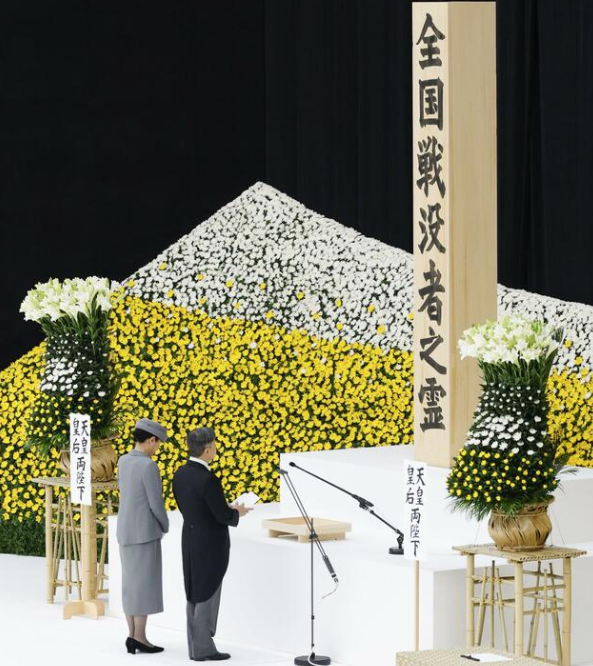
The government-sponsored ceremony at the Nippon Budokan was attended by around 4,180 people, including bereaved family members, Emperor Naruhito and Empress Masako. The event honoured approximately 2.3 million military personnel and 800,000 civilians who lost their lives during the war, which ended in 1945.
For Takaichi, who is known for her strong national security views, the ceremony marked her first attendance as prime minister since taking office last October.
In her address, Takaichi said Japan had consistently followed “the path of a nation that values peace” and had made every effort to contribute to global peace and prosperity.
However, she did not repeat the language used by her predecessor, Shigeru Ishiba, at last year’s ceremony. Ishiba had explicitly referred to Japan’s “remorse” over the war and reaffirmed the country’s “resolute pledge to renounce war.”
Wartime Aggression Not Directly Addressed
Takaichi, like several recent Japanese prime ministers, avoided directly referring to Japan’s wartime aggression in Asia, including its actions in China and on the Korean Peninsula.
Before Shinzo Abe returned to office in December 2012, Japanese leaders had regularly acknowledged the country’s wartime aggression and expressed remorse during the August 15 memorial ceremony.
Takaichi also used wording that differed from that of her predecessors. While previous leaders pledged that Japan would “never repeat the horrors of war,” Takaichi said, “The horrors of war must never be repeated.”
“Although 81 years have now passed, no matter how time flows, we will remain committed to this resolute pledge, passing it down across generations,” she said.
Yasukuni Shrine Remains a Diplomatic Sensitivity
Takaichi did not personally visit Tokyo’s Yasukuni Shrine, which remains a major source of diplomatic tension with China and South Korea because it honours convicted wartime criminals alongside millions of Japanese war dead.
Instead, she sent a ritual offering to the shrine. Before becoming prime minister, Takaichi had regularly visited Yasukuni on the August 15 anniversary.
However, upon arriving at the Nippon Budokan, she made a Shinto gesture of worship toward the shrine, located across the street, bowing twice, clapping twice and bowing once more.
Japan’s Security Policy Under Greater Scrutiny
This year’s memorial comes as Japan faces a rapidly changing security environment, including heightened tensions in the Middle East and a significant transformation of its defence policy.
Tokyo has substantially increased national security spending and eased restrictions on defence equipment exports as it seeks to strengthen its military capabilities.
Relations between Japan and China have also deteriorated since Takaichi told parliament in November that a potential Chinese attack on Taiwan could constitute a “survival-threatening situation”, potentially allowing Japan’s Self-Defense Forces to intervene in support of the United States.
Emperor Naruhito Expresses “Deep Remorse”
Emperor Naruhito, who attended the ceremony with Empress Masako, expressed “deep remorse” in his address, continuing a tradition observed in his annual August 15 speeches.
He also expressed his sincere hope that future generations would continue to preserve the memories of the suffering endured during and after the war while striving for peace and happiness.
A moment of silence was observed at noon, commemorating the exact time when Emperor Hirohito announced Japan’s surrender in a radio broadcast on August 15, 1945.
Families Remember Those Lost
Speaking on behalf of bereaved families, 84-year-old Takeshi Kanamori, whose father died on the Philippine island of Luzon, said the world continues to witness conflicts and loss of life.
He expressed hope that peace would come as soon as possible.
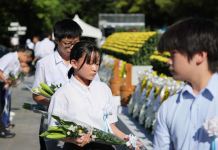
The ceremony also brought together generations of families affected by the war. The oldest participant was 98-year-old Kazuhiko Takahashi of Kawasaki, while the youngest was three-year-old Ryoyu Tachihara of Tokyo, whose great-grandfather died on the Philippine island of Mindanao.
The memorial once again underscored Japan’s enduring effort to preserve the memories of its wartime dead while navigating the sensitive balance between historical remembrance, reconciliation and the country’s evolving security role in the region.
BY: The Times Union – KYODO