- Seven Mountain Strongholds Honored as Iran’s 30th UNESCO World Heritage Site
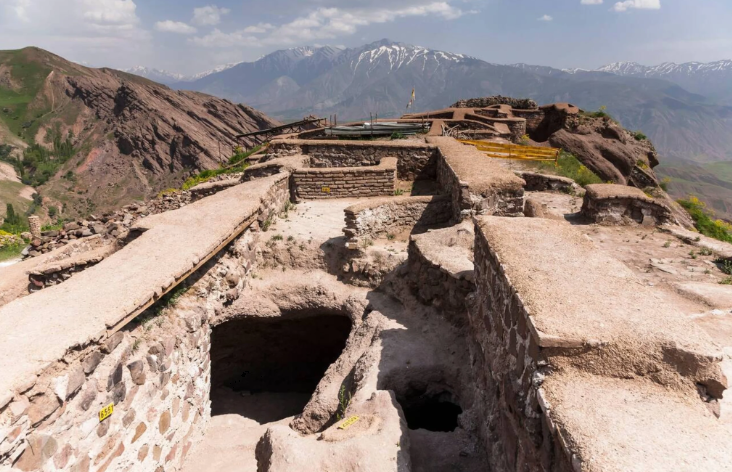
Islamabad: The inscription of “Alamut Castle and Related Fortifications” on UNESCO’s World Heritage List marks international recognition not of a single fortress, but of an extraordinary network of seven interconnected mountain strongholds that represented one of medieval Iran’s most sophisticated defensive systems.
Recognized during the 48th Session of the UNESCO World Heritage Committee in Busan, South Korea, the site became Iran’s 30th tangible cultural heritage property to receive UNESCO World Heritage status.
A Revolutionary Network of Fortresses
Unlike the common perception of Alamut as a solitary castle perched atop a dramatic cliff, UNESCO’s designation encompasses a serial heritage property consisting of seven strategically positioned fortifications:
- Alamut
- Lambesar
- Noweizar Shah
- Shams Kalayeh
- Qestīnlar
- Shirkuh
- Ilan
Constructed between the 11th and 13th centuries CE across the southern slopes of the Alborz Mountains, these fortresses formed an integrated defensive network that combined geography, architecture, water management and spatial planning to create a highly resilient military system.
According to UNESCO’s nomination dossier, the strength of the complex lies in its network-based organization, where each fortress functioned as part of a coordinated defense system rather than as an isolated stronghold.
Strategic Design Rooted in Geography
According to Iran’s Miras Aria news agency, the architects carefully selected locations on towering cliffs and narrow mountain ridges that could only be reached through one or two restricted routes.
This strategic positioning forced potential attackers to advance along steep, easily defended paths while allowing defenders to monitor surrounding valleys, trade routes and mountain passes.
UNESCO describes the property as an exceptional example of advanced spatial organization and military planning adapted to one of Iran’s most challenging mountainous landscapes.
Self-Sustaining Strongholds Built for Long Sieges
One of the defining characteristics of the Alamut fortifications was their remarkable ability to sustain life during prolonged sieges.
The UNESCO nomination highlights sophisticated systems that included:
- Rainwater collection and spring-fed water channels
- Large underground cisterns
- Grain storage facilities
- Agricultural lands surrounding the fortresses
- Residential quarters and service buildings
These features transformed the castles into self-sufficient mountain settlements capable of functioning independently for extended periods during military conflict.
An Early Example of Resilient Defense
Rather than concentrating military power in a single fortress, the Alamut system dispersed defensive capabilities across multiple strongholds.
If one fortress came under attack, the remaining castles could continue operating, reducing the likelihood of the complete collapse of the defensive network.
Among them, Lambesar Castle, one of the region’s largest fortresses, played a pivotal role by controlling key western access routes and serving as a central pillar of the broader defensive system alongside Alamut Castle.
Architecture Integrated with Nature
Another distinctive feature recognized by UNESCO is the seamless integration of architecture with the natural landscape.
Builders utilized existing cliffs and rock formations as natural defensive barriers, minimizing the need for artificial walls while significantly strengthening the fortifications.
UNESCO describes this approach as an outstanding example of defensive architecture harmonized with the mountainous terrain, where the natural environment itself became part of the fortification system.
Beyond Military Power: A Center of Knowledge
Beginning in the late 11th century CE, Alamut evolved into the political, military, scientific and intellectual center of the Nizari Ismaili community.
In addition to its military significance, the fortress network became a hub of scholarship and cultural life—a dual role that UNESCO identified as one of the principal reasons for its World Heritage inscription.
Fall of Alamut During the Mongol Invasion
The Alamut strongholds fell in 1256 CE when Mongol ruler Hulagu Khan captured the network through a combination of military pressure and diplomatic negotiations after securing the surrender of the Nizari Ismaili leader, the successor to Hassan-i Sabbah.
Although the conquest ended Alamut’s political influence, the surviving remains continue to provide valuable insight into medieval military engineering, territorial organization and sustainable resource management.
From Forgotten Ruins to Global Heritage
For centuries after its fall, Alamut faded into relative obscurity before returning to international attention following the publication of British explorer Freya Stark’s influential 1930s travel book, The Valleys of the Assassins.
Today, the UNESCO inscription has reaffirmed Alamut’s global historical significance, recognizing the fortress network as an exceptional testament to medieval innovation in defense, architecture and human adaptation to a rugged mountain environment.
BY: The Times Union