- IOM hands over advanced equipment and vehicles to FIA after four-year initiative focused on border security, migration governance and protection of vulnerable migrants
ISLAMABAD: The International Organization for Migration (IOM) has handed over advanced border management equipment and transport vehicles to Pakistan’s Federal Investigation Agency (FIA), marking the successful completion of a four-year project funded by the Government of Japan to strengthen the country’s border management capabilities.
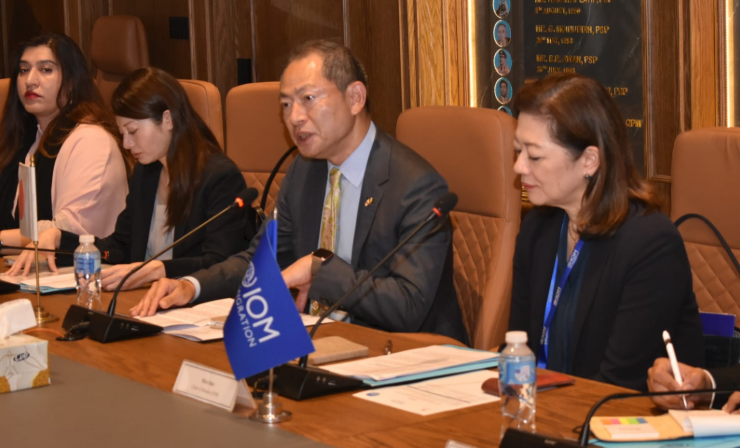
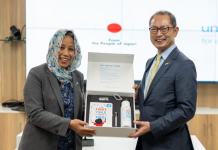
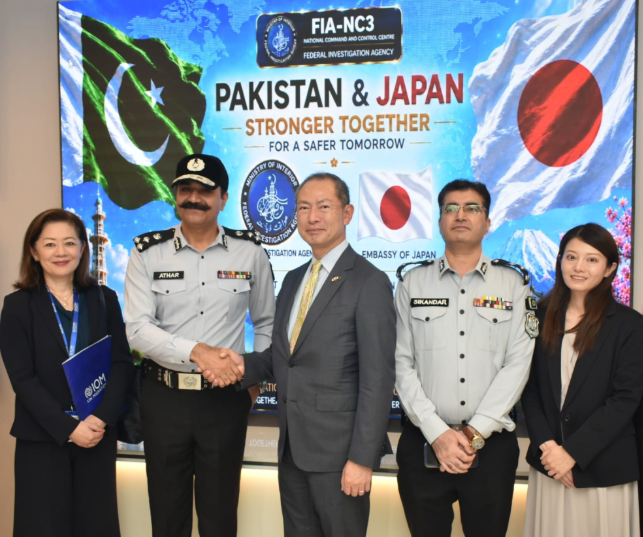
The handover ceremony was held at FIA Headquarters in Islamabad and was attended by Ambassador of Japan to Pakistan H.E. Akamatsu Shuichi, IOM Pakistan Chief of Mission Mio Sato, FIA Director General Dr Usman Anwar, as well as senior representatives of the Embassy of Japan, IOM and FIA.
Japan-Funded Support Expands FIA’s Operational Capacity
The initiative forms part of IOM’s broader cooperation with the Government of Pakistan to strengthen migration governance, promote safe, regular and orderly migration, and enhance protection-sensitive responses to human trafficking and migrant smuggling.
Under the project, IOM provided FIA with a comprehensive range of biometric, information technology, security, surveillance, communications and solar-powered systems, deployed across 21 FIA operational points nationwide.
The support also included equipment for FIA’s National Command and Control Centre (NC3) at its headquarters in Islamabad. The centre is designed to enhance coordinated and intelligence-led responses to transnational crimes, including human trafficking, migrant smuggling and cybercrime.
Dedicated Vehicles Deployed at Major International Airports
As part of the handover, IOM also provided three dedicated transport vans for deployment at the international airports in Islamabad, Karachi and Lahore.
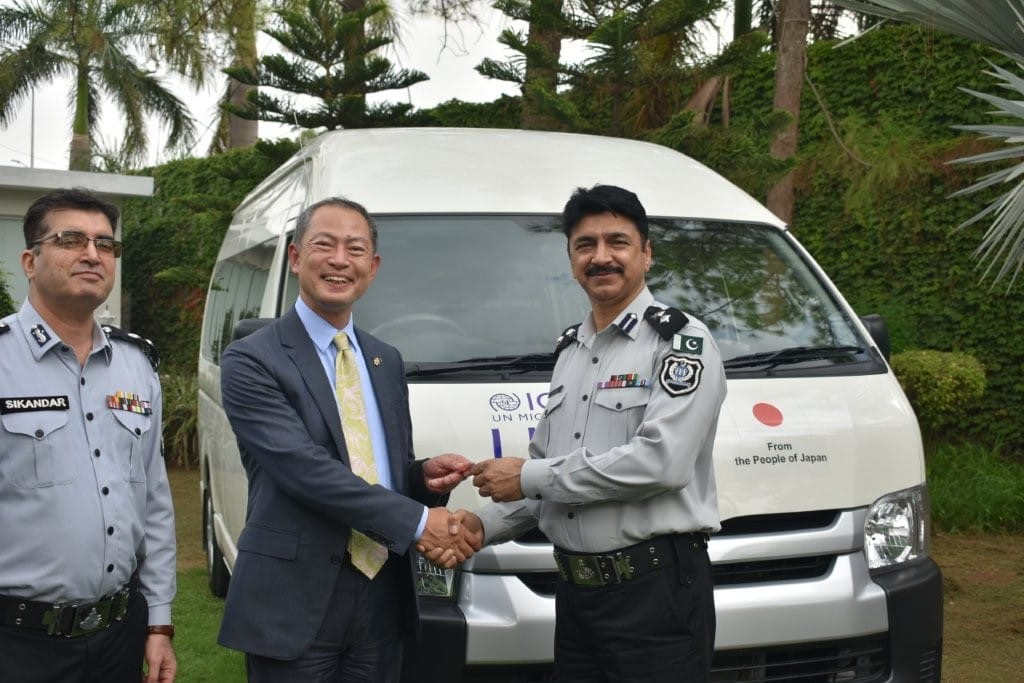
deployment at the international airports in Islamabad, Karachi and Lahore.
The vehicles will support the safe, dignified reception and onward transportation of returning migrants at Pakistan’s busiest points of entry.
During the ceremony, Ambassador Akamatsu formally handed over one of the vehicles to FIA and visited the National Command and Control Centre, where he received a briefing on its role in operational monitoring, intelligence coordination and responses to transnational crime.
FIA Training Academy Upgraded
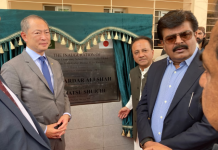
The project also invested in strengthening FIA’s institutional capacity through the refurbishment of the FIA Training Academy, completed in March 2026.
The upgraded facility features improved IT infrastructure, enhanced security systems and renovated training facilities, providing a modern learning environment for both newly recruited and serving FIA officers.
With the Academy training an average of 1,000 officers annually, the improvements are expected to help sustain the project’s long-term impact by strengthening FIA’s capacity in rights-based and protection-sensitive border management.
More Than 150 FIA Officials Receive Specialized Training
The four-year initiative also placed significant emphasis on human resource development.
More than 150 FIA officials received training in areas including rights- and gender-responsive border management, investigation techniques, and document and biometric verification.
The project also established a sustainable pool of FIA master trainers, including women, enabling the agency to continue building institutional expertise and training personnel beyond the project’s completion.
In addition, more than 200 participants, including FIA officials, provincial police personnel and civil society representatives, received specialized training on protection-sensitive responses to trafficking and migrant smuggling.
Training covered victim identification, screening and referral mechanisms, with women accounting for more than half of the participants.
FIA Highlights Importance of National Command Centre
FIA Director General Dr Usman Anwar praised Japan and IOM for their sustained cooperation in strengthening Pakistan’s border management and migration governance systems.
“This partnership demonstrates the importance of sustained international cooperation in addressing increasingly complex migration and border management issues,” Dr Anwar said.
He particularly highlighted the support provided to the National Command and Control Centre, saying it would strengthen FIA’s ability to improve operational monitoring and coordinate responses to transnational crime.
Japan Reaffirms Commitment to Secure and Humane Borders
Japanese Ambassador H.E. Akamatsu Shuichi emphasized that effective border security and protection of human rights should be pursued together.
“We believe that security and human rights are not competing values — they are complementary ones. Strong, capable, and humane border management institutions protect the integrity of the state and protect the dignity of individuals at the same time.”
He said the project had worked to establish that model and reaffirmed Japan’s continued commitment to supporting Pakistan in this area.
IOM Underscores Broader Role of Border Management
IOM Pakistan Chief of Mission Mio Sato said modern border management extends beyond controlling the movement of people across international borders.
“Border management today extends far beyond the movement of people across borders. It sits at the intersection of national security, economic connectivity, regional cooperation, and the protection of human dignity,” Sato said.
She noted that Japan’s support had helped strengthen institutions and improve systems that would continue to serve Pakistan’s border management needs over the long term.
Japan-IOM-FIA Partnership Delivers Sustainable Impact
IOM and FIA expressed appreciation to the Government of Japan for its continued support for migration governance and border management in Pakistan.
IOM also acknowledged FIA’s institutional leadership and close cooperation throughout the project’s implementation.
The completion of the four-year initiative represents a significant step toward strengthening Pakistan’s capacity to manage its borders through modern technology, trained personnel, coordinated intelligence systems and protection-sensitive practices, while ensuring that national security measures remain aligned with the dignity and rights of migrants.
BY: Nadeem Faisal Baiga