Kazakhstan is entering a new stage of presidential republicanism with the approval of the announcement of constitutional reforms by the reform-oriented President of Kazakhstan by a majority of 81.5%, in the national referendum held in March 2026.President Kassym-Jomart Tokayev has introduced a multidimensional constitutional package drafted through the active deliberations of a broad based “Constitutional Commission” that included the head of the constitutional court of the country besides representation from all important government bodies. An unbiased analysis of the constitutional reforms points out that the constitution has been has been amended to allow an effective president and a strong parliament, to serve unencumbered by bureaucratic constraints and procedural strictures.
Parliamentary reform is the logical continuation of earlier political transformations, including the initial reform of the presidential power, and reflects commitment to building a just Kazakhstan, through open dialogue between the state and the society. The nationwide referendum of 2022 had vouchsafed the public support for the principle of “Strong President – Influential Parliament – Accountable Government,” and the latest reforms have evolved continuously to meet real public demand, duly approved by a thumping majority in March 2926 referendum.
In Pakistan’s constitutional journey many governance problems were faced due to the inability of the head of the government and the parliament to harmonize the political power for the benefit of the people. As a result, several amendments in the Pakistan’s constitution had to be made, a process that is still on, and might result in another constitutional amendment, to bring harmony and balance between the centre and the provinces. Kazakhstan’s latest constitutional amendments betoken a political realization to bring about a better balance between the parliament, constitutional court and the president’s office.
Kazakhstan is rapidly carving out a niche for itself as an important middle power and an emerging Eurasian economic powerhouse through its multi vector policy that is opening up more opportunities and the challenges for Kazakhstan. The transition needs continuity of policies, political stability, and effective governance for Kazakhstan which are being ensured through the new constitutional arrangement that empowers the parliament, without hamstringing the power of the president. The reforms provide for consistency in the policies and an effective governance by leaving no time or space for indecision and inaction. The president’s powers to govern through decrees for limited transitional period in the absence of parliament fill an important governance void that has bedevilled other polities the world over including South Asia.
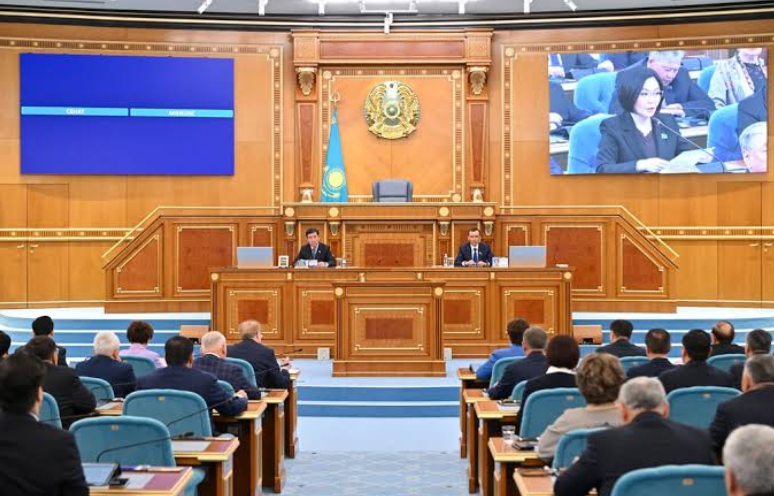
The new unicameral parliament (Kurultai) with 145 deputies, elected on a strictly proportional representation system where the big as well as small parties are well represented on merit and no vote is wasted, is expected to make the legislation more representative and speedier. Many procedural bottlenecks and delays that accompanied legislation in a bicameral parliament are avoided in a unicameral parliament, that is truly representative of the people, instead of representing the elite interests. The President’s powers have been enhanced to ensure effective governance through the right and speedy choice of the important offices like the appointment of the Chairman of the Constitutional Court, the Chairman of the National Bank and Supreme Judicial Council, the Prosecutor General, and the Chairman of the National Security Committee.
In Pakistan, long delays in appointing Election Commissioners, Chairman NAB and the Leaders of the Opposition in Parliament have adversely impacted the governance. With the current reforms Kazakhstan apparently has overcome these delays. The appointment of judges and the chief justices was another issue in Pakistan that has been resolved after a lot of effort in Pakistan through 26th amendment. Similarly, the 27th amendment has brought about greater stability in important tenures, besides bringing greater balance between the powers of judiciary, executive and parliament. In Kazakhstan, the same has been achieved through the latest constitutional reforms.
Similarly, another important reform is the new slot of the Vice-President, replacing the state counsellor, who would be appointed by the President with the consent of he Parliament by a majority vote. The appointment would represent the President in state bodies and parliament and on any other forum with the concurrence of the President. The appointment would also provide continuity in case of any emergency or the incapacitation of the president. The election of the Vice-President makes the appointment more democratic and representative of the will of people, thus granting greater legitimacy in line with democratic ethos.
The office of the Vice-President would also be a very useful instrument in lending a helping hand in governance, by relieving the president of the routine activities in order to allow him to concentrate on more important governance functions. Another important function of the office of the Vice-President would be to ensure a continuity after the seven-year term of the president providing an effective grooming and succession management model. Article 43.2 of the constitution has been supplemented by a new law that allows only those with a five-year experience in public office or the legislature, to be eligible for the office of the president in future. This amendment strengthens the credentials of the new incumbent in favour of proper grooming for the onerous job.
After doing away of the Senate, the Parliament has been named as “the Kurultai” comprising 145 members and elected for six years, through proportional representation. This proportional representation system based on a single national constituency, as the highest representative body, exercising legislative power, ensuring a minimum of 5 percent votes for representation was once tried earlier also in Kazakhstan and is expected to make the polity more democratic. The above reform resolves the dilemma of lack of representation and wastage of votes experienced in the “first past the post” system of Westminster polity such as that being followed in South Asian countries like India, Pakistan and the Bangladesh.
All parties in this system are represented as per the weight of their votes and the voter lists submitted on merit by the electorate. The electorate is expected to make better and informed choices on the basis of the strength of political parties’ manifestoes and the credentials of the individual candidates displayed on the voter lists of respective parties. Multiple parties, even the small ones would be represented in the national parliament through this inclusive constitutional scheme.
Another very interesting amendment is the Article 60, which sets up a “People’s Council” of 126 public representatives, which would comprise the representatives nominated by the president and created on the pattern of the Assembly of the People of Kazakhstan including at least 42 representatives from ethnocultural and major public associations, “maslikhats” (local representative body), and regional public councils. Though the procedure of selection and the powers of the assembly are not very clear as yet, but the main purpose to enable a public body to initiate legislation including national referendum on any national issue is interesting and innovative. The inclusion of multiethnic communities in this body makes the governance participatory and democratic. However, it would have to be seen how this body interacts with the national assembly (the Kurultai) and would it not result in the clash of powers between the two.
Lastly the focus on public morality and dignity of persons of the revised constitution ensures that the national and cultural values are well respected, preserving public order and personal dignity. The constitutional reforms of Kazakhstan indicate the acuity, vision and the pro-people spirit of the revised constitution. It is in line with the original governance vision of President Kassym-Jomart Tokayev of “strong President, an influential parliament and an accountable government.”
Disclaimer: Views expressed by writers in this section are their own and do not necessarily reflect The Times Union‘ point of view