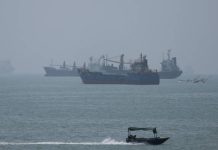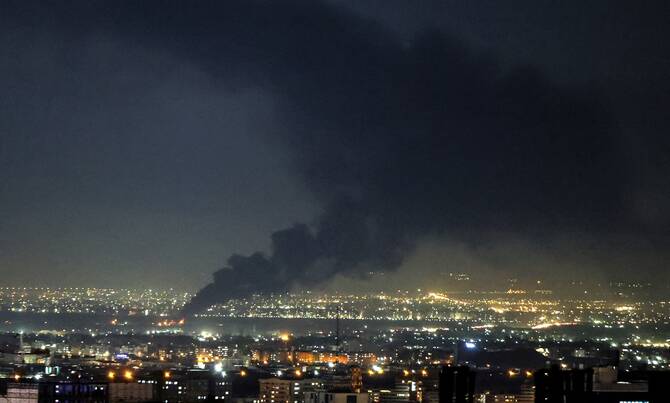
The war between the US and Iran has entered an ambiguous phase. While strikes still take place during the ceasefire, both sides are exchanging demands for the negotiations. Among the points raised by Iran is the recognition of its sovereignty over the Strait of Hormuz. And, while it denies that the US has any impact on the strait, it demands an end to the American naval restrictions on Iranian ports, plus guarantees for safe passage under Iranian control.
As we discuss Iran, I feel compelled to paraphrase something Saddam Hussein stated during the Iran-Iraq war, which was also the last time the Strait of Hormuz faced real navigational obstructions. Saddam stated that, if you take out your gun, it is not to threaten but to shoot and kill. Iran today, after decades of threatening to block the strait, has finally done so. Yet, despite the hurt inflicted on the global economy, it missed its shot. This weapon, whose use has been threatened for years and years, is finally out — but it has clearly been overpowered by the US.
Despite this, we are now in a difficult position. It is undeniable that the Iranian regime’s actions are a threat to the stability and future of both the Middle East and the world. Even if it is not a gun, it is a splinter adding pressure.
To start, no country — not even China — will accept the regime in Iran continuing to threaten or control this strait, through which about a quarter of global seaborne oil trade and a fifth of the world’s liquefied natural gas usually passes. China gets about half of its crude oil imports from the Middle East, so any disruption is a direct threat to its economy.
No country — not even China — will accept the regime in Iran continuing to threaten or control this strait
Khaled Abou Zahr
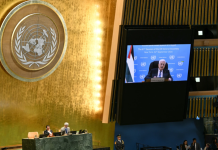
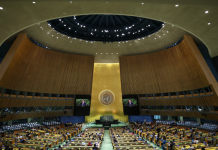
The main diplomatic effort is a UN Security Council draft resolution under Chapter VII of the UN Charter that demands Iran immediately cease attacks on shipping, remove mines, stop imposing illegal restrictions and guarantee freedom of navigation. Experts have compared the long-term goal to a solution similar to the 2022-23 Black Sea grain deal, which, despite the war in Ukraine and tensions in the neighborhood, guaranteed the safe transit of food, fertilizer and essential goods.
As for the multinational military proposition, there has been a series of ideas put forward with the goal of restoring safe passage through the strait. The latest is a strictly defensive multinational mission co-led by the UK and France. The goal is to ensure merchant vessel protection, escorts and mine clearance, with participation from more than 40 nations.
For its part, the US launched “Project Freedom,” a unilateral but expandable escort operation that was briefly activated before being paused for diplomacy. Additionally, Washington proposed the broader “Maritime Freedom Construct,” inviting international partners for coordinated diplomatic and military support.
While the back and forth between military action — even if it is defensive — and diplomacy continues, there is always a possibility we could witness a swift and dangerous escalation. If this happens, will the US and other countries be forced to put boots on the ground?
While the back and forth continues, there is always a possibility we could witness a swift and dangerous escalation
Khaled Abou Zahr
The Iranian regime knows the US can inflict more pain, but it also knows that America does not want to send soldiers to complete the mission. The US and Israel know that, while the Iranian regime can project an image of resistance through targeted actions, its military infrastructure has been devastated. So, what comes next? How long will this status quo hold? And who will yield first?
The US and Iran have probably already started a long-term posture of confrontation, flirting with the red line of an all-out war and boots on the ground.
The Iranian regime’s goals were exemplified by the Islamic Revolutionary Guard Corps’ failed attempt at an infiltration attack on Kuwait’s Bubiyan Island this month. A relatively small group of six armed IRGC members tried to land by boat but Kuwaiti forces repelled them, detaining four. One Kuwaiti officer was wounded. While Tehran claimed it was a navigation error during a routine patrol, few believe this. It is worth noting that the island hosts the China-backed Mubarak Al-Kabeer Port project. Such consistent and persistent destabilization actions, while officially denied, look to increase the hostage-taking and blackmail operations, while not being serious enough to merit a military escalation from the US.
The US and Israel themselves will probably work to weaken the regime even more or push for its downfall through infiltration by covertly supporting internal opposition networks and ethnic minorities, such as the Kurds, Balochis and Azeris. The work of intelligence agencies, coupled with further airstrikes and cyber operations, could be the way forward to avoid boots on the ground. The ability to assassinate regime figures, coupled with the sabotage of key infrastructure by limited special forces or proxy actions, can certainly disrupt the regime’s control.
This is hence no longer a quick operation but a long-term one that will continue to focus on information warfare, targeted assassinations and economic disruption. There is no doubt that the main goal will be to erode loyalty within the military and security forces. Looking at past covert programs, the US is capable of executing its goals with great precision and with the same deniability the Iranian regime uses. Ultimately, this could lead to the regime’s downfall. But patience and time will be of the essence.
BY: Khaled Abou Zahr is the founder of SpaceQuest Ventures, a space-focused investment platform. He is CEO of EurabiaMedia and editor of Al-Watan Al-Arabi.
Disclaimer: Views expressed by writers in this section are their own and do not necessarily reflect The Times Union‘ point of view