- US President Dismisses Financial Considerations in Iran Policy Decisions
WASHINGTON: US President Donald Trump said on Tuesday that Americans’ financial hardships are not influencing his approach toward the ongoing conflict with Iran, emphasizing that preventing Tehran from obtaining a nuclear weapon remains his administration’s overriding objective.
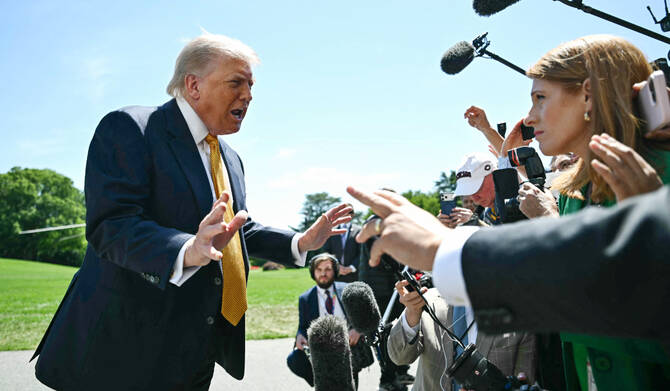
Speaking to reporters before departing the White House for an official visit to China, Trump made clear that national security considerations outweighed economic concerns linked to the conflict.
“The only thing that matters, when I’m talking about Iran, they can’t have a nuclear weapon,” Trump said. “I don’t think about Americans’ financial situation. I don’t think about anybody. I think about one thing: We cannot let Iran have a nuclear weapon. That’s all. That’s the only thing that motivates me.”
White House Defends President’s Position
Trump’s comments are expected to fuel debate among critics who argue the administration should carefully balance geopolitical objectives with the economic pressures facing American households, particularly as inflation and rising living costs remain major concerns ahead of November’s midterm elections.
Responding to questions regarding the president’s remarks, White House Communications Director Steven Cheung defended the administration’s position, stating that Trump’s primary responsibility is safeguarding American security.
“Iran cannot have a nuclear weapon, and if action wasn’t taken, they’d have one, which threatens all Americans,” Cheung said.
Rising Economic Pressures Add Political Challenges
The Iran conflict has intensified political pressure on Trump from within his own Republican Party, with some lawmakers expressing concern that economic fallout from the war could weaken voter support and jeopardize Republican control of Congress.
Rising energy prices linked to regional instability have contributed to higher gasoline costs and renewed inflationary pressure across the United States.
According to economic data released Tuesday, US consumer inflation in April recorded its largest increase in three years, further amplifying concerns over the economic impact of the conflict.
Intelligence Assessments Raise Questions Over Nuclear Timeline
Despite the administration’s strong rhetoric, US intelligence assessments reportedly indicate that Iran’s estimated timeline for developing a nuclear weapon capability has not significantly changed since last summer.
According to sources familiar with the matter, analysts previously assessed that military strikes by the United States and Israel had extended Iran’s potential nuclear timeline to between nine months and one year. Officials say those assessments have remained broadly unchanged despite two months of conflict.
Iran Continues to Reject Nuclear Weapons Allegations
Trump and his allies have repeatedly argued that the threat posed by a nuclear-armed Iran outweighs any short-term economic difficulties resulting from the conflict.
Iran, however, continues to deny seeking nuclear weapons, maintaining that its nuclear program is intended solely for peaceful civilian purposes. Western governments have long expressed concerns that Tehran may be pursuing the capability to develop a nuclear bomb.
BY: The Times Union