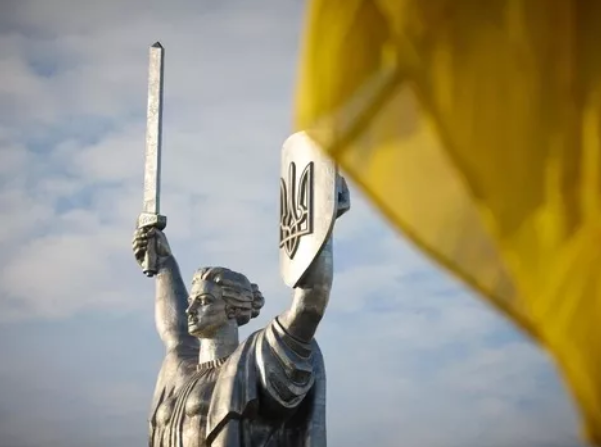
- Honoring the Memory of World War II Victims
On May 8, European Union countries together with Ukraine commemorate the Day of Remembrance and Reconciliation, paying tribute to the millions of victims of World War II. The red poppy, the symbol of remembrance, represents the countless lives lost on battlefields across Europe and serves as a reminder of the devastating human cost of war.
For Ukraine, this day carries profound historical significance. The country was among the nations that suffered the greatest destruction during the war and made one of the most substantial contributions to the defeat of Nazism.
Ukraine’s Immense Sacrifice During the War
Ukraine endured catastrophic losses during the Second World War. More than six million Ukrainians fought against Nazi Germany within the ranks of the Soviet Army, while millions of civilians suffered occupation, deportation, executions, and imprisonment in concentration camps.
Ukraine’s total demographic losses are estimated at no less than 14 million people. Before the war, Soviet Ukraine had a population of approximately 41.7 million; by 1945, only 27.4 million remained. Entire cities and villages were devastated, leaving deep scars that shaped the nation for generations.
Despite these immense sacrifices, Ukrainians demonstrated extraordinary courage and resilience throughout the conflict.
Ukrainian Heroes on the Frontlines
Ukrainians played a decisive role in many of the major military operations that led to victory over Nazism. They ranked second only to Russians in the number of recipients of the title Hero of the Soviet Union during the war, with 2,021 Ukrainians receiving the highest military honor.
More than half of the wartime Soviet fronts were commanded by marshals and generals of Ukrainian origin, reflecting Ukraine’s critical military leadership during the conflict.
Among the most celebrated Ukrainian heroes was legendary fighter pilot Ivan Kozhedub, the most successful ace of the anti-Hitler coalition, credited with shooting down 62 German aircraft. He became the only pilot awarded the title Hero of the Soviet Union three times during the war.
Another remarkable figure was Ivan Drachenko, an attack pilot who continued fighting after losing an eye in combat and surviving captivity. His bravery symbolized the determination and endurance of Ukrainian soldiers on the battlefield.
Ukrainian Leadership in Europe’s Liberation
Ukrainian commanders and soldiers played vital roles in the liberation of European cities from Nazi occupation.
The success of the Vienna Offensive in April 1945 was strongly supported by the 6th Guards Tank Army under the command of Ukrainian Colonel-General Andriy Kravchenko. Rising from the rank of private soldier to general, Kravchenko led his forces from Ukraine to Prague and later to the Far East, earning the title Hero of the Soviet Union twice.
During the liberation of Prague, one of the first tanks to enter the city was commanded by Ukrainian lieutenant Ivan Goncharenko, whose leadership became part of the city’s liberation history.
Ukrainians also played a prominent role in the final assault on Berlin. The troops of the 1st Ukrainian Front were among the key forces storming the Nazi capital. The group that raised the Victory Banner over the Reichstag was commanded by Ukrainian officer Oleksiy Berest. Meanwhile, the commander of the regiment that captured the Reichstag, Fedor Zinchenko, became the building’s first commandant after its fall.
Ukraine’s Industrial and Scientific Contribution
Ukraine’s contribution to victory extended far beyond the battlefield. During the war, approximately one thousand major industrial enterprises were evacuated from Ukraine to the eastern regions of the Soviet Union, where they became a foundation for wartime production and the post-war industrial complex.
One of the most famous examples of Ukrainian innovation was the development of the legendary T-34 tank in Kharkiv before the war. Its mass production became possible thanks to advanced electric welding technologies developed under the leadership of Ukrainian academician Yevgeny Paton, founder of the renowned Institute of Electric Welding.
These scientific and industrial achievements significantly strengthened the Allied war effort and contributed to the eventual defeat of Nazi Germany.
Ukraine’s Place Among the Victorious Nations
Ukraine’s extraordinary military, humanitarian, industrial, and scientific contributions to the defeat of Nazism earned it international recognition after the war. Ukraine became one of the founding members of the United Nations, acknowledging the immense sacrifices and contributions of the Ukrainian people during World War II.
Today, Ukraine honors the memory of all those who fought against Nazism while reaffirming its commitment to peace, freedom, and the protection of human dignity. The courage and sacrifice of the Ukrainian people remain an inseparable part of Europe’s shared history and the global victory over tyranny.
BY: The Times Union