- Vance says Iranians refused to accept American terms not to develop a nuclear weapon; Islamic Republic’s media claims Washington’s ‘excessive demands’ collapsed negotiations
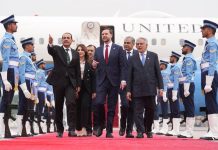
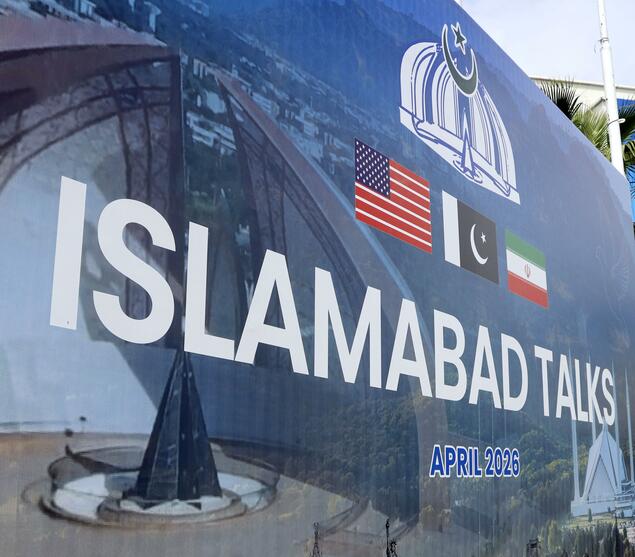
Islamabad – The United States and Iran said Sunday they had failed to reach a peace agreement after holding marathon face-to-face negotiations, with differences remaining over the reopening of the Strait of Hormuz and other major sticking points.
“We go back to the United States having not come to an agreement. We’ve made very clear what our red lines are, what things we’re willing to accommodate them on and what things we’re not willing to accommodate them on,” U.S. Vice President JD Vance said after the talks in Pakistan. “They have chosen not to accept our terms.”
Vance, who led the U.S. delegation, told a brief press conference in Islamabad that the core objective of his team was to secure an Iranian “affirmative commitment” not to seek a nuclear weapon.
But Vance said the United States and Iran, which agreed to a two-week ceasefire last week, could not bridge the gap.
Claiming that the lack of an agreement was “bad news for Iran” much more than for the United States, he said, “We leave here with a very simple proposal, a method of understanding that is our final and best offer. We’ll see if the Iranians accept it.”
Iran’s semi-official Tasnim news agency said nearly 21 hours of negotiations and consultations, mediated by Pakistan, did not produce an agreement because of the U.S. delegation’s “excessive demands and ambitions.”
It reported that the United States had tried to achieve through the negotiations what it could not through war, including the removal of nuclear materials, but the Iranian side, headed by Parliament Speaker Mohammad Baqer Qalibaf, had foiled the attempt.
The high-level talks ended after continuing into a second day on Sunday, with the tentative ceasefire due to expire on April 21.
The effective blockade of the Strait of Hormuz by Iran since the war was launched by the United States and Israel on Feb. 28 has roiled global markets and sent energy prices surging.
About 20 percent of global oil supply transits through the narrow waterway in normal times, which is also crucial for the transportation of liquefied natural gas, fertilizer and other resources.
With his approval ratings falling, U.S. President Donald Trump has urged Iran to ensure the safe passage of ships through the strait since both sides agreed to the ceasefire on Tuesday.
But the pause in the war appears fragile, with Israel continuing to attack the Iran-backed militant group Hezbollah in Lebanon, which the United States says is not covered by the deal.
While the Strait of Hormuz was among the key agenda items at the talks mediated by Pakistan, two U.S. Navy destroyers transited through the waterway in preparation for mine-clearing operations, according to the U.S. military, a claim denied by Iran.
Mines reportedly laid by the Islamic Revolutionary Guard Corps have raised concern that it will take time for safe passage of tankers and other vessels to be ensured, even if the Iranian blockade ends.
Special envoy Steve Witkoff and Jared Kushner, Trump’s son-in-law, were part of the U.S. delegation, while the Iranian side included Foreign Minister Abbas Araghchi.
BY: The Times Union – KYODO