On the sands of ancient Memphis, where pharaohs once walked, a new legend is being carved into the landscape. Rising like a modern-day marvel at the foot of the timeless Giza pyramids, the Grand Egyptian Museum (GEM) is more than a museum; it is a bold declaration of national renaissance. Scheduled for its grand inauguration on November 1st, this monumental project transcends the very idea of a cultural institution, marking Egypt’s strategic pivot to reclaim its stature on the global stage by masterfully weaving an unparalleled civilizational legacy with 21st-century ambition.
The journey of the GEM is a narrative of perseverance. Conceived in the 1990s and with its foundation stone laid in 2002, the project navigated years of delays and political upheaval. Its revival and completion under the direct supervision of President Abdel Fattah El-Sisi signal a decisive chapter in modern Egyptian history. The vision expanded beyond the museum’s walls, integrating it with the development of the Giza Plateau, Sphinx International Airport, and key highways, thereby transforming the entire region into a cohesive, world-class cultural and tourism destination.
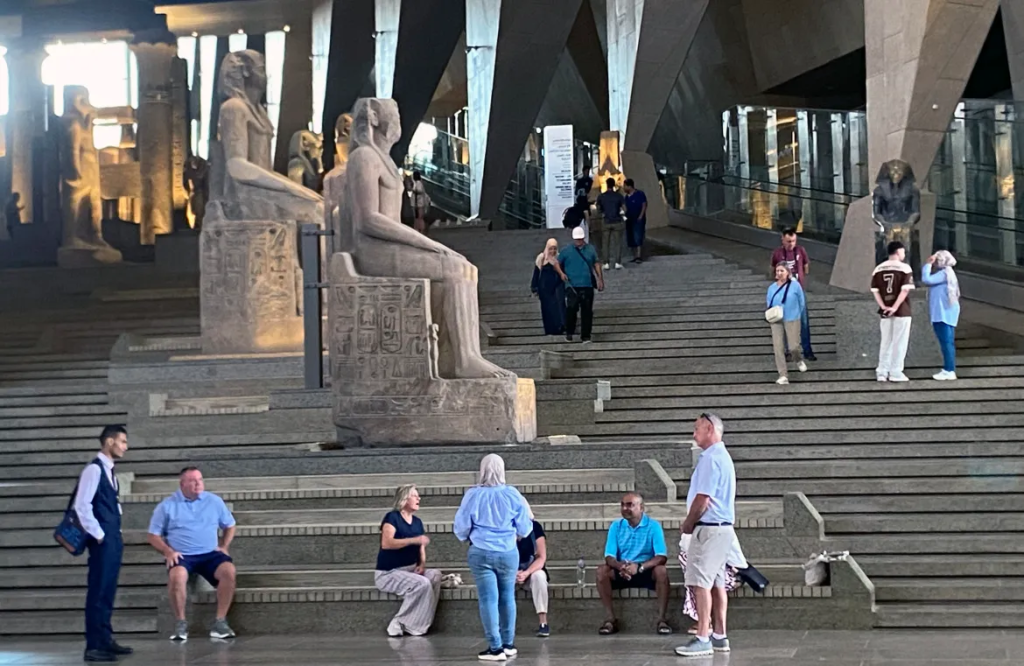
An architectural triumph in its own right, the GEM is aptly named. With an investment exceeding $1 billion—significantly supported by the Japan International Cooperation Agency—the museum spans a staggering 480,000 square meters. The winning design from an Irish firm, selected under UNESCO’s auspices, envisions the structure as a “fourth pyramid,” a stunning visual and symbolic extension of its ancient counterparts. Its facade captures the horizon’s light, while its interior unfolds like the layers of history itself, guiding visitors from a monumental entrance guarded by the statue of Ramses II into the heart of Egypt’s storied past.
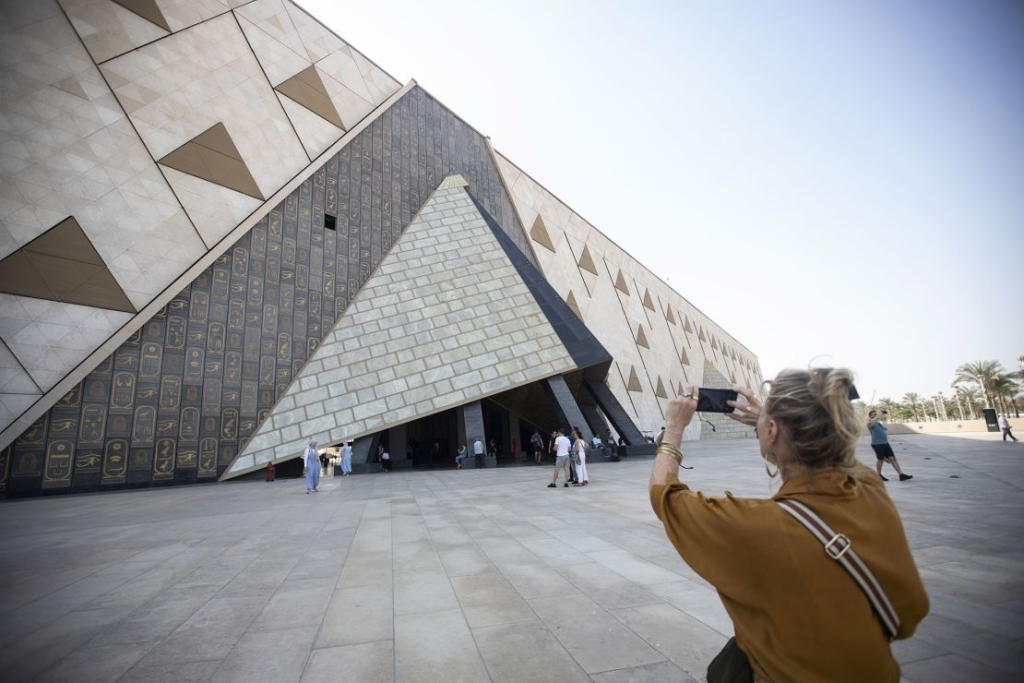
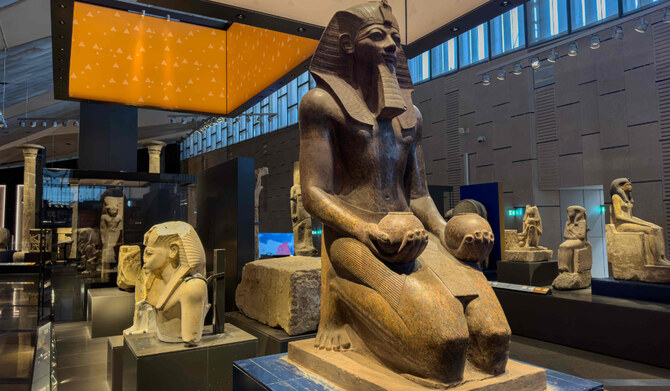
But the true jewel of the GEM is its content. It is the eternal home for over 100,000 artifacts, but its crown jewel is the complete, breathtaking collection of Tutankhamun’s treasures. For the first time, all 5,300 artifacts from the boy king’s tomb will be displayed together, a spectacle of ancient opulence enhanced by cutting-edge augmented reality that connects each piece to its moment of discovery.
The impact of the GEM, however, extends far beyond its galleries. It is the cornerstone of a strategy to double tourist arrivals to 30 million annually by 2031, with projections of 5-7 million visitors for the museum alone. This is not merely about tourism; it is an economic catalyst. The museum is already stimulating high-end real estate and hospitality development, creating thousands of jobs, and revitalizing traditional crafts and creative industries. It acts as a golden gateway for foreign investment, proving that heritage can be a powerful engine for contemporary economic vitality.

Ultimately, the Grand Egyptian Museum is a masterclass in soft power. It embodies three profound dimensions: it is a symbol of unbroken civilizational continuity, a vehicle for cultural diplomacy as it welcomes world leaders, and a powerful tool for global promotion. Through its walls, Egypt reintroduces itself to the world—not just as the cradle of civilization, but as a dynamic nation leveraging its glorious past to build a prosperous future.
In a world increasingly looking to the past for meaning, Egypt sends a powerful message from the heart of the pyramids: great civilizations do not fade into history. They are reborn.
BY: Nadeem Faisal Baiga Editor-in-Chief of The Times Union.
Disclaimer: Views expressed by writers in this section are their own and do not necessarily reflect The Times Union‘ point of view